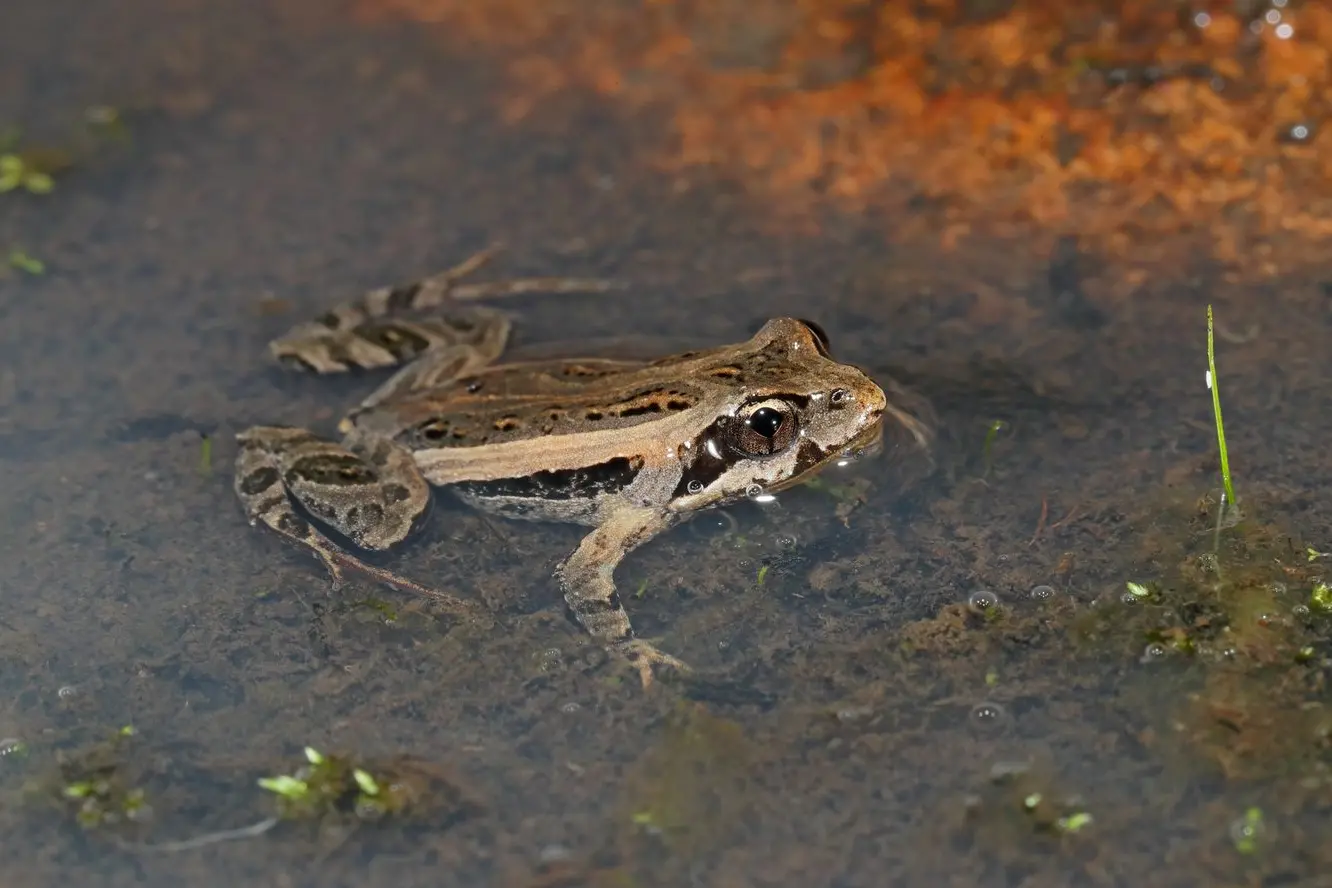
OF the dozen or so species of frogs that occur in the Wangaratta region, the Plains Froglet is among the most common and widespread. Inhabiting a range of different habitat types, Plains Froglets are not as highly specialised as some other frog species, thus they are found in just about any wet, damp or flood-prone environment, such as creeks and rivers, dams and billabongs and even roadside ditches and low-lying farmland. In these areas, they shelter under logs, rocks and ground litter, usually at the edge of water or otherwise in shallow depressions. Numerous individuals may be found beneath one rock or log. Rains stimulate their activity and in wet conditions, they freely move across the landscape seeking moist patches of shallow water required for breeding. Eggs are laid individually or in loose clumps, on the bottom of shallow waterbodies, and once the eggs hatch, tadpoles are bottom dwellers feeding on plant matter. Like birds, frogs make distinctive calls. To the trained ear, it is often the unique sounds given by each species that indicates their presence as most frogs can be quite difficult to actually see. The call of the Plains Froglet, a long squelching ‘eeeeeek’, can most commonly be heard after rains from late autumn, through winter and into spring, as males advertise to prospective female mates. However, unlike most other frogs, Plains Froglets do regularly call throughout the year, day and night, whereas other species typically call only at night. In appearance, Plains Froglets are among the smallest species of frog in our region, adults measuring 20-24mm, around the size of a 10-cent coin. Their general upper body colour of light grey to brown, and patterning of blotches and bands, is extremely variable, making identification difficult. They are very similar in appearance to the related Common Froglet (with which they often co-occur) and the much rarer Sloane’s Froglet. In the hand, they can be flipped over to observe their belly patterning, Plains Froglets being lightly ‘peppered’ in complexion, Common Froglets more coarsely mottled black and white, Sloane’s being pale with scattered flecks of dark grey in clusters. Identification by call is the most reliable method, the Common Froglet giving their distinctive ratchet-like ‘crick-crick-crick-crick’ call, and Sloane’s giving a short, sharp ‘eep’.