PHOTO
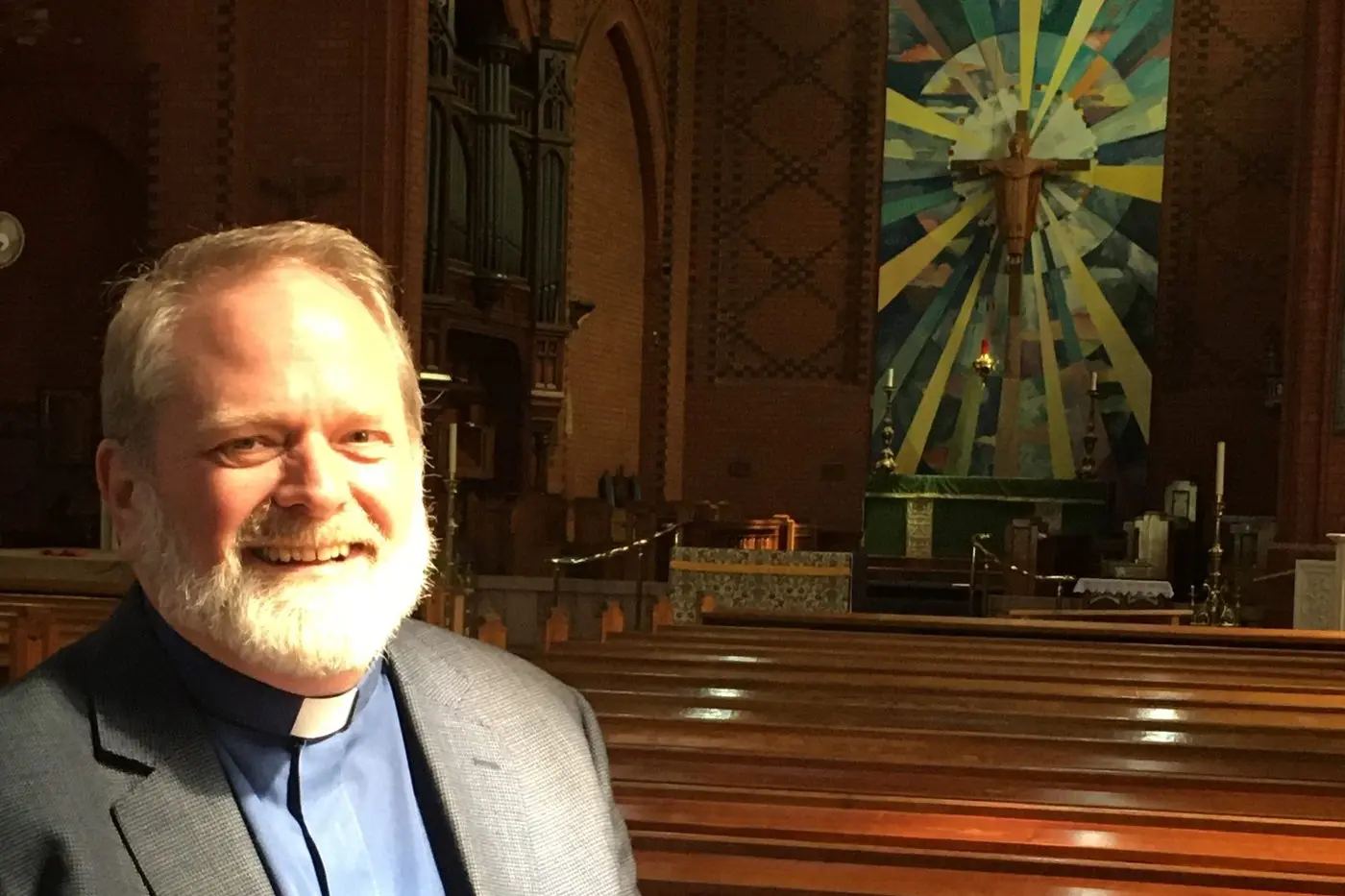
FOR the first time, the Dean of Holy Trinity Anglican Cathedral Wangaratta will oversee more than the cathedral parish.
The Very Reverend Neil Hicks, 65, was installed as dean on August 31, taking on a co-operative ministry which will also see him retain involvement with Wangaratta West and the Warbys Parish, where he has been priest-in-charge since 2022.
Holding multiple roles is no new concept for the seventh cathedral dean; soon after he was inducted to his Wangaratta West and the Warbys role two years ago, Neil assumed his responsibilities as vicar-general of the Wangaratta diocese, while also continuing in the role as archdeacon of Wangaratta he had held since 2020.
However, the co-operative ministry is a new approach for the Wangaratta parishes, and one which was the focus of a 'getting-to-know-you' gathering at Bishop's Lodge in early August, in the lead-up to Neil's installation.
The arrangement between the two parishes (Wangaratta West and the Warbys comprises St Michael's Appin Street as well as Taminick and Glenrowan, while Holy Trinity Cathedral parish includes the cathedral, and Moyhu and Whitfield churches) is part of a restructure in line with changing needs and resources.
Neil said 50 years ago, parishioners would attend church every week, but now with easy access to travel on weekends, and children's sport proving an increasing drawcard for families, fewer people were weekly attendees.
"The reality is that our membership is aged - though in the cathedral parish, because of the younger members of the choir, the congregation has a slightly younger demographic," he said.
"I've grown up in the church, and for as long as I've been around, people have said it was going to shrink - that hasn't happened suddenly, but it is certainly happening.
"It's been decided to have a common priest for the two places, to see how they might be the Anglican parish in current day Wangaratta, rather than operating as separate groups.
"There are less funds to provide a full-time priest, so essentially, I'm two half-time priests; I was doing that when I was archdeacon and parish priest at Wangaratta West and the Warbys, but I am no longer archdeacon, and now serve as Vicar of the Parish of Holy Trinity Cathedral and Dean of Holy Trinity Cathedral."
The Wangaratta role is Neil's second as a dean, after he served for 18 months in Sale.
Prior to that posting, Neil, who grew up in Tongala, had lived in Mildura, Robinvale/Manangatang and Point Lonsdale; after Sale, he moved from Balwyn North to Geelong, and then Yarrawonga prior to his relocation to Wangaratta.
He said his installation on August 31 was "a really great celebration", with the cathedral filled with people he'd met in the diocese through his role as archdeacon, as well as in his parish involvements.
"I've had people saying it was an inspiring service. It started at the font, because that is the start of our life in the church at baptism, and that set the tone for the service," he said.
As the church adapts to shifts in society, Neil said the change in scope of the dean's role was one he was "still getting my head around", but also something in which he felt supported by the local parishes he served.
With Wangaratta's Anglican college named after the cathedral, as it had its beginnings on a site nearby, Neil said it was important to build that connection not just in name but "as a place where people can come and find God and find community".
That extends beyond Cathedral College, local parishioners and the diocese, to Holy Trinity Cathedral's position as a Wangaratta landmark.
"It's apparent that the cathedral does have some attraction to some sections of the community: people who want to get married here or have their funeral here, and we'll also soon host the annual jazz mass again," Neil said.
"So it does have an attraction, but what does that mean for the dean? My role is to minister to people and help them live the Gospel."
He said the cathedral existed as the 'mother church' of the diocese, and it was one of only two in Victoria - along with Melbourne's St Paul's - which were built as cathedrals; the others, in Bendigo, Sale and Ballarat, were all constructed as parish churches.
"People in those days put money into things that were beyond the time and space of there and then," Neil said.
"Part of building a structure like this is offering a sign that there are people who think there's more to life than the material."