
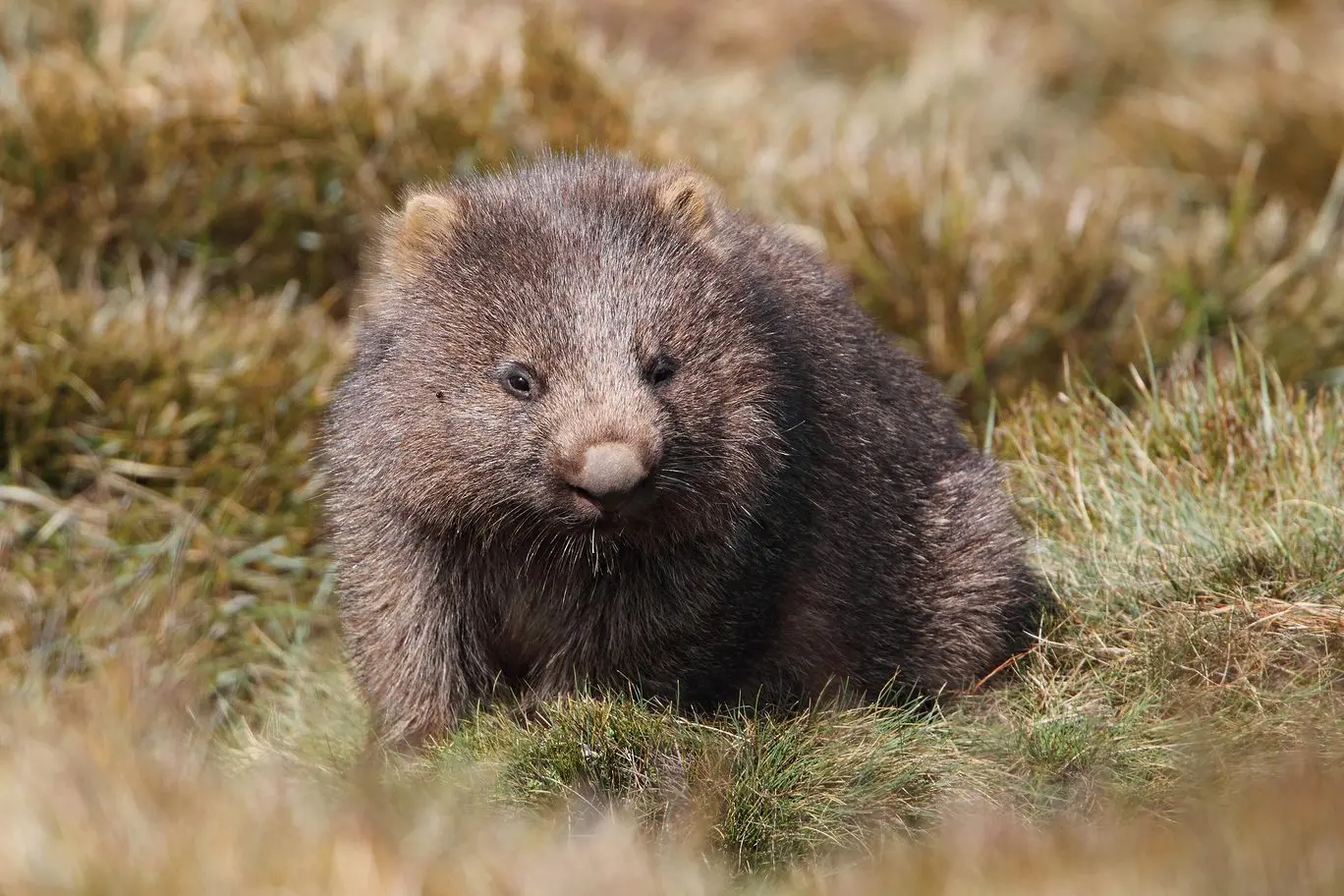
PHOTO
WOMBATS are amongst the world's largest burrowing animals and are equipped with powerful limbs, short broad feet and flattened claws.
The wombats found in our region are known as Common Wombats, although this name is based on historic distribution because these populations now have fragmented distribution, having almost disappeared from the western part of NSW, Victoria and South Australia.
They are also known as the Bare–nosed Wombat because unlike the other two species of wombat found in Australia, they have a large and hairless nose.
The Common Wombats are a marsupial with a stocky, barrel–shaped animal that reflect its burrowing nature, having a broad head with small eyes, a short strong neck, powerful shoulders and slightly rounded ears.
The colour of their short coarse coat varies from glossy black, dark grey, silver–grey, or chocolate brown.
Wombats differ from other marsupials by having only two incisor teeth in the upper jaw.
The incisor and molar teeth of this animal are also unique because they have open roots and continue to grow throughout the animal's life.
The main habitat for the Common Wombat is the temperate forest–covered areas of southeastern Australia and is one of the few marsupials that are active above the snowline in winter.
In summer, the animal is mainly nocturnal, emerging from its burrow when the air cools down so as to avoid high temperatures.
In general, wombats spend most of their lives in their burrows.
Wombats prefer to dig their main shelters on slopes above creeks and gullies, and feed in grassy clearings.
A wombat usually leaves the burrow after sunset and begins to graze for several hours.
During this time, it may return to its burrow to rest, or seek refuge, and it will return to sleep generally before sunrise.
However, on cool or overcast days the animals may forage longer and during the day.
Their diet is mostly fibrous native grasses, sedges and rushes, and the choice of food depends on what is available at the time.
At times when it is eating grass, a wombat will also eat dry leaves and stalks, and occasionally tear a strip of bark from a tree trunk and chew small quantities of it.
Wombats are solitary animals despite the overlapping ranges and occasional sharing of the burrows.
Therefore, communication between two individuals is often threatening or aggressive.
Females give birth to a tiny, underdeveloped wombat which is born following a gestation period of about one month, where it makes its way to the pouch and grows for 6–10 months.
The young then leaves the pouch and remains with its mother for nearly a year before becoming independent. Common Wombats become sexually mature after two years and may live around 10 years.
Locally, wombats appear to be increasing in numbers in parts of their former range with sightings common in places like the Warby Ranges now, where sightings were rare only a decade ago.
Apart from spotlighting, the best way to see wombats is to look at grassy clearings in any of our foothill forests on misty days around dawn or dusk.