
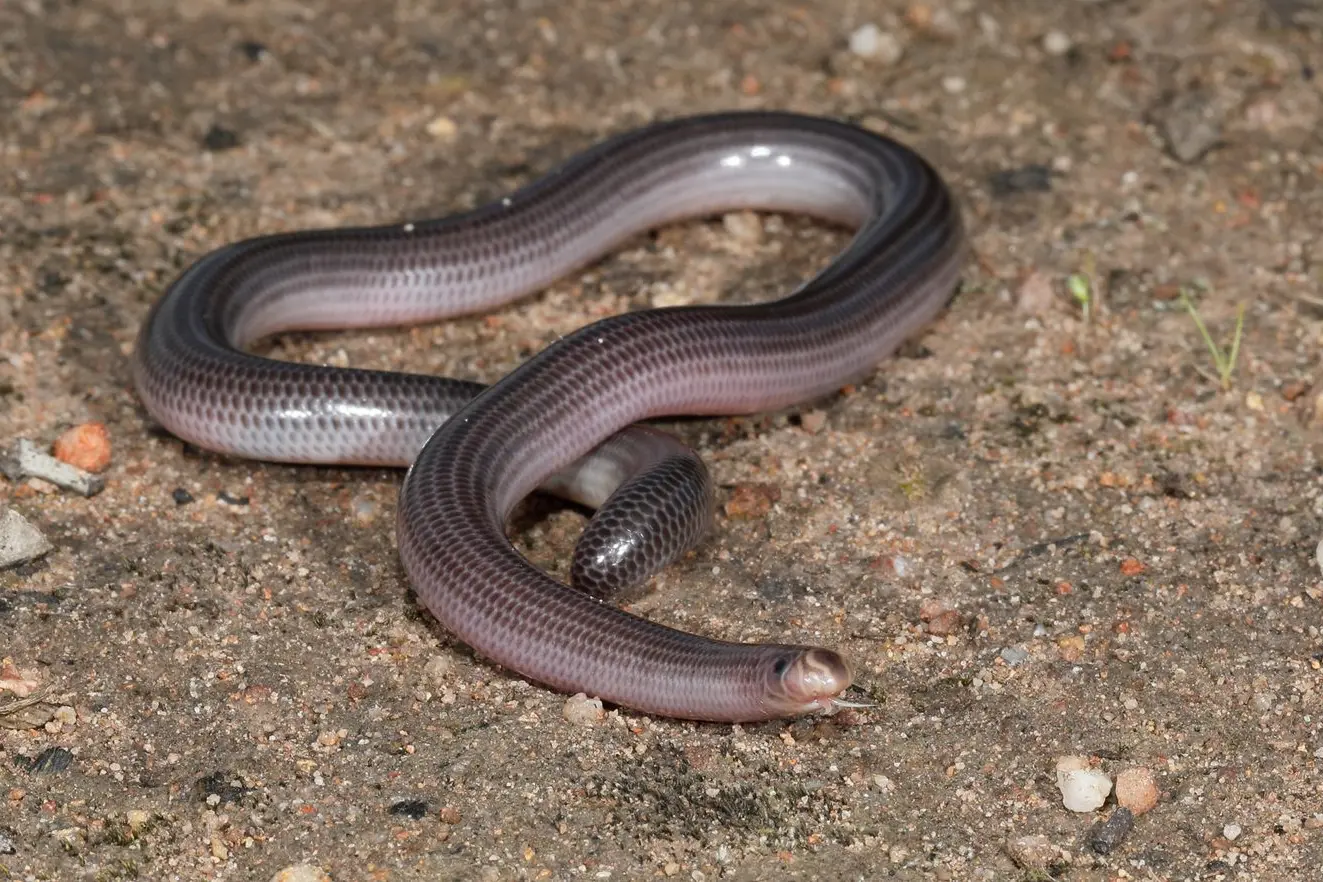
PHOTO
Merlin Tzaros, aged 13, has had a keen interest in nature, especially reptiles, for several years. He has contributed this weeks' article after his recent sighting of this animal.
By MERLIN TZAROS
SNAKES are an incredible and amazing group of animals, ranging from the slow–moving pythons to the fast–striking Death Adders.
Among the most remarkable group of snakes are the blind snakes.
These small, worm–like reptiles are specially designed and well–suited to their behaviour and habitat.
Blind snakes are fossorial, meaning they spend most of their life burrowing underground.
Over thousands of years, they have evolved a transparent layer over their whole head to prevent dirt and soil getting in their eyes, nose and mouth.
This means that they have extremely limited vision, only being able to detect light.
Their nostrils are completely dysfunctional, but their mouths still function fully.
Although their teeth and fangs have disappeared, this does not affect their lifestyle due to their peculiar diet.
Blind snakes are the only insectivorous group of snakes in Australia, with some feeding exclusively on termites, bull ants and sugar ants.
The Woodland Blind Snake, one of the few Victorian representatives of these snakes, is known for being a bull ant specialist.
Blind snakes have incredibly hard scales, designed to be impenetrable to the ant's formidable mandibles and sting.
They use their forked tongue, like all other snakes, to first find a bull ant nest, then they burrow down to the nesting chamber and feed on the soft–shelled pupae of the ants.
Even as they bite the snake, the helpless ants cannot do anything against this well–armored predator.
Usually, one snake will empty a whole nest in a single sitting.
The Woodland Blind Snake lives in the forests and woodlands of central to north–eastern Victoria on hard soils, grainy sand around granite outcrops, and clayey earth of lowland grassy woodlands.
They prefer areas with abundant fallen, rotten timber, and well–established leaf litter.
The Woodland Blind Snake occasionally forages on the ground surface at night, especially after thunderstorms when it is warm and humid.
The reproductive habits of this species are relatively unknown, though it is thought that they are oviparous, laying between 3 to 34 eggs during spring to summer.
They are non–venomous and, as they have no teeth, provide absolutely no harm to humans.
The Woodland Blind Snake is quite an elusive and rarely seen beast, so if you see one, enjoy your special experience.