Molecular ecology has proven hybridisation between dingoes and domestic dogs prompting a call for dingoes to be removed from the state's threatened species protections.

The Victorian Farmers Federation (VFF) request follows the release of new genetic research that "raises serious questions" about the scientific basis underpinning current conservation policy.

Dingoes were placed on the Flora and Fauna Guarantee Act 1988 Threatened List in 2008 in Victoria.

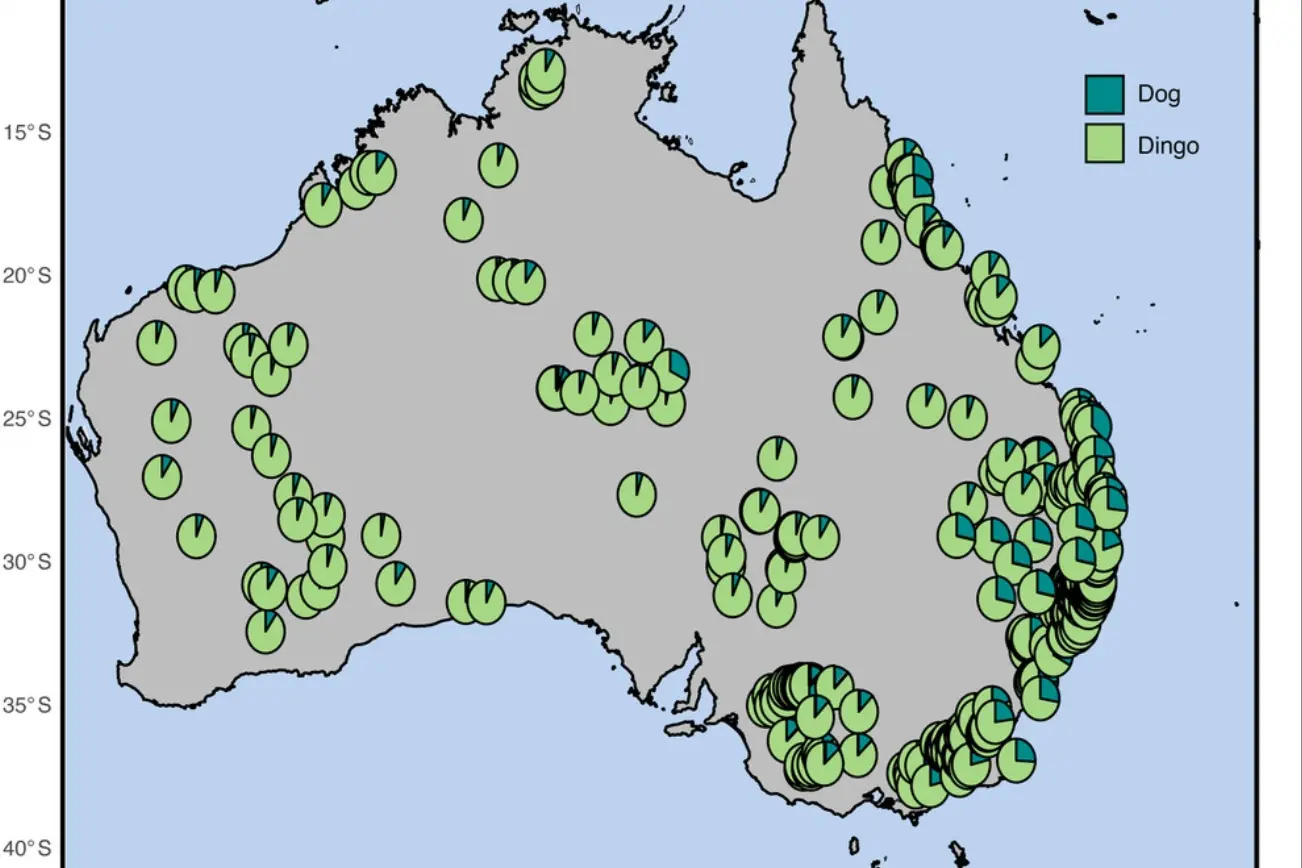
The 2025 Molecular Ecology paper Domestic Dog Introgression in Australian Dingoes: Environmental Drivers and Evolutionary Consequences, alongside recent research undertaken by the University of Adelaide, produced the finding.

The study identified substantial levels of domestic dog ancestry within south-eastern Australian dingo populations.

The dataset contained 390 dingoes sampled from multiple regions across Australia, along with 54 domestic dogs representing Australian breeds, and 342 European breeds.

The VFF said the findings fundamentally challenge the rationale for maintaining strict endangered species-style protections for dingo populations in North West Victoria.

VFF acting president Peter Star said the government could no longer ignore emerging science while livestock producers continued to suffer the consequences of failed policy settings.

“The science underpinning current government policy has shifted,” he said.

“When populations contain significant levels of historic domestic dog hybridisation, the government must seriously reconsider whether these animals should continue to receive the same threatened species protections.”

The research found dingo populations in eastern and southern Australia, including regions directly relevant to Victoria contained up to 20–23 per cent domestic dog ancestry, while more remote central Australian populations remained far more genetically isolated.

Researchers also concluded that previous estimates of hybridisation may have been overstated due to incorrect interpretation of naturally occurring dingo genetic markers.

Mr Star said the state government could no longer justify maintaining rigid protection arrangements while livestock producers across the region continue to face escalating stock losses, increasing wild dog activity and growing animal welfare concerns.

“Farmers are paying the price for a policy framework increasingly disconnected from both the science and on-ground realities," he said.

“Two breeding seasons have now occurred since protections were reinstated, and producers are reporting growing predation pressure with fewer practical tools available to respond.”