
PHOTO
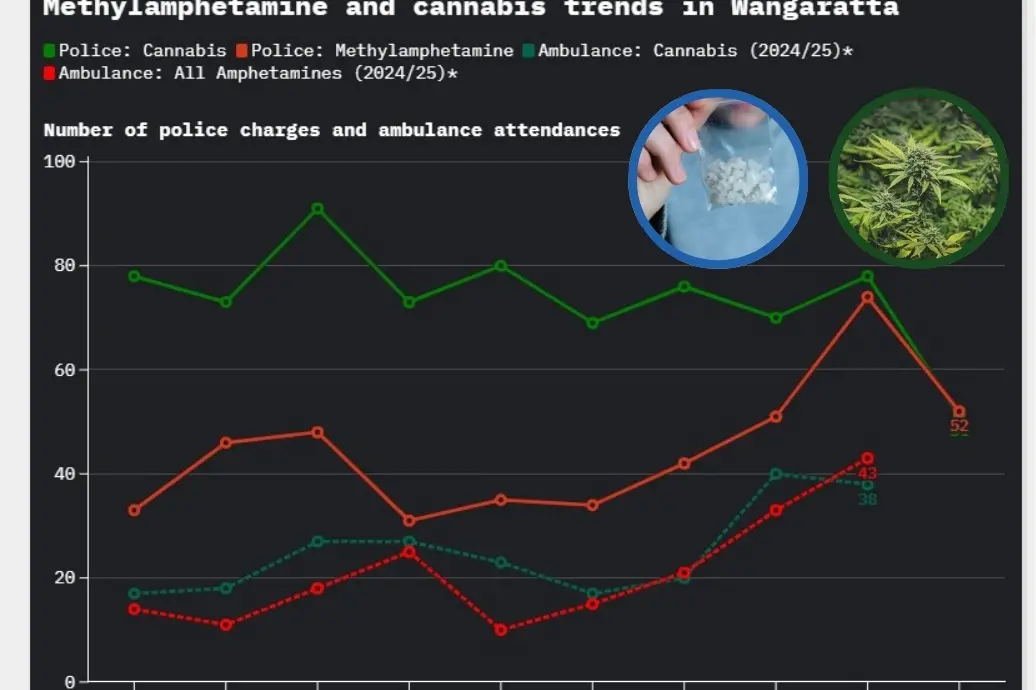
A decade-long shift in local illicit drug markets has reached a tipping point in Wangaratta, with methylamphetamine drug possession charges surging past cannabis.
According to statistics from the Crime Statistics Agency, methylamphetamine has become the most common drug involved in local possession charges in the 12 months to March 2026.
This is a decade first for the area, after cannabis was the dominant drug in the rural city until this year, which saw it drop to a decade low.
Wangaratta is one of 23 LGAs where methylamphetamine is the most common while the remaining 56 Victorian LGAs have cannabis as the most frequent drug.
AODstats by Turning Point also show an increase in ambulance attendances to amphetamine related incidents in the Wangaratta LGA in recent years, overtaking cannabis related paramedic turnout for just the second time in nine years of data.
Acting Inspector and Wangaratta Local Area Commander Nathan Ractliffe said the shift had been brought about by an ease of access to methylamphetamine and a harder crackdown on local cannabis cultivation.
“Methylamphetamine is so readily available; either through air mail, air cargo, large-scale clandestine labs, or created in portable suitcase labs that operate remotely… I think that’s why we see such a spike,” he said.
“Whereas cannabis requires sophisticated growing environments, and then obviously it takes a long time to harvest and grow.
“Police have put a lot of effort into investigating hydroponic setups in residential properties and factories.
“We hit it hard, making it much more difficult for people to organise large-scale grows to make a profit.”
Act Insp Ractliffe said the Hume Freeway was a “superhighway” for drug traffic between Melbourne and Sydney and was also a factor in methylamphetamine detections locally.
On 22 April this year Wangaratta police seized about 33kg of methylamphetamine following a Hume Freeway intercept.
“When you look at some of the drug busts we've had on the Hume Freeway with large quantities of methylamphetamine detected, it shows how much is being transported on our road network,” Act Insp Ractliffe said.
Up the freeway, Wodonga has experienced a similar trend where methylamphetamine has overtaken cannabis as the most frequent drug in 2026, the first time in 10 years, according to the CSA data.
Other regional LGAs including Moorabool, Greater Geelong and Greater Shepparton have seen steep increases in methylamphetamine possession over the past three years.
Act Insp Ractliffe said he didn’t expect the shifting trend to be an anomaly within the Wangaratta area.
“Methylamphetamine will be the number one drug because it's so easy to make, get, and supply, without requiring the infrastructure that cannabis does,” he said.
Act Insp Ractliffe said police would continue to rely on valuable community information when it comes to keeping the drug off the streets.
“We rely on the community to provide information if there's a drug hotspot or a house getting visitors at all hours of the night,” he said.