
PHOTO
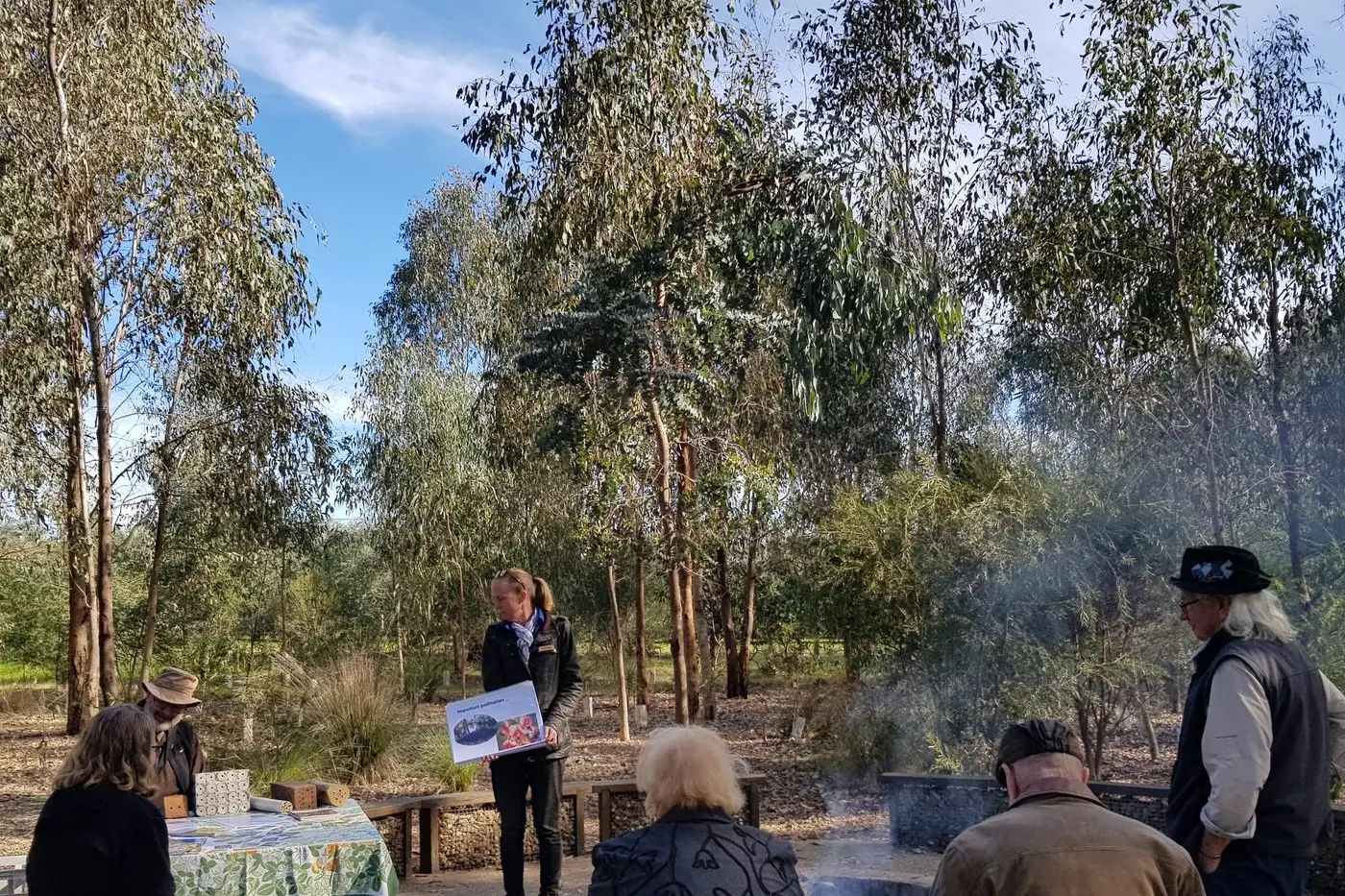
MULLINMUR Billabong was recently abuzz with discussion of native bees at a workshop to mark World Bee Day.
The workshop was conducted by naturalist and educator Karen Retra and hosted by the North East Catchment Management Authority and Wangaratta Landcare and Sustainability.
It highlighted that there are more than 1600 species of native bees in Australia.
But they are not the only pollinators of plants in Australia.
"The workshop explored the diversity of pollinator insects, which include species of native bees but also butterflies and moths, flies, wasps, beetles, thrips and ants," Ms Retra said.
"Some are key to the pollination of particular plants while others are more generalist and may pollinate a range of plants (including crops)."
"Flowers have co–evolved with native bees, other insects and animals, and some plants seek to attract particular pollinators through their colour, shape, scent, and by providing nectar and pollen."
The workshop also discussed how to attract and support native pollinators in a garden.
"This includes providing flowering plants as sources of nectar and pollen; retaining nesting sites and materials; and using non–toxic pest control methods," Ms Retra said.
They learnt about the lifecycles of native bees, why they are rarely seen during winter and even how to construct bee hotels.
"During our cold winters bees are in their immature forms; so there aren't out foraging," Karen Retra said.
"It might come as a surprise that most native bees nest in the ground and are solitary.
"That is, they don't work as a colony or have a food store (honey) like honey bees do.
"Females create and provision their own brood cells.
"A majority nest in the ground while others use holes in wood or pithy plant stems."
The bee hotels or bee blocks can be used to observe the bees.
Ms Retra also stressed that insects have important roles beyond pollination, including as predators, food for other animals and as decomposers.
These interconnections mean many animals and plants rely on insect activity in one way or another.
She said the workshop was attended by a small enthusiastic group who were surprised by the diversity of the pollinator insects, and who were looking forward to observing them in their own gardens.