PHOTO
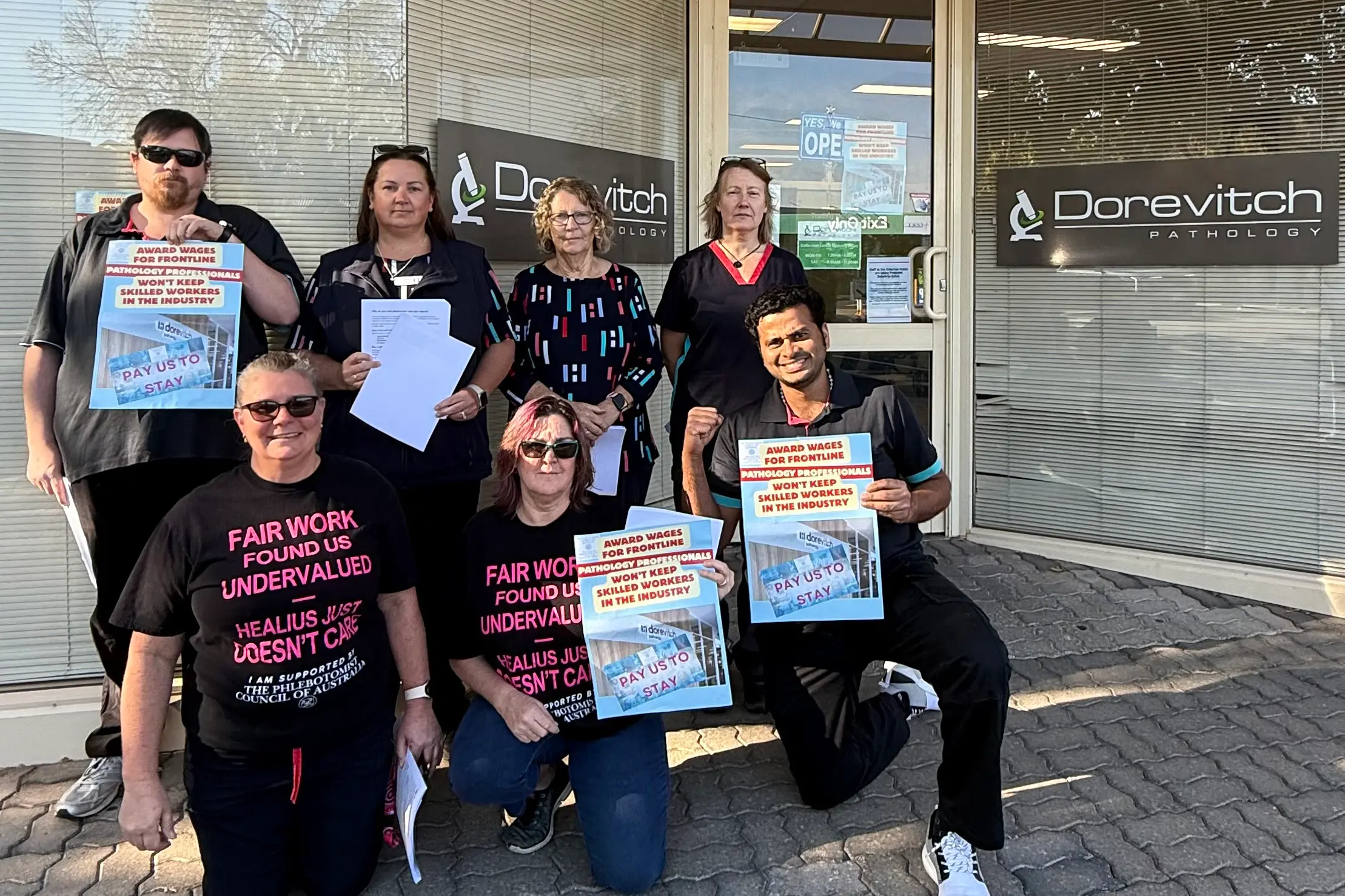
A majority of Dorevitch Pathology staff members at the Wangaratta Ovens Street collection centre took stop work action on Thursday morning in support of their ongoing bid for better wages and working conditions.
Staff members in centres across Victoria escalated their protected industrial action by striking from 9am to 12 noon, and will continue to maintain bans implemented a month ago limiting processing to one patient blood test per hour.
The employees’ representatives, the Phlebotomists Council of Australia (PCA), said Thursday's action was to show their employer they are not prepared to take on more work while being threatened with a return to minimum award wages.
PCA representative Bec Luxton said they have been negotiating in good faith with Dorevitch for the past year.
"During that time, the employer has put an unacceptable agreement to employees on three separate occasions, and workers have decisively rejected it each time," she said.
"This has occurred even after the employer offered lower-paid workers a sign-on bonus...an approach seen as a tactical attempt to pressure financially vulnerable employees into accepting a substandard deal."
Ms Luxton said pathology collectors were recently recognised by the Fair Work Commission as having been historically undervalued in the Gender Undervaluation Review of the federal award and that finding led to their reclassification and an increase to the base award wage.
"Workers say some employers are now attempting to use that award increase to absorb and offset the additional value of enterprise agreement conditions previously negotiated with employees, rather than genuinely improving wages and conditions," she said.
"Workers argue this sends a deeply unfair message: that although their historic undervaluation has now been formally recognised, they are still expected to take on more
work for minimum rates of pay."
Ms Luxton said Dorevitch, which is the Victorian branch of the national Healius brand, recently reported a 3.8 per cent increase in group revenue to $688.1 million, with pathology revenue growing 3.5 per cent, which staff say makes the company’s position even harder to defend.