
PHOTO
Home to around 200 species of birds, the Warby Ranges are recognised as a hotspot when it comes to birdwatching, attracting interest from around Australia and even internationally, with drawcards being the Turquoise Parrot, Swift Parrot, Regent Honeyeater and other local icons.
With such an impressive array of species and regular scouring from keen-eyed bird enthusiasts, it’s hard to imagine adding ‘new’ (or previously unrecorded) species to the list, but as of this week, that’s exactly what happened!
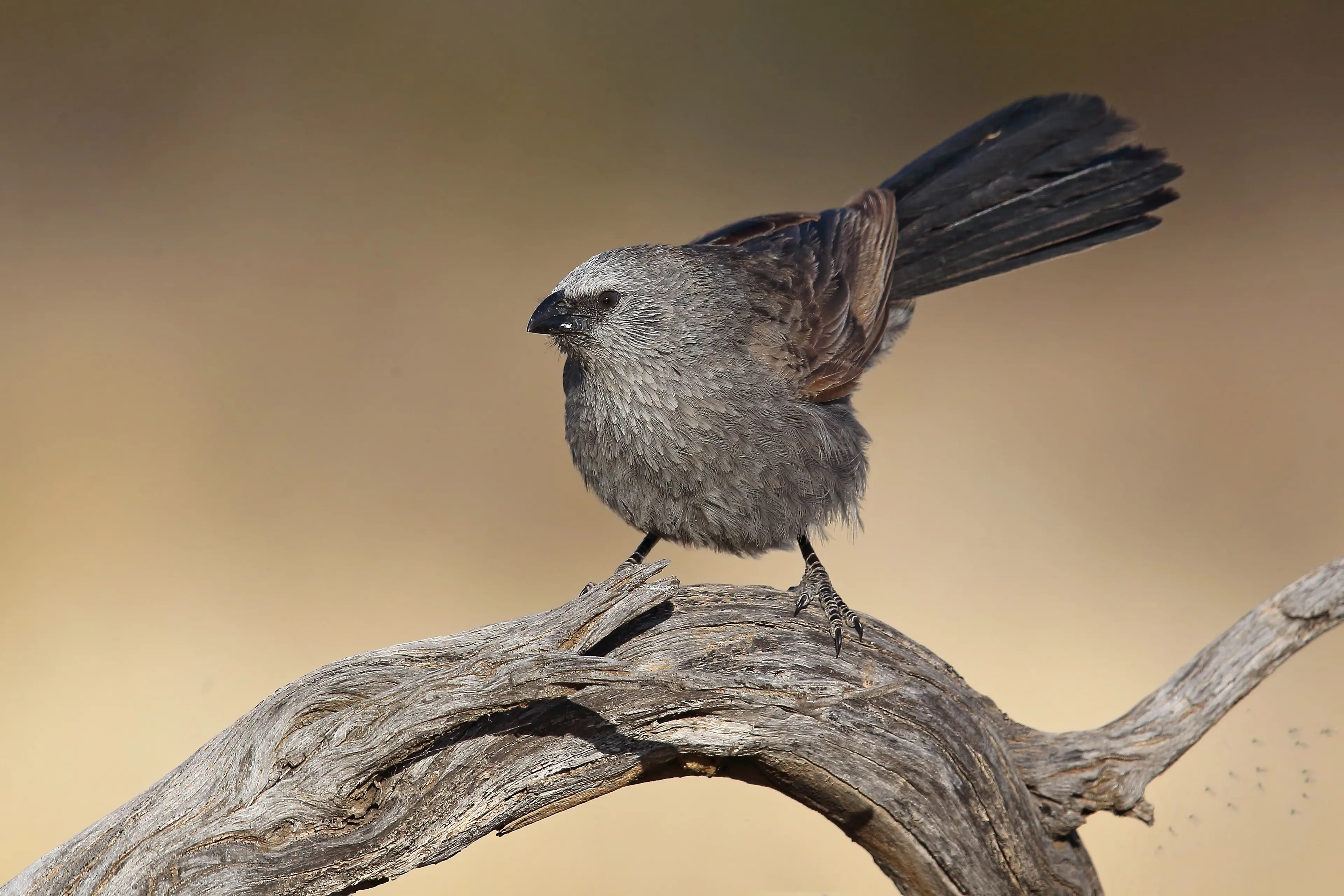
A tip-off from a friend led to the sighting of a mob of Apostlebirds – a species never before seen in or around the Warbies, with the closest groups known to occur on the northern parts of the Boorhaman plains near Brimin and on the outskirts of Rutherglen.
Here, they occur in remnant dry open box eucalypt and native pine woodlands, which is their preferred habitat right throughout their south-eastern Australian range.
In these areas, they use habitat on roadsides and nearby farmland as this is often the only place where suitable habitat exists.
It is puzzling then to think that a group of birds has travelled from somewhere (exactly where may forever remain a mystery) to occupy a different landscape on the western fringe of the Warby Ranges, however the birds are occupying native pine (a common thread) and plantation ironbarks among lightly timbered remnant woodland.
Apostlebirds are distinctive birds and easy to recognise.
They are a medium-sized dark grey bird with a short strong bill, brown wings and black tail.
They are normally seen in groups, often on the ground, and belong to the group of birds known as ‘mud-nesters’, which includes White-winged Choughs and Magpie-larks. They are noted for their communal lifestyle and their bowl nests constructed of mud and plant fibres.
Their habit of perching in close sitting groups is what has given them their name, Apostlebird.
They are also known as the 'Happy Family' as they live in constant noisy groups of 12 or more.
Their call is a rough, scratchy, discordant: ‘ch-kew ch-kew’ or a nasal ‘git-out’ when disturbed.
They forage on the ground in groups, often in association with White-winged Choughs, and they characteristically allow a close approach.
Apostlebirds usually eat seeds and vegetable matter, insects and other invertebrates though sometimes they prey on small vertebrates such bas skinks.
Apostlebirds are cooperative breeders.
Non-breeding family members assist with the rearing of young birds and the helpers are generally previous seasons young.
All members of a group assist with nest building, as well as feeding of nestlings, while only the adults usually incubate the eggs.
More than one female may lay eggs in the same nest.
While many eggs may be laid, usually only four nestlings will survive to fledge, with numbers possibly restricted by the size of the nest.
Two broods may be raised in a season.
Who knows what the next new species might occur in the Warbies?
This current winter, with barely a frost, mild temperatures and heavy rains is a sure sign that our climate is changing and with this could come a number of unexpected arrivals.