PHOTO
70535.0
Cuckoos are typically spring-summer visitors to the North East, arriving from late winter, breeding through the spring period and departing by late summer.
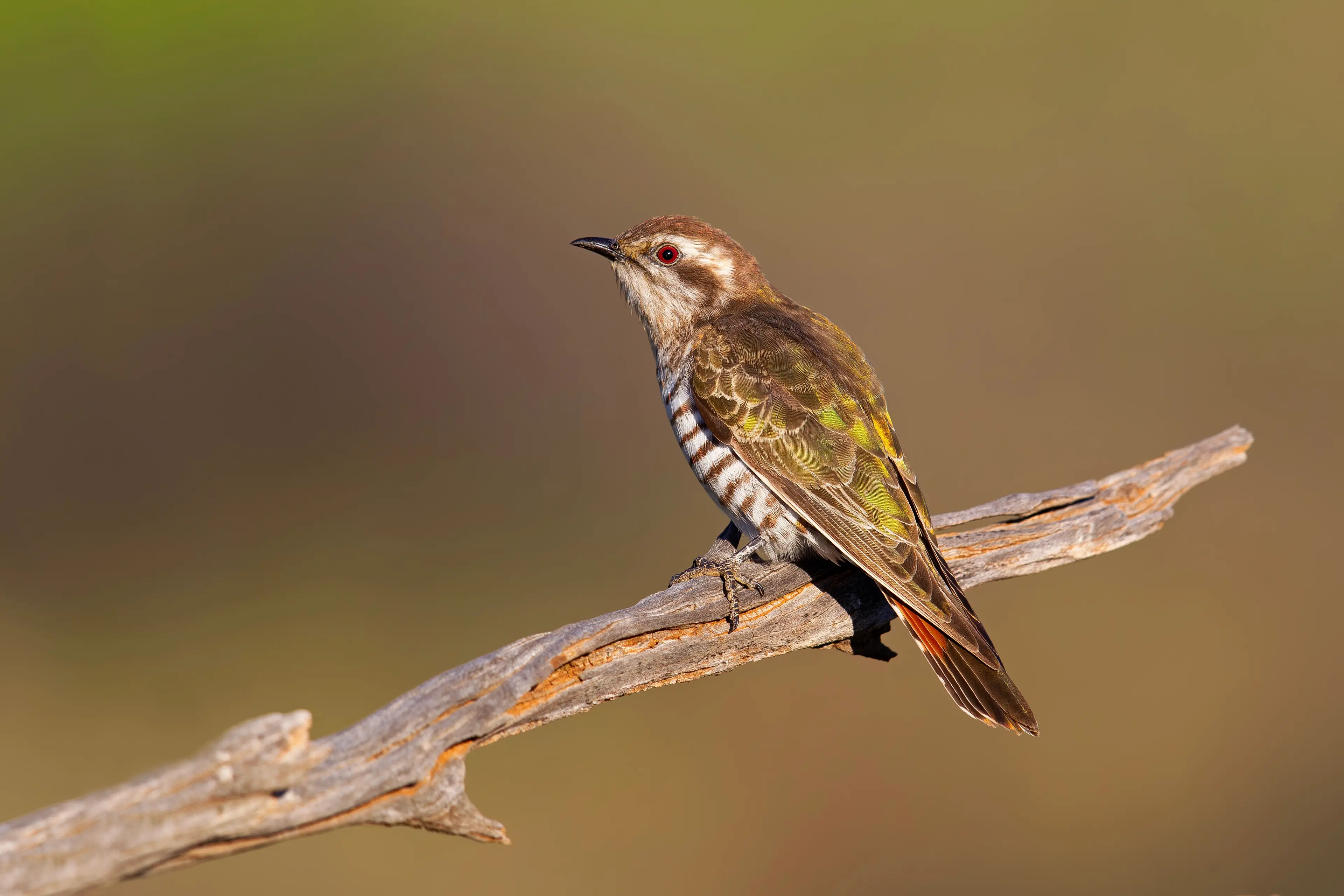
However, earlier this week, sightings of Horsfield’s Bronze-cuckoo in the region were noteworthy and stimulated discussion for this week’s column.
This attractive little bird, a little larger than a honeyeater, migrates south from parts of inland and northern Australia.
Their camouflaged colouring and intricate patterns, as well as their habit of concealing themselves amongst foliage, means they are generally much less conspicuous and harder to see than our larger cuckoo species such as the Fan-tailed and Pallid Cuckoo.
They do, however, give very distinctive and at times monotonous calls, which is often the best way to locate them.
As the breeding season approaches and these birds are keen on establishing a territory, males can sing persistently from a favourite perch, day and night, especially on moonlit nights.
They give a plaintive mournful whistle, similar to the closely-related Shining Bronze-cuckoo, yet there are key differences between the two that allow them to be readily identified.
The call of the Horsfield’s Bronze-cuckoo is a descending ‘tseeeeuw, tseeeeuw’ repeated many times, but they also give a high-pitched chirruping call as well.
The Horsfield’s Bronze typically broadcasts its call from an exposed branch high in a dead tree, but at other times they are intent on foraging among shrubs and the eucalypt canopy and keeping out of sight.
The main call of the Shining Bronze-cuckoo is a series of high-pitched whistled notes that rise (as opposed to fall) in sequence before ending with a descending note.
Unlike the Horsfield’s, the Shining Bronze calls mostly from a well-concealed perch – typically a leafy branch high in a living eucalypt.
As with all cuckoos, Horsfield’s Bronze-cuckoos are insect eaters and they primarily feed on hairy caterpillars gleaned from the ground, from grasses and herbs, and from shrub and tree foliage.
It is characteristic behaviour for them to patiently sit and wait while scanning nearby vegetation for any signs of caterpillar activity.
Upon seeing a prey item, they pounce on it from above and immediately bash it on the ground, a nearby rock or branch, to kill the caterpillar quickly before potentially being stung (by species such as Cup Moth Caterpillars).
In general, Horsfield’s Bronze-cuckoos are found in more open habitats such as forest edges and treed farmland.
All of our cuckoos are nest parasites relying on a host species to rear their young.
Horsfield’s Bronze-cuckoos select small insect-eating bird species as their hosts, typically those that build dome-shaped nests such as fairy-wrens, thornbills and gerygones, but also some open cup-shaped nesters as well, such as robins and honeyeaters.
The cuckoo lays its egg in the nest and removes one of the host’s eggs.
The cuckoos egg is the first to hatch, after which it instinctively forces the other eggs and chicks out of the nest.
The cuckoo chick then receives the sole attention and care of its ‘foster parents’ until it leaves the nest and for a period thereafter until it is independent.