PHOTO
70533.0
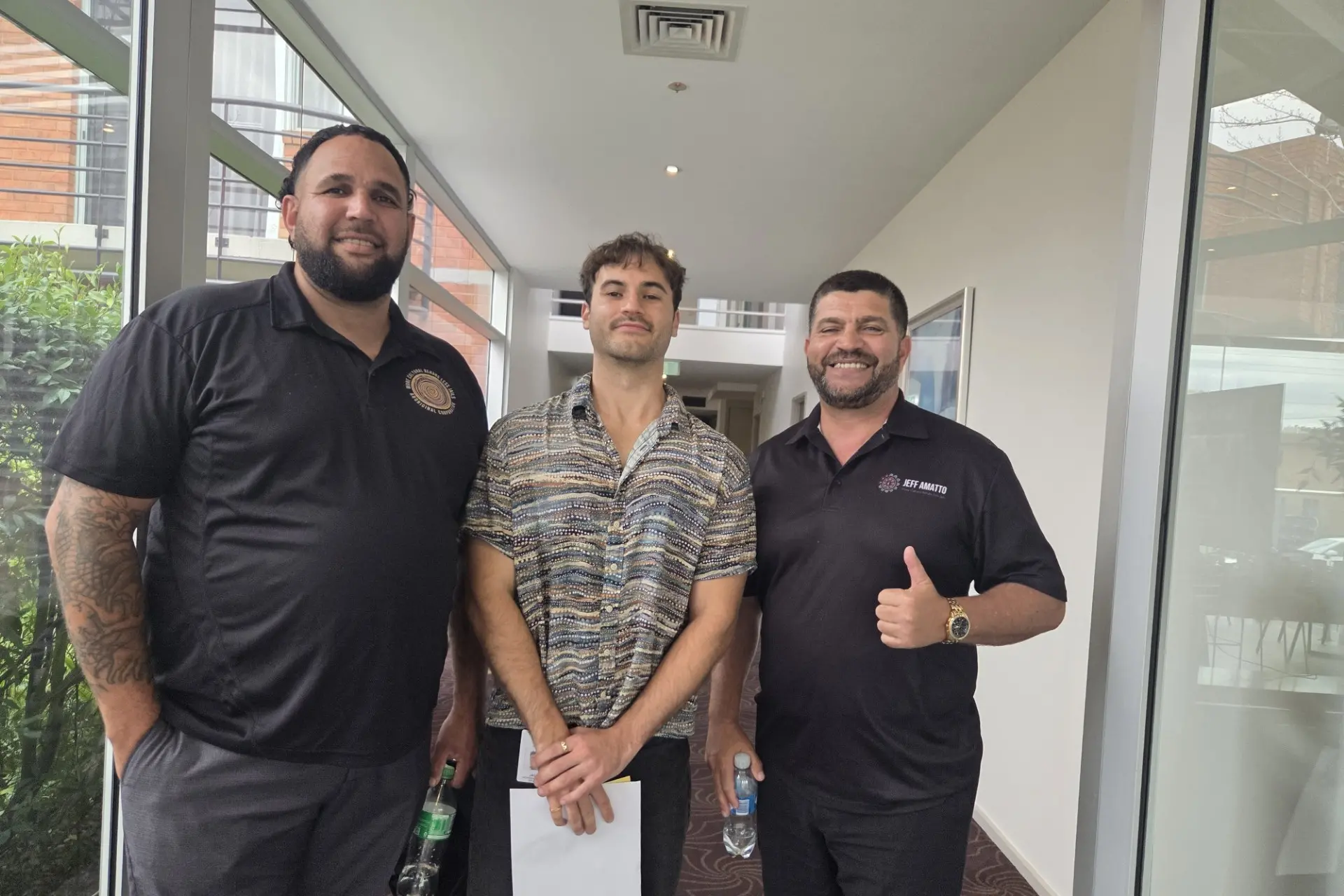
Proud Waradjuri man, Jeff Amatto, was an inspirational speaker at the Gateway Hotel in Wangaratta on Monday 15 June in an event hosted by the local Mungabareena Aboriginal Corporation and attended by representatives from a range of health and welfare services.
Mr Amatto spoke about his personal journey after growing up in a community where alcoholism, violence, and prison were normalised.
It was only when a parole officer told him prison was not working, and encouraged him to try a program that reconnected him with culture that he was able to build a new sense of normality - one grounded in belonging.
He realised, “We can’t get well in a jail cell.”
Mr Amatto said if an Indigenous person commits a crime in the morning, they will have a bed before lunchtime but, if they seek help to break addictions, there is nothing available for weeks.
“If it was half as easy to get help we’d start to close the gap,” he said.
When Mr Amatto was in a stable relationship, working full-time and able to feel a sense of pride about what he had achieved, he started being invited to speak to different communities and created ‘More Cultural Rehabs Less Jails!’
As well as assisting many individuals in overcoming their addictions and moving into healthier, culturally-connected lifestyles, Mr Amatto has helped facilitate the development of rehabilitation programs, men’s groups, and phased transition programs to move out of the prison lifestyle ultimately into full-time employment.
He was accompanied by another Waradjuri man, Kenny Everson, whose participation in Mr Amatto’s programs have enabled him to turn his life around from prisoner to becoming a community leader working with other men to break the intergenerational cycles of trauma and abuse.
Both spoke of the challenges in engaging with men who are caught in the cycles of addiction and imprisonment but believe they are able to make these connections because of their lived experience, sharing their stories and real-life experiences rather than relying on textbooks.
Mr Everson said the first step in breaking free of the cycles is to connect with culture and Mr Amatto explained how this had given him a sense of belonging and self-esteem.
“It is mob healing mob,” Mr Amatto said.
Helping individuals break free of the cycles of dependency and abuse also then benefits the communities and especially the children.
Mr Amatto said his children can “see Dad being a good person.”
His programs have achieved measurable outcomes such as improved retention rates in schools with attendance of Indigenous students at Wellington High School, NSW, increasing from 38 per cent to 94 per cent.
Mr Amatto emphasised that early intervention was very important because “it is easier to guide young men and women than fix them when they’re broken.”
However, one of the comments from the audience was everyone knew early intervention was the most effective approach but there was still inadequate government support.
Mr Amatto’s programs receive no government funding although he has created strong partnerships with government networks.
Local services represented in the audience included the Centre Against Violence (CAV), Victorian Aboriginal Child and Community Agency (VACCA), and Northeast Health Wangaratta (NEW), as well as parole workers, drug and alcohol support workers, and interested individuals.
Mr Amatto said it was important for services and community groups to work together and build cultural connections to bring about positive change.