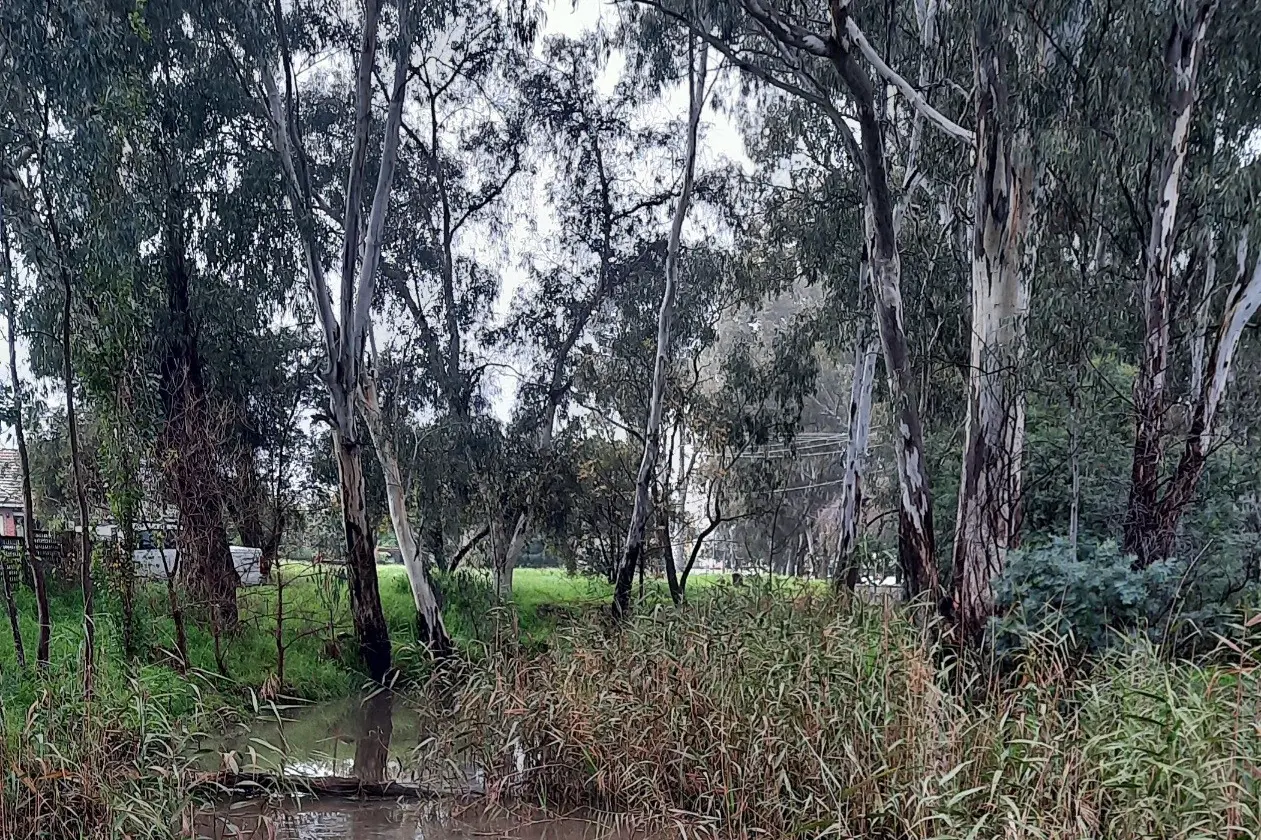
Five years ago, One Mile Creek was covered in a slew of litter.

But clean-up efforts from local volunteers are offering a promising glimpse into its true potential.

Andy Kimber said the Clean Up Wangaratta group, a sub-branch of Wangaratta Urban Landcare and Sustainability Group, have not only been important in the revitalisation of the creek's ecological health, but also in preserving a beloved community asset.

“The community regards waterways as sacred,” Andy said.

Driven by a small group of Clean Up Wangaratta volunteers like Andy, rooting out the rubbish has been a pivotal move in protecting the creek's ecosystem.

“Since the early 2000s there has been major and very successful revegetation of the banks of the creek by our council, but no real attempt to actually clean up the creek of rubbish before Clean Up Wangaratta started," Andy said.

“So, we offered to just get in there with a kayak, waders and long poles and remove the rubbish ourselves, with larger items pulled out removed by a Rural City of Wangaratta truck.

"The creation of a 12 plus network of One Mile Creek neighbours, who continue to clean up, will keep the process going."

Andy said over the five-year period, they've worked tirelessly to remove some 130 large bags full of miscellaneous bits of rubbish and the many larger furniture items plaguing the creek.

Locals may have paid notice to the signs along the creek which offers a snapshot of the restoration timeline, involving the likes of volunteers, Wangaratta Urban Landcare and Sustainability Group and council.

But Andy said there's a bigger story to tell.

"According to creek neighbours we met while cleaning up One Mile Creek, this waterway was ecologically quite healthy in the 1950s but then challenges were experienced," Andy said.

"Pollution from the mills/industry and increasing housing development affected the waterway negatively.

"The removal of much of the catchment water when the freeway was built in the mid-90s, which did reduce harmful flooding, obviously affected natural flows.

"Particularly in the drier months, therefore most likely preventing platypus and other native fauna from living there.

"Silt has built up with the accompanying reed growth which has prevented fauna movement up the creek such as fish from the Ovens and various small invertebrates which changes the food web."

Long-time resident Fran Kneebone has been watching the creek heal and is hopeful about the possible return of native wildlife.

"It would be nice to see the platypuses back... I haven't seen any for a long time," she said.

"I think it's a wonderful thing for people to take the time to make an effort to bring back that lovely nature."

Despite such immense progress, Andy said maintaining the drainage infrastructure facilities such as stormwater outlets and the Wareena Wetlands is not an easy task.

Moreover, there's one recurring item that ends up in the creek.

"Storm water issues and silting up with accompanying reed explosion, will continue to create problems which are common to many waterways in developing urban areas," Andy said.

"But the most obvious problem is the commonly dumped shopping trolleys."

Clean Up Wangaratta believes the best way to address stray shopping trolleys, or any large litter items for that matter, is to report it through the 'Snap, Send, Solve' mobile app.

“The more widespread use of the very effective SSS (Snap, Send Solve) app to report problems will be a big step forward,” Andy said.

Supplemented by the work of the Clean Up Wangaratta network, you can do your bit using 'Snap, Send, Solve'.

For more information, visit https://www.snapsendsolve.com/.