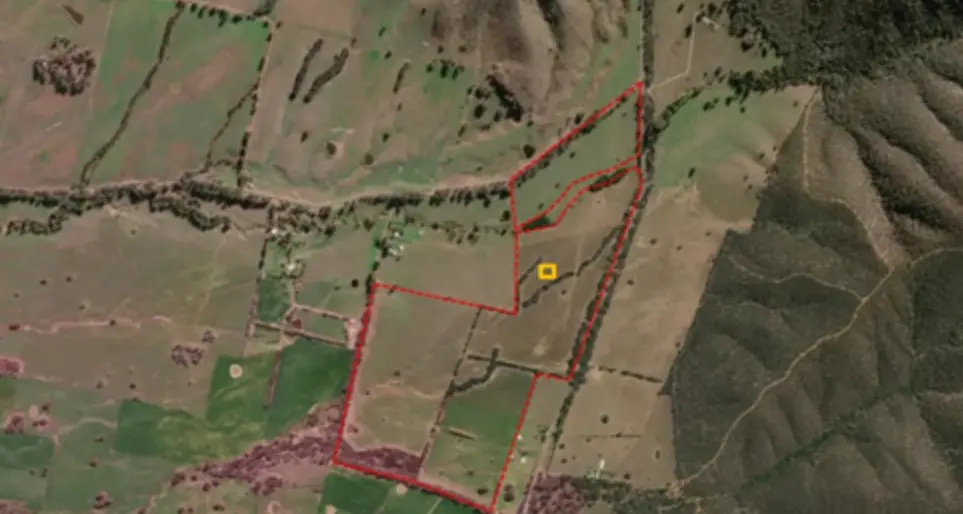
Well, its reared its head again, the call for building of Big Buffalo dam.
I would encourage the community to read the research: ‘Why building more big dams could be a costly gamble for future water security and the environment’. (https://phys.org/news/2024-10-big-gamble-future-environment.html)
That research shows that large dam projects are very expensive gambles, using the public purse.
It also demonstrates a failure to deliver promised economic benefits.
Consideration should also be given to the environmental, financial and social impacts.
Past lessons in Australia and worldwide indicate big dam cost overruns can be up to 825 per cent, with the average overrun being 120 per cent.
This casts serious doubt on such projects’ financial and social viability.
Is the ‘build more dams’ mentality misguided?
Graeme Taylor, Wangaratta
(Former CEO, North East Waterways)
Emergency Department layout needs a change
I am writing to draw urgent attention to the chaotic and poorly designed waiting area behind our hospital's Emergency Department.
The main issue is the waiting area behind the Emergency Department, where there are three beds in between a counter to book in ultrasounds and the hospital’s pharmacy.
Paramedics are walking backwards and forwards between the area trolleying patients while there are people sitting in a waiting, patients being assessed and hospital staff.
It’s not right for those who are waiting and it’s not fair for paramedics who constantly met with people in their way.
This has been an issue for a long time and the hospital should be receiving government funding to change this layout so it is more organised.
I recently went into the Emergency Department of a Melbourne hospital and it was an absolutely beautiful layout, they had couches for people waiting and plenty of space.
Like with repairing our roads, the government seem to only take the short stick approach to these fixes.
Russell Stone, Wangaratta
Victoria’s gun reforms fall short
The Alannah & Madeline Foundation welcomes the Victorian government’s decision to accept the majority of recommendations from the rapid review of firearms laws, but is deeply disappointed the lead recommendation around caps on firearm ownership was not accepted by the government.
The government has agreed to tighter eligibility requirements, mandatory health assessments, stronger screening processes and tougher penalties - measures which represent important progress toward a safer community.
However, it has missed a critical opportunity to strengthen public safety by ruling out a cap on individual firearm ownership.
Additionally, it has so far refused to join the national gun buyback scheme.
Introducing limits on the number of firearms individuals can own and supporting a national buyback scheme are among the most effective measures available to reduce firearm proliferation, limit theft and diversion risks, and prevent the accumulation of large private stockpiles.
Sarah Davies AM, CEO of Alannah & Madeline Foundation
Powering on with renewable energy projects
The Albanese Government is backing the biggest single boost to Australia’s main electricity grid with 19 new renewable energy projects that will supply enough cleaner, cheaper, and more reliable electricity for four million Australian households by 2030.
Supported through Tender 7 of the Albanese Government’s flagship Capacity Investment Scheme (CIS), the projects will deliver 7.8 GW of renewable generation and a further 7.9 GWh in battery storage through hybrid projects.
Across 19 projects, the wind farms, solar installations and battery developments will be built in NSW, Queensland, Tasmania, Victoria and South Australia to service the National Electricity Market (NEM).
The projects will unlock an estimated $17 billion in private investment and create an estimated 19,000 construction jobs.
Chris Bowen, Minister for Climate Change and Energy