PHOTO
Department of Industry, Science and Resources Eureka Prize for STEM Inclusion National Youth Science Forum Finalist team National Youth Science Forum Year 12 Program Participants
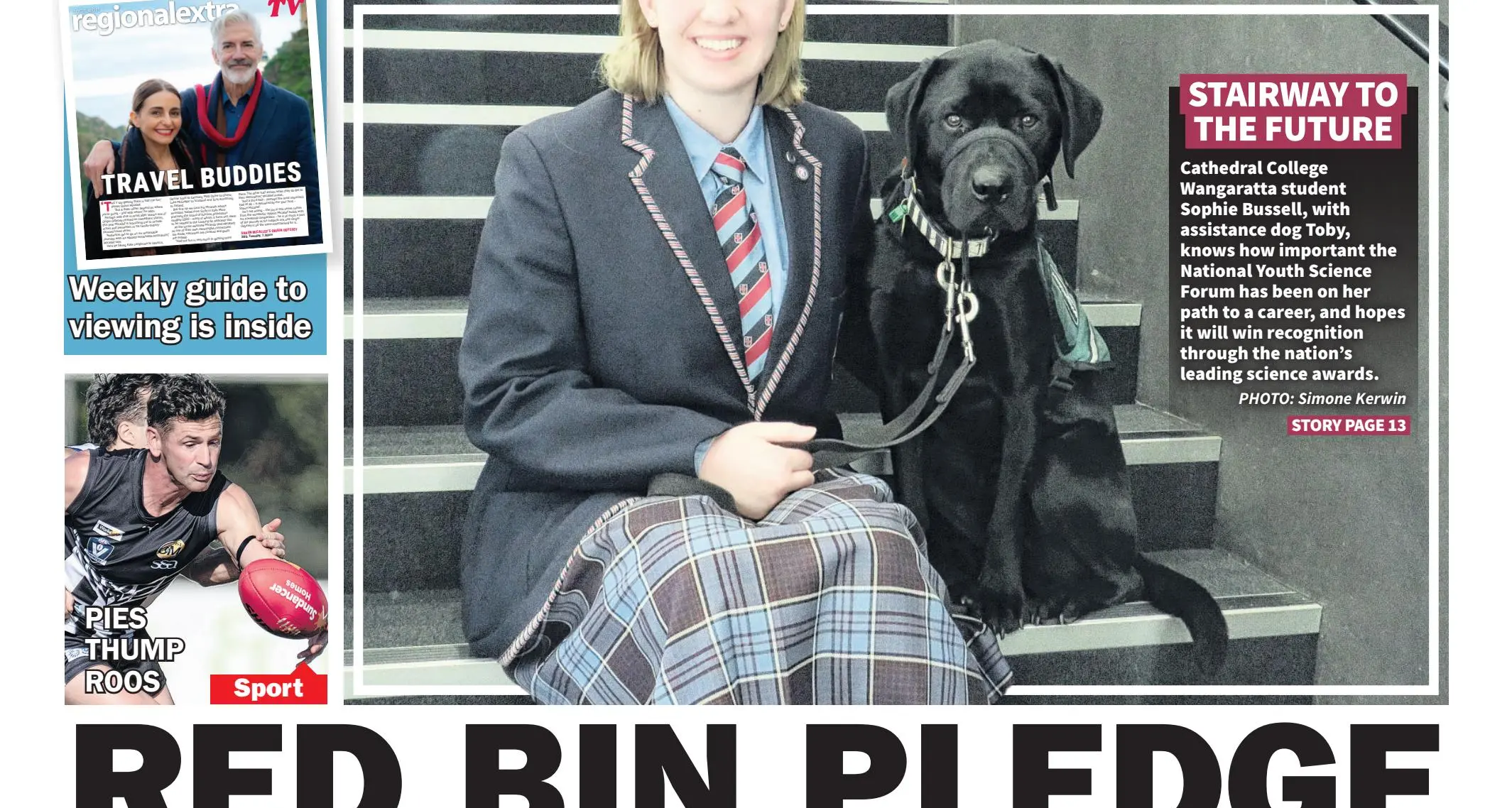
It didn't take much prompting for Carboor resident Sophie Bussell to lend her support to the National Youth Science Forum's (NYSF) nomination for one of Australia's leading science awards.
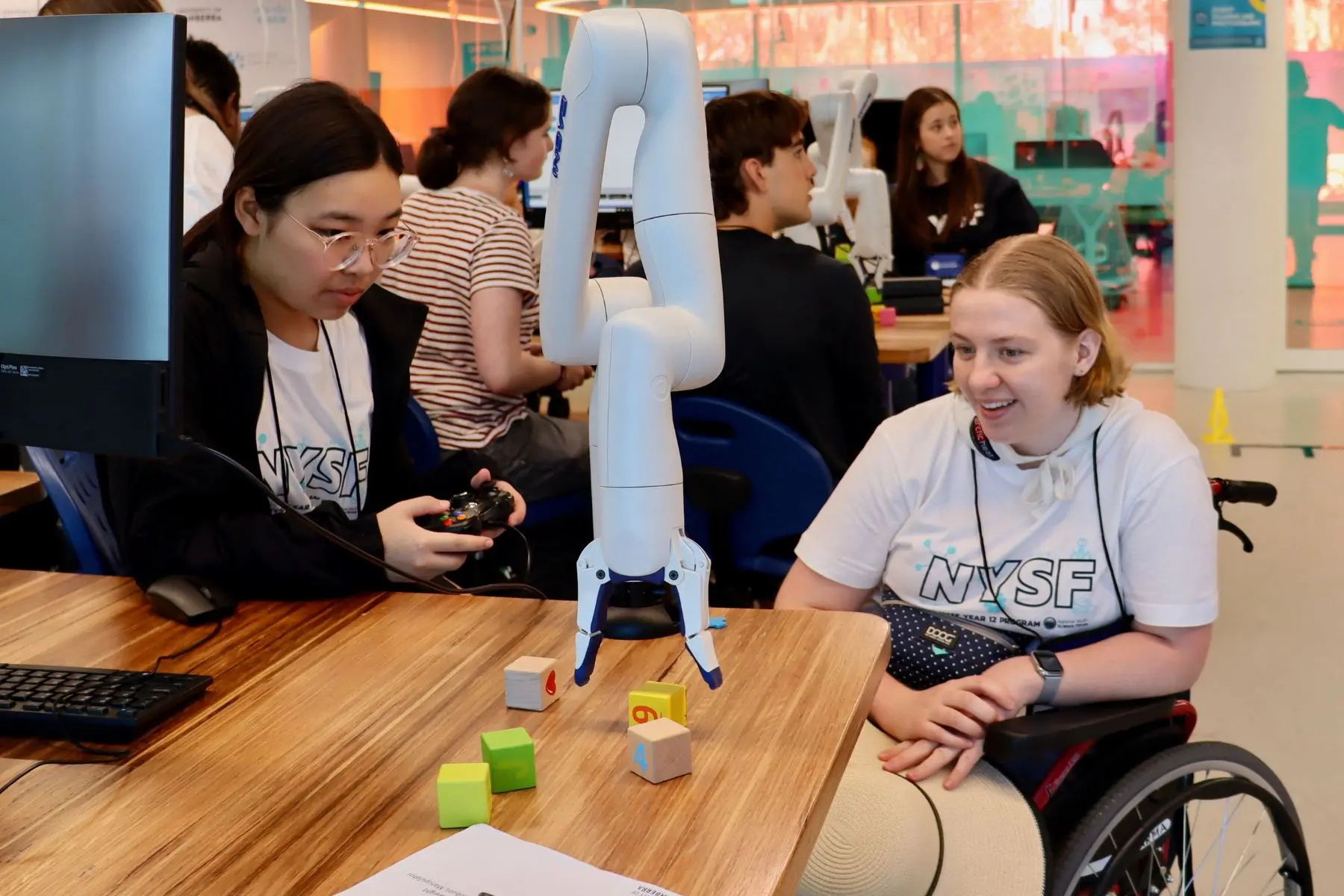
The 19-year-old Cathedral College student relished her involvement in the NYSF Year 12 Program held in Canberra in January, but even before she got there, she was aware of the forum's inclusive nature.
Sophie was set to attend the program at the start of 2025, but when illness stepped in (she lives with postural orthostatic tachycardia syndrome and had at the time also been hospitalised with functional neurological disorder), the NYSF held her place and enabled her to be fully involved this year.
"They were so amazing, and I don't think they talk themselves up enough - more people need to know about the NYSF and what they provide," Sophie said.
Considering her experience, Sophie was thrilled to lend her support, and to see the NYSF named a finalist in the 2026 Australian Museum Eureka Prizes, for the Department of Industry, Science and Resources Eureka Prize for STEM Inclusion.
This category of the awards recognises an initiative that has led to greater inclusion in science, technology, engineering and mathematics across the Australian community.
A national not-for-profit that has delivered STEM programs for more than 40 years, NYSF is a finalist for its flagship year 12 program - a nine-day residential experience that opens real STEM pathways to young people, particularly those from regional, remote, financially constrained and under-represented backgrounds.
Since 2021, the NYSF Year 12 Program has reached in excess of 3000 participants from more than 1000 schools across Australia, including 47 per cent from regional and remote communities, more than 60 per cent who identified as female or gender diverse, or as Aboriginal or Torres Strait Islander, and 65 per cent of whom said the program expanded their career options.
Sophie, who also received support from the Rotary Club of Appin Park Wangaratta to take part, credits the program with steering her in the direction of her planned future career in biomedical engineering.
"I've wanted to be an engineer from when I was about 12 years old," she said.
"I've always been good at maths and science, and I liked the challenge of solving problems, and always liked creating things with Lego and doing puzzles and things like that.
"Originally, I was looking at civil engineering, because I liked the idea of designing roads and bridges.
"When I ran into my medical problems, I didn't think I would be able to follow that path, and I was looking at occupational therapy as a career.
"But I heard people in the NYSF Year 12 Program discussing biomedical engineering, which involves designing medical equipment and prosthetics, and I had never heard anything about that.
"They showed me all the unis that are out there, and it really opened my eyes; it was like when you go overseas for the first time and realise there's a whole world out there.
"The program was life-changing, not just for looking at my career and what I want to do after school, but also showing another side of me.
"When you have a disability, it can be hard to think you can do things in the world, but they accepted me for who I am and it didn't matter that I couldn't stand for extended periods of time, or that I was in a wheelchair.
"I wasn't the girl with the assistance dog or the girl in the wheelchair, I was just Sophie who loved engineering.
"It showed me I could be whoever I wanted to be, and I don't have to be held back by medical conditions."
Sophie said the program exhibited "ultimate inclusion".
"It feels like you need a higher word than inclusion to describe it; even the students and 'staffies' (student staff volunteers) were amazing," she said.
"The program involved people from all over Australia and from different backgrounds; they try to choose people they think are going to get a lot out of it, and who will get to experience something they couldn't otherwise experience.
"They see so much more to every student than the students see for themselves."
Sophie loved the experience so much that she applied to be a student staff volunteer, and will return to assist with the 2027 NYSF Year 12 Program.
"I'm super-excited, and can't wait to help inspire students," she said.
Through the information and encouragement offered during the 2026 program, Sophie has her sights set on a place at Swinburne University to study biomedical engineering, after completing her year 12 studies this year.
"I can't wait to go into the next chapter of my life, and it all started with NYSF - everything opened up because of them," she said.
"I've put in the hard work, but they helped light those tiny sparks for me."
The 2026 Australian Museum Eureka Prizes will be announced on Thursday 3 September at Sydney Town Hall, with a livestream from 6.30pm at australian.museum/eurekaprizes