PHOTO
67775.0
A new national report has revealed a sharp rise in bulk billing across regional Australia, but local healthcare providers say the headline figures do not tell the full story in communities like Wangaratta.
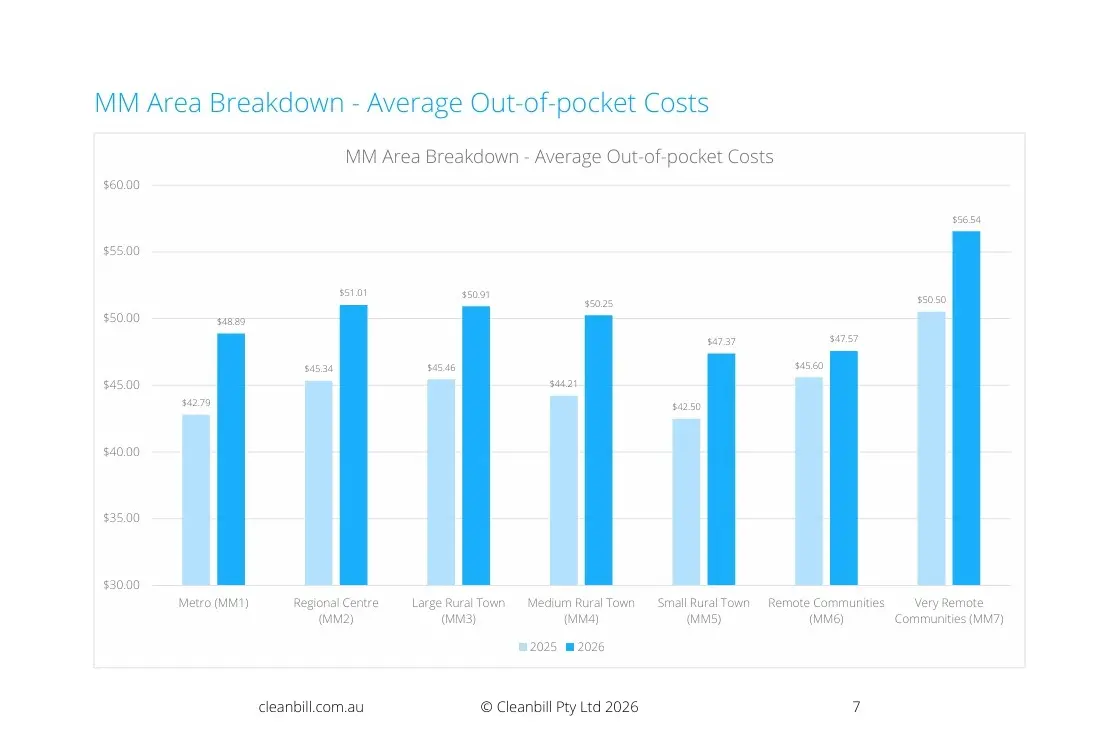
The Cleanbill 2026 Blue Report – Regional Breakdown found that recent government incentives have driven unprecedented increases in bulk billing, bringing many regional areas in line with metropolitan rates.
However, the report also highlights ongoing challenges, including limited clinic availability outside capital cities and rising out-of-pocket costs.
According to the report, the average out-of-pocket costs to see a GP have surged, costing $1.50 more to see a GP outside a capital city than within one.
Medical practices in Wangaratta say that while the increase in bulk billing is a positive step, barriers such as workforce shortages, travel distances and cost-of-living pressures continue to affect access to care for many residents.
Managing director at Northeast General Practice Services, Kim Ling Ching, said the Cleanbill report accurately reflects the "cost of living" crisis in their waiting rooms.
"While regional bulk billing parity is a positive headline, it masks a deeper struggle," she said.
"For many in Wangaratta, the choice isn't just about the gap fee; it’s about the cost of the fuel to get to the clinic and the inflation hitting their grocery bills.
"We are seeing a community that desperately needs bulk billing to remain a right, not a privilege."
South Wangaratta Medical Centre has always bulk billed concession card holders and children.
Ms Ching said since the commencement of the government’s November 2025 Bulk Billing Incentive changes, they have also participated in bulk billing relevant eligible Medicare services for Medicare-eligible patients where the incentive applies.
"We believe that a person’s financial situation should never be a barrier to essential healthcare," she said.
"When patients have accessible local care, it leads to better preventive health and management of chronic conditions, ultimately benefiting the entire Wangaratta community.
"Bulk billing is important for access, but it needs adequate, ongoing government funding to be sustainable.
"General practices are small businesses and are facing the same cost pressures as everyone else - rising wages, fuel, utilities, rent, and medical consumables.
"Those costs have increased significantly, while Medicare rebates have not kept pace.
Ms Ching said there is also a structural issue with the Medicare model.
"It is largely based on time-based consultation items, which tend to favour shorter, higher-volume consultations," she said.
"In reality, many patients require more complex, longer consultations - particularly with chronic disease, mental health, and an ageing population.
"Providing that level of care properly takes time, and the current funding model does not always reflect that.
"We are doing everything in our power to manage this balance, but the line between staying accessible to the community and remaining a viable business is getting thinner every day.
"We need a funding model that recognises regional GPs as the backbone of the health system, not just a line item in a budget."
Gateway Health CEO Trent Dean said at their Wangaratta medical practice, they welcome any shift that improves access to primary care, particularly in regional communities where barriers are often more pronounced.
“The reported increase in bulk billing across regional Australia is encouraging and reflects the importance of targeted policy settings,” he said.
However Mr Dean said in our local context, the picture remains more nuanced.
“While incentives can support increased bulk billing, access continues to be shaped by workforce availability, service distribution and the realities of delivering care across large geographic areas,” he said.
“For many people, distance, transport and service availability remain just as significant as cost.
“At Wangaratta Medical Practice, we have made a deliberate commitment to affordability.
“In the last financial year, 92 per cent of our consultations were bulk billed.
“We aim to maintain high levels of bulk billing wherever possible and keep gap payments low, generally below the local market rate.
“Where patients are unable to afford a gap, we apply discretion to help ensure cost is not a barrier to care.
“We also recognise that out-of-pocket costs, even when modest, can impact people differently depending on their circumstances.
“For some in our community, even small increases can influence decisions about when and whether to seek care.
“While recent data reflects some positive trends, it also highlights the ongoing structural challenges in regional health.
“Addressing access requires more than funding settings alone.
“It requires sustained investment in workforce, service models and locally responsive care.
“Our focus remains on ensuring people in Wangaratta and surrounding communities can access the care they need, when they need it, regardless of their financial situation.”