
PHOTO
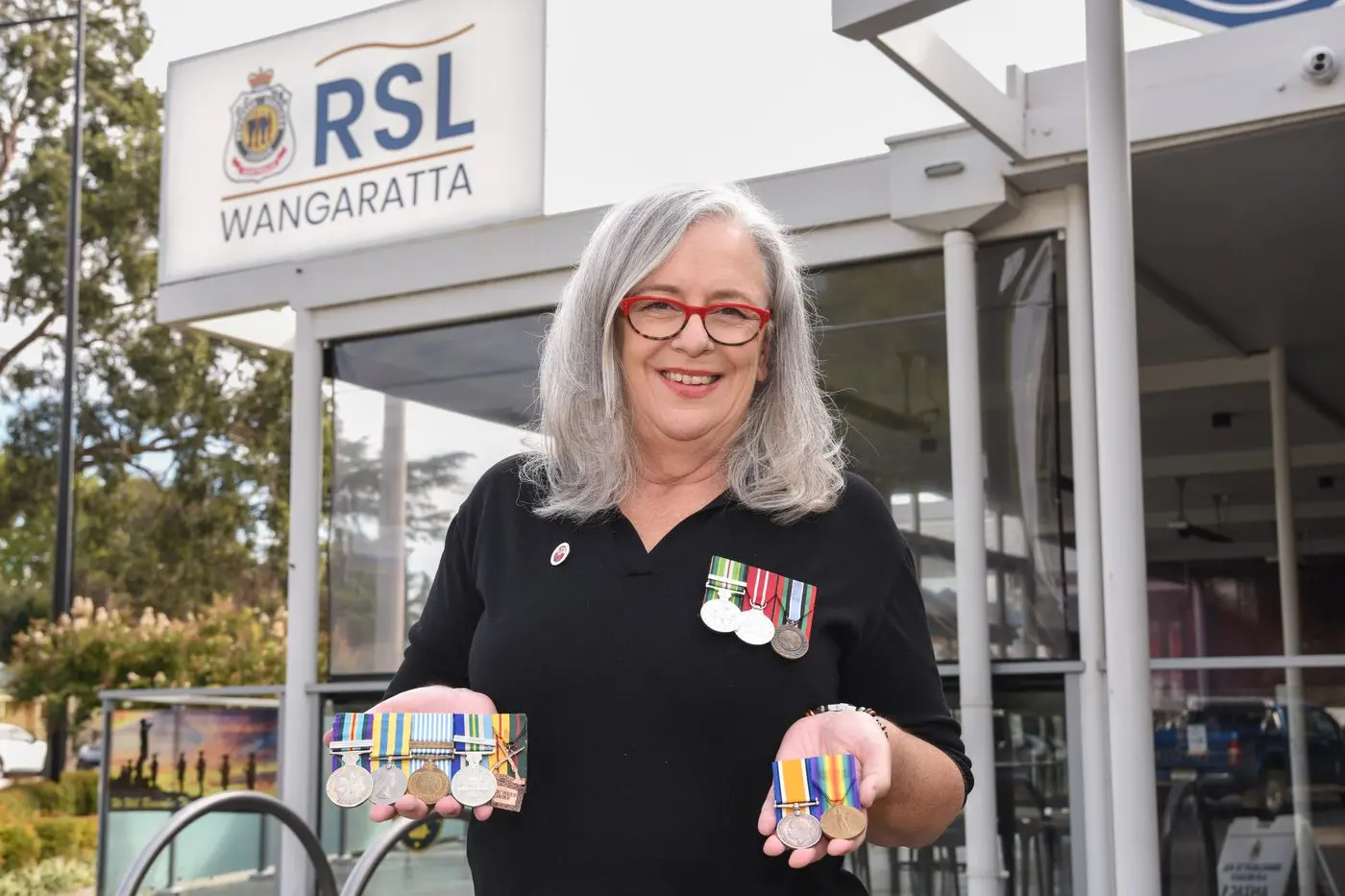
AS people prepare to pay their respects to ex-service men and women on ANZAC Day next week, former local Australian Defence Force (ADF) public affairs photographer Robyn White knows only too well the horror that conflicts can deliver.
During her service from 1991 to 1999 she encountered some uplifting moments behind the lens of her camera and was the first person to come through Karpooka Army Base into public affairs and the first woman as a combat photographer.
There were also some dark times such as the Kibeho massacre in Rwanda in April 1995 where about 4000 displaced persons were killed by the Rwandan Patriotic Army.
She joined a peace keeping mission as a world photographer and videographer, alongside a Reuters media reporter, to document the aftermath of the conflict, and the vision is chilling.
It was to be the most difficult time in Ms White's ADF career, as years later she was medically discharged due to her post traumatic stress disorder from the event.
"It was pretty horrific. Australian personnel consisted of medical, infantry and I was there as the cameraman for the world," she said.
"Apparently the world's media were upset because Reuters had the exclusive on the incident and they questioned what type of imagery would they get from an Army photographer.
"It was a really horrible place and there were just bodies everywhere - I had never seen and I don't think many soldiers could say they had seen that many people on the ground at one time."
During Ms White's service she was part of some other notable historical events including the return of The Unknown Soldier from France in 1993, who now lies at the Australian War Memorial in Canberra.
She would go on to receive a Damien Parer tri-service defence award for public affairs for the photo of The Unknown Soldier being carried by six Regimental Sergeant Major equivalent from the three services with the French soldiers and the colour party saluting, surrounded by a foggy backdrop.
Ms White's 21-year-old son Jackson Bird is the fourth generation of the family to serve in the military and is currently with the Australian Army posted in Darwin.
A lot of Ms White's job was to photograph positive PR about the ADF but one job that took a turn for the worse was when she was aboard a 50-year-old Douglas DC-3 aircraft when it was ditched by the pilots into Botany Bay shortly after take-off the day before ANZAC Day in 1994.
The cause of the crash was determined to be a power loss in the aircraft's left engine due to an inlet valve being stuck in the open position.
Ms White was aboard the plane that was destined for Norfolk Island where she was going to photograph Victoria Cross recipients.
"I lost all my camera gear and I was jokingly told off for not getting a photo because a photographer from The Australian managed to get a photo of inside the plane when it was in the water," Ms White said.
"The Australian photographer panicked a bit after taking the photo and he wanted to get out of the plane and I was stuck in my seat, struggling to get out.
"The plane floated for about 15 minutes and looking back it was funny because we were worried about it crashing prior to take-off due to the age of the plane and the eight-hour trip we were about to travel.
"After the crash I was in shock and all I could think about was losing my two sets of camera equipment and having to fill out a loss and damage report and getting into trouble."
Ms White's connection to the defence force came at a young age with her father Reg Charles White completing national service from 1947-48 and in 1951 in Korea and she will be thinking about him on ANZAC Day, as they both used to share the memories of the day.
"I always used to come home and march with Dad on ANZAC Day - it was a special thing for us," she said.
Her grandfather, Reg John White served in World War I, and due to the effects of war such as being gassed, he died at the age of 50, leaving Robyn's grandmother with 11 children.
This was a similar story to so many others who served in the Great War, a legacy that many Australians, and no doubt Ms White, will be paying tribute to again, next Thursday.
"It's important for people to pay respect to those who served because it's a big deal," she said.
"Young people see the old diggers marching but they don't see them as 18, 19, or 20-year-olds, which is the age they are, I'd really like them to think about that."
ANZAC Day services will be held in Wangaratta at dawn and 11am on Thursday, April 25 to commemorate Australian service members.
To attend the dawn service, members of the public must arrive at the Cenotaph at 5:45am, with the service commencing at 6am and concluding at 6:25am.
Veterans, wives, partners and their carers are invited to attend the Gunfire Breakfast at the Wangaratta RSL at 6:30am following the dawn service.
To participate in the march leading to the 11am service, assemble in front of King George Gardens (opposite RSL) no later than 10:20am for a 10:40am step off.
The march will conclude at the cenotaph for the main service to commence at 11am.