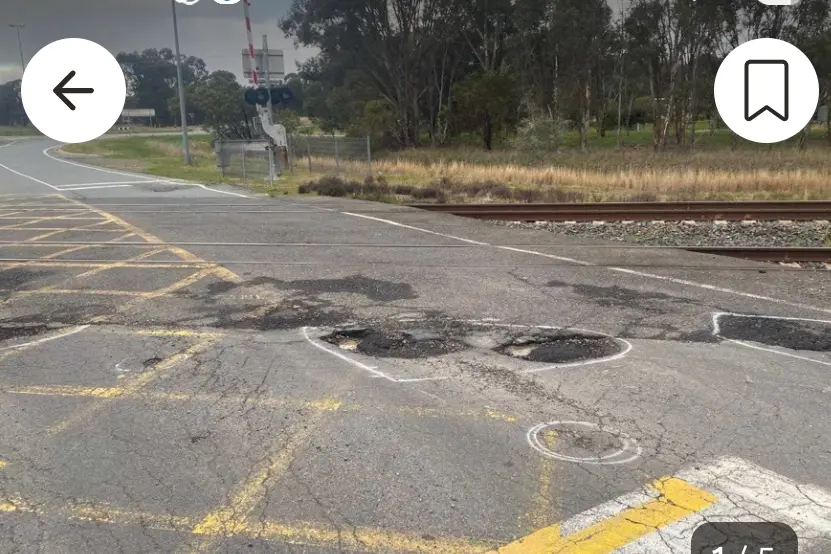
PHOTO
Wangaratta council currently spends about $18 million on the construction, maintenance and renewal of its road network, however, council reports funding from state and federal grants over the years has reduced while the costs of maintaining roads has increased.
Despite this significant investment, the size of the network, increasing construction costs and the impact of severe weather events continue to place pressure on available funding.
Council director of community and infrastructure Marcus Goonan said many of the roads that residents most frequently raise concerns about are arterial roads managed and funded by the Victorian government through the Department of Transport and Planning, not council.
He said it conducts regular inspections of its road network and repairs potholes that meet the intervention standards set out in its road management plan.
Council repairs potholes on sealed link (local access) and collector roads (between local and major arterials) when the hole exceeds 300mm wide and 75mm deep, with maintenance inspections required at least twice a year.
"Once a pothole reaches the required intervention level, it is prioritised and scheduled for repair based on the road classification and response times specified in the plan," Mr Goonan said.
The plan states a two-week repair time on link roads and four weeks on collector roads.
In cases where a defect is not due to be repaired in less than four weeks, temporary measures such as warning signage, erecting barriers, or painting the defect with a bright contrasting colours may be implemented at the time of identification to reduce the risk until repairs can be carried out.
Council also relies on community reports to help identify defects between scheduled inspections, while maintenance work is undertaken proactively.
"Dry weather, heavy rainfall, and flooding can create road defects faster than repair crews can address them, particularly across a large rural network," Mr Goonan said.
"In some instances, roads remain too wet for permanent repairs, meaning temporary repairs may not last as long as desired.
"Council must also prioritise repairs based on safety risk, traffic volumes, road hierarchy and the severity of the defect.
"Council understands the frustration potholes can cause and encourages residents to report defects as soon as they are identified.
"While council cannot immediately repair every defect across more than 1500km of local roads, crews work continuously to inspect, prioritise and repair hazards in accordance with the road management plan."
Mr Goonan said council also continues to advocate strongly for greater investment in state-managed roads, which account for many of the road condition concerns raised by the community.
To report a road defect and for a quick, trackable fix, take a photo and submit a request using the Snap Send Solve app.