PHOTO
72917.0
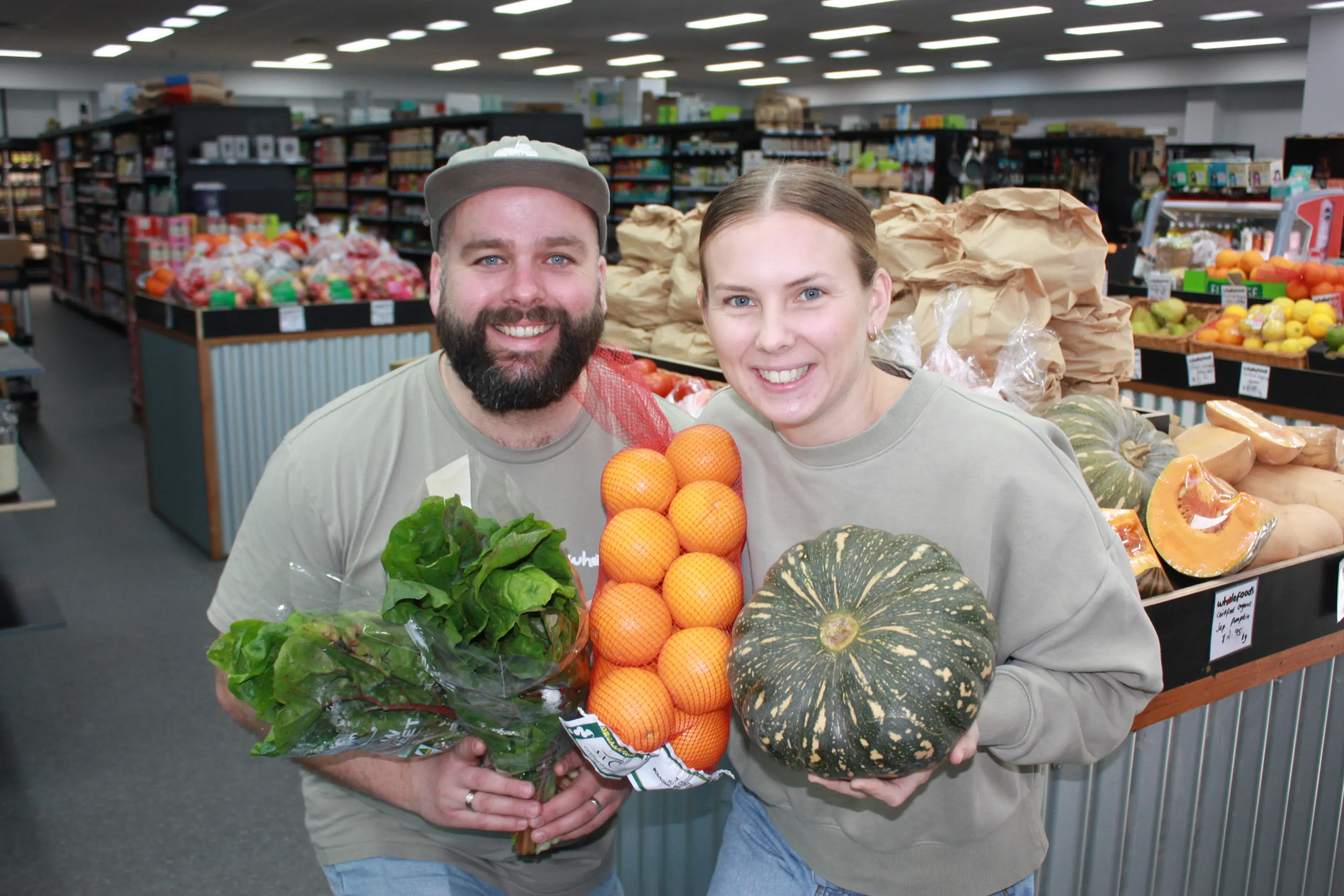
As Wangaratta families look for ways to stretch household budgets through winter, Wholefoods Wangaratta owners Kacey and Jerry O’Callaghan suggest shopping seasonal produce to make a difference at the checkout, in the kitchen and for the environment.
Winter in the North East brings a range of hearty produce to the table, from pumpkins, leafy greens and brassicas to citrus, kiwifruit, apples and pears.
Seasonal guides for Victoria also list winter staples including cauliflower, cabbage, Brussels sprouts, potatoes, leeks, parsnips, celeriac, mandarins, navel oranges and herbs such as rosemary, sage and thyme.
Jerry said the timing of winter produce often lines up with what people naturally need during the colder months.
“With the shorter days and stuff, we need a little bit more vitamin C,” he said.
“Kiwi fruit and citrus are both super high vitamin C and that’s what’s available right now.
“It really aligns with what you need at the time.”
Citrus and kiwifruit are known for their vitamin C content, which supports immune function, while leafy greens and brassicas such as kale, cabbage and cauliflower provide fibre, folate and a range of minerals.
Root vegetables and pumpkins can also help build filling, warming meals without relying on expensive ingredients.
The O’Callaghans said buying in season can also help families get better value at a time when grocery bills and broader cost-of-living pressures are front of mind.
“When it’s in season, it’s always going to be at its best value,” Jerry said.
He said produce that had to travel long distances often carried extra transport costs, food can be nearly twice as expensive as it was when in season locally.
“Shopping in season, if you’re shopping basics, is always going to save you a dollar,” he said.
Kacey said the key was flexibility rather than trying to overhaul the family grocery shop all at once.
“Be flexible with your recipes,” she said.
“If it asks for broccoli and it’s not in season at the moment, swap it for something that is.”
That might mean using cauliflower, pumpkin, cabbage or potatoes in place of harder-to-find vegetables, or building meals around what is plentiful and well-priced that week.
For families unsure where to start, Kacey suggested making gradual changes.
“As we run out of something, we just replace that one item,” she said.
“Try a few bits of fruit, don’t overhaul everything at once.”
Eating with the seasons can also reduce a household’s environmental footprint.
Jerry said in-season produce generally requires less long-distance transport, helping cut food miles while supporting nearby growers.
“When you’re buying Victorian produce, it’s travelled less distance to get to your plate," he said.
“If you just try to make those choices in season, you are going to be working to be better in that space.”
The cherry on top is the flavour factor, Jerry said produce picked in its natural season was often fresher and more enjoyable to eat.