PHOTO
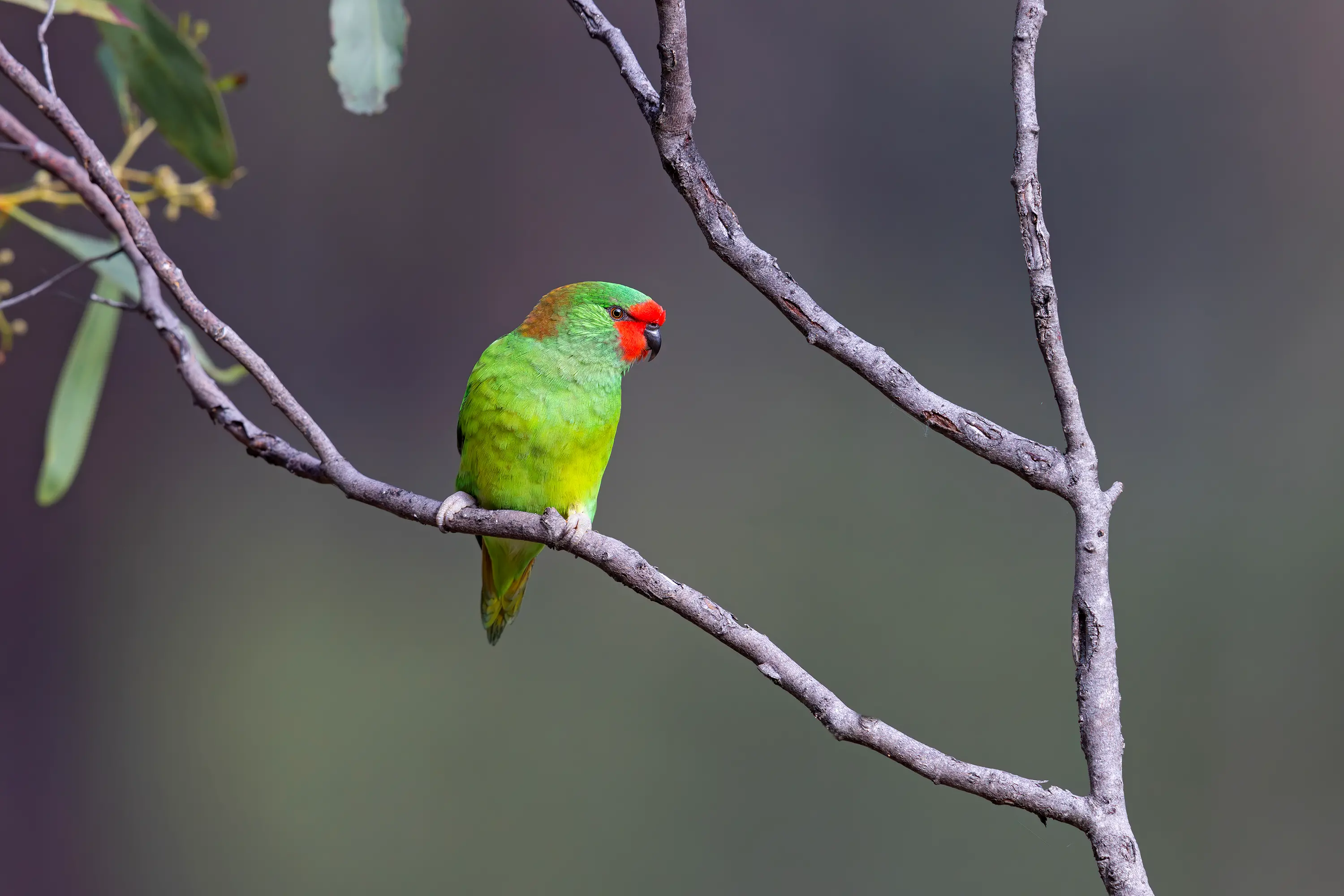
Parrots in Australia are often seen as bright and conspicuous birds, but the Little Lorikeet is a notable exception.
Their green plumage, small size and unobtrusive nature allow them to blend into the eucalypt canopy, making them hard to spot.
Typically, they are noticed only by their calls or when they flush from trees, often after being disturbed by other birds, or when they fly quickly overhead.
Similar to other lorikeet species, the Little Lorikeet primarily feeds on nectar, frequently visiting flowering eucalypts to consume pollen and nectar.
Their brush-tipped tongues are specially adapted for efficiently lapping up liquids while they forage skilfully—often inverted—among blossoms and foliage.
Additionally, their diet includes fruits, foliage insects, and galls, particularly during the breeding season when it is necessary to provide sustenance for their nestlings.
Little Lorikeets, like most parrots, form lifelong pairs and stay close even outside breeding season, often roosting and foraging together.
Flocks may gather at abundant food sources, sometimes joining other nectar feeders like Purple-crowned Lorikeets and small honeyeaters.
To avoid competition with large aggressive honeyeaters such as wattlebirds and friarbirds, they typically feed on the fringe of main nectar sources.
Little Lorikeets nest in tree hollows or branches high above the ground during spring and early summer.
Pairs may prepare nest sites by excavating rotting wood from a hollow spout.
In the North East, Little Lorikeets are usually found in forests and woodlands with flowering eucalypts, including ironbark, red gum and box, but they also visit urban areas with blooming trees.
When these aren't available, they feed on other nectar sources like mistletoe or migrate long distances to follow nectar supplies.