PHOTO
71199.0
A guided historical walk on Saturday 4 July will invite locals to look across the Ovens River and imagine Wangaratta in its earliest settlement days.
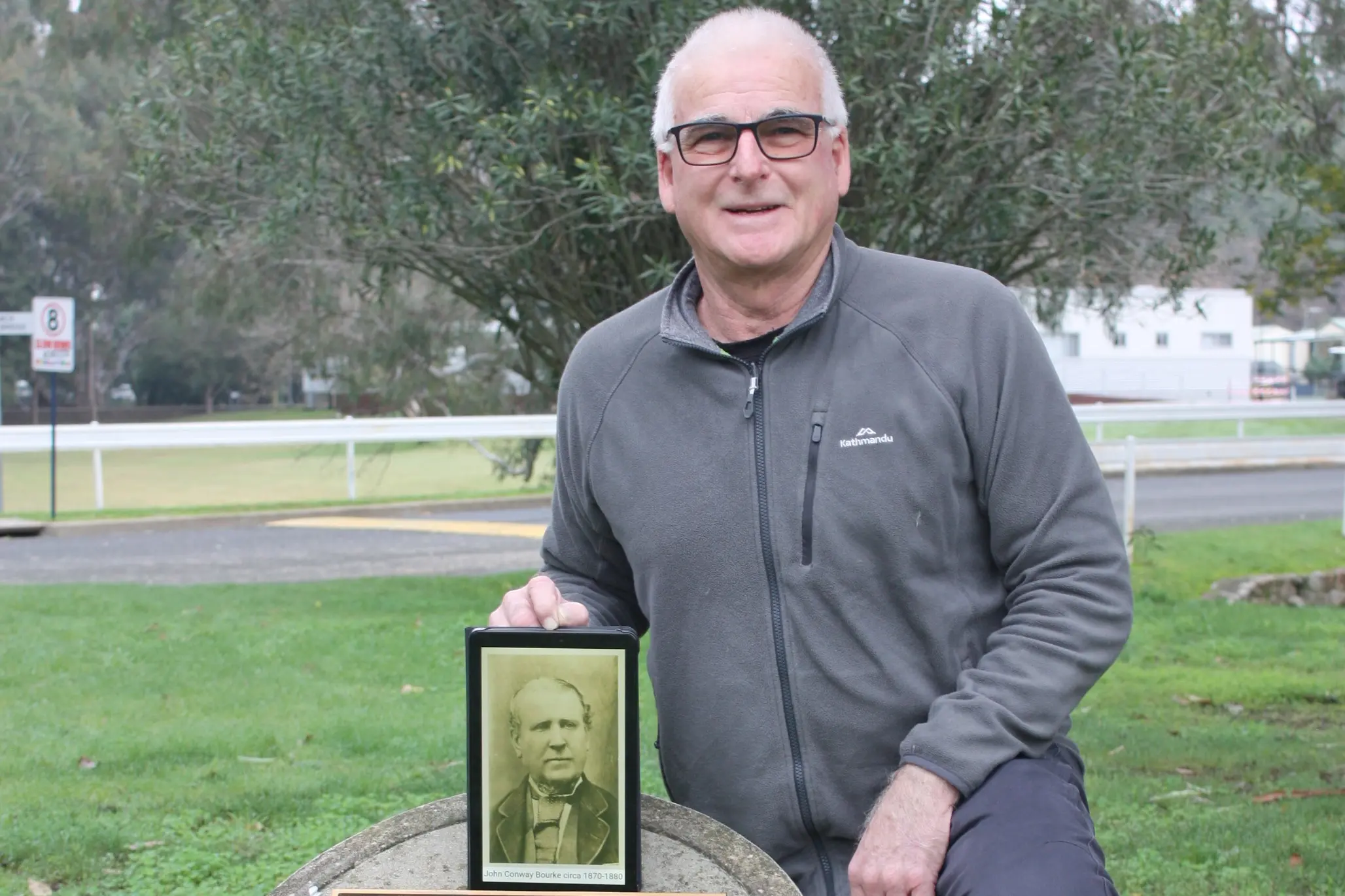
Led by Wangaratta Historical Society volunteer Phil Emslie, the walk will begin at Marmungun Rock in Apex Park at 10am sharp and is expected to run for about one to one and a half hours.
Phil said the walk would focus on “what happened on the other side of the river” during the first settlement days, including the people who lived there, where they came from and the places they established.
Among the stories will be that of Wangaratta’s early postal contractor, who began carrying mail on 1 January, 1838, when there was no white settlement between the Murray River and Melbourne.
“He was basically on his own and camping on rivers every night,” Phil said.
The route will also take in sites linked to Wangaratta’s earliest buildings, including Meldrum’s Wangaratta Hotel, believed to have been the first brick building constructed in the town, as well as other old buildings.
Phil will also speak about the punts and river crossings that predated Wangaratta’s bridges, including one operated by his ancestor John Crisp.
Crisp, who Phil believes was among the earliest permanent residents of the township, came from a family with convict links and had already established himself as a young cattleman before arriving in Wangaratta in the late 1840s.
At about 17, Crisp had his own property near Goulburn, and by 20 had formed a partnership with John Ford to bring 1000 head of cattle to establish a run, near where Wahgunyah stands today.
After later moving to Wangaratta with his wife Mary and a large young family, Crisp built near what is now Parfitt Road, a place which served as both a home and hotel.
He also put a punt across the river, not necessarily to compete with another operator, but, Phil believes, to help his family get around.
“I’ve got a feeling that it wasn’t to go into competition with the existing punt operator,” he said.
“It was more to save himself some money in getting six kids across the river to go to school.”
Crisp later bought the site of what became the Royal Hotel in Reid Street and accumulated several allotments around the town as Wangaratta was surveyed and subdivided.
For Phil, the walk is also a chance to restore attention to a figure he believes has been overlooked in Wangaratta’s story and share local history, much of which is family history for him.
“John Crisp has probably been largely forgotten about,” he said.
"It will be quite an interesting story for people who come along to the walk."
The walk will include stops near the old river course and a monument to the early mail contractor, where Phil said the river’s former path can still be seen in the landscape.
Unlike some of the society’s regular CBD walks, Phil's July walk will finish back at the starting point, with enough history in the Apex Park and river precinct to fill the morning.
The Wangaratta Historical Society runs guided historical walks on the first Saturday of each month, with different guides bringing their own areas of interest to the program.
Registrations can be made by calling Adrian Twitt at 0470 403 875.
The walk is free, with donations gratefully received by the Wangaratta Historical Society.