PHOTO
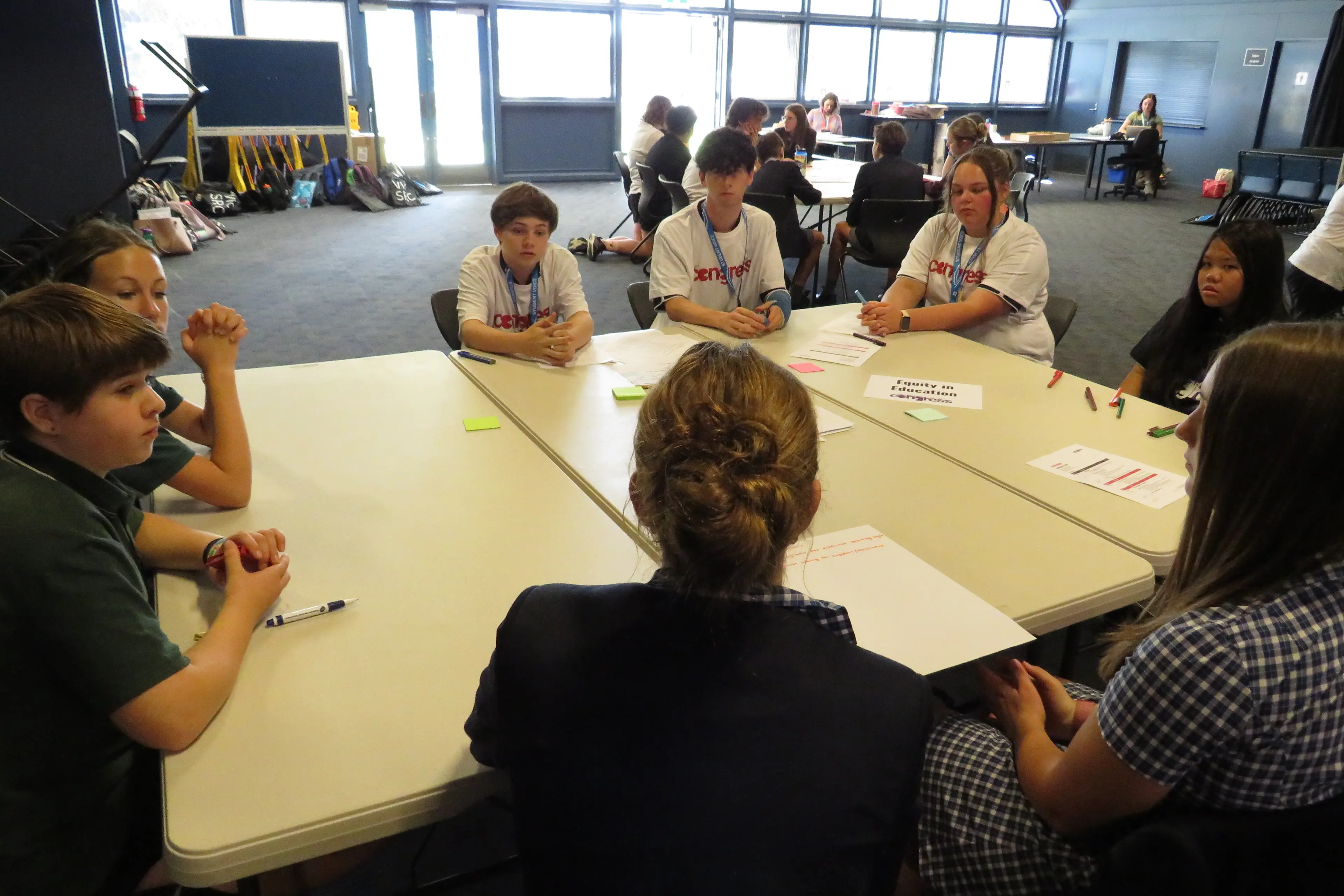
Local students had the chance to voice their opinions and ideas, and develop leadership skills, as the Victorian Student Representative Council held one of four regional congress gatherings in Wangaratta on Wednesday.
VicSRC is the peak body and leading advocate representing school-aged students in Victoria.
It was created by students to be a voice for all primary and secondary school students at the highest levels of decision-making in Victorian education, envisioning an education system that is student led, driven and focused.
The body holds an annual congress in Melbourne, bringing together students from across Victoria to unpack ideas and solve issues in the education system, so that their thoughts can be passed on to decision-makers.
To celebrate VicSRC Congress' 20th year, the organisation received funding to hold four regional congress sessions, before the final anniversary congress in Melbourne in September.
Along with the sessions held in March in Gippsland and Wangaratta, others will be staged in Geelong in May and Swan Hill in June.
Wangaratta High School hosted the local congress on 25 March, with 20 students between year seven and 12 from WHS, Galen Catholic College, Myrtleford's Marian College, and Beechworth Secondary College taking part.
VicSRC chief executive officer Julia Baron said the organisation represented all primary and secondary students in the state, and the congress sessions were a chance for students to bring their knowledge and experience to the table, ensuring it could be passed on to those shaping the education system.
Students were given five topic options to discuss during the day, and Julia said three stood out for those involved locally: inclusive and accessible education; equity in education; and definitions of success.
"We use these events to develop policy and in our advocacy work for the year," Julia said.
"At the end of congress in Melbourne, we will prepare a report about all that has been discussed and raised at each congress.
"This year, it will be used in the lead-up to the state election - hopefully to get the Minister thinking about regional areas.
"We find it super valuable to hear from a wide range of students, not just those who are engaged with SRC at school.
"My background is as a youth worker, so I love the fact I'm still working closely with young people.
"What I find is that students are not afraid to ask questions, and they will generally ask questions that older people don't think of.
"Youth participation is becoming popular in many organisations, but it has always been in our constitution.
"I can anticipate pretty easily what questions I will get from our board, but not what I'll get from the 15 high school students who sit alongside our board."
Julia said she had noticed some key differences between discussions in rural and regional areas, and those among city-based students.
"Regional students often talk about access to services in schools, but one of the more positive things is that in the city there is still a stigma around non-university pathways, whereas a lot of students from rural and regional areas don't feel that," she said.
Wangaratta High School teacher Katherine Sullivan said the day was an excellent chance for students from the local area, including some who undertook facilitator training in the lead-up, to boost their skills during the small group discussions.
"They are able to show leadership, and have a voice to Parliament," she said.