PHOTO
WODONGA-based Senator Bridget McKenzie has pursued a hard line of questioning on the topic of the Australian Rail Track Corporation's (ARTC) lack of consultation with communities, including Wangaratta and Glenrowan, about the Inland Rail project.
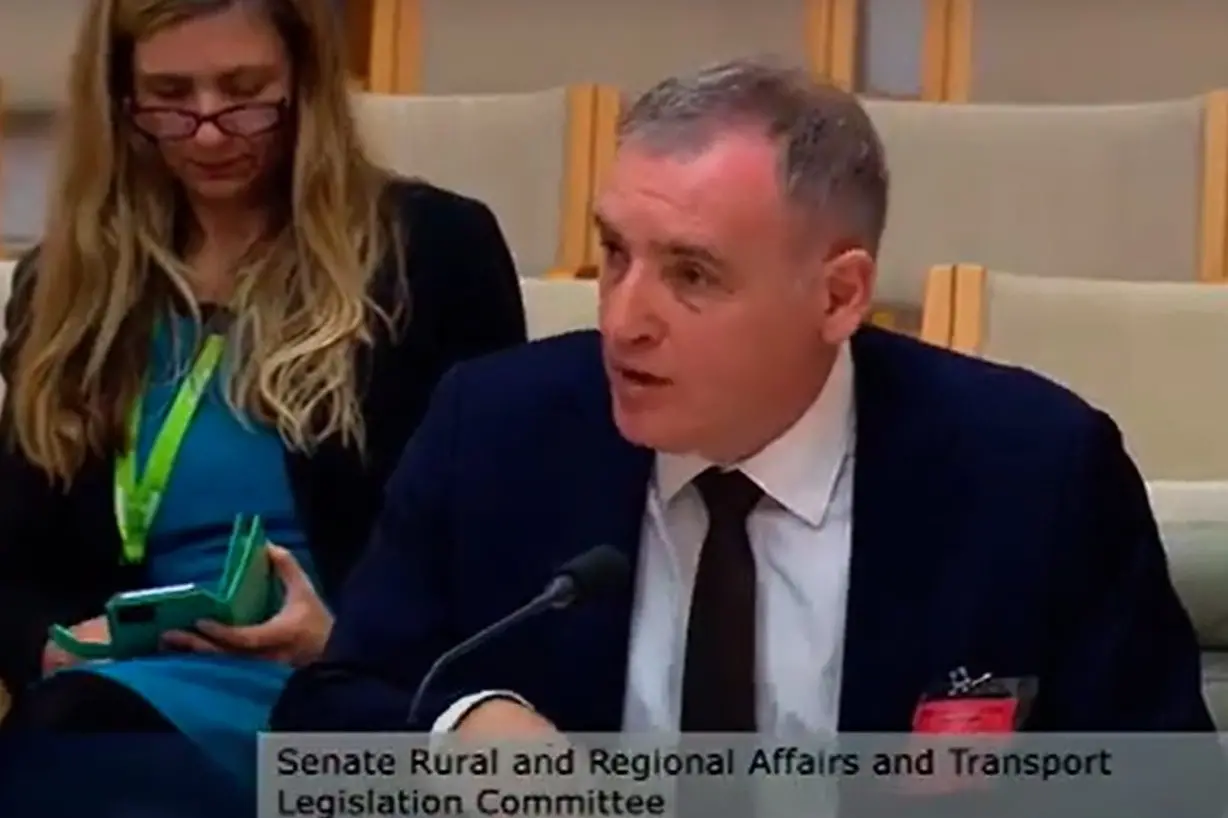
During a direct line of questioning with ARTC chief executive officer Mark Campbell this week, Senator McKenzie highlighted that people were saying the ARTC has "consulted poorly" since the Inland Project began.
Without acknowledging the corporation's alleged poor performance, Mr Campbell did note that he was not able to visit areas where there was concern due to COVID in 2020, however, he began visitations to realise community feedback earlier this year.
Senator McKenzie told the Senate Rural and Regional Affairs and Transport Legislation Committee that feedback she has gathered has indicated a shortfall.
"I've heard from these community groups over a long period of time and ARTC has not been up to scratch in terms of its consultation," she said.
Mr Campbell said he was "disappointed" to hear community's views that they express ARTC has not been operating in good faith.
He explained that the initial process of ARTC (began seven to eight years ago) was to decide the design concepts needed in each town along the rail corridor so double stack freight trains could gain passage.
These include the removal of existing bridges and the establishment of overpasses, underpasses or track realignments at several North East Victorian locations including Wangaratta, Glenrowan, Benalla and Euroa, to accommodate the double decker freight trains at the heart of the Inland Rail project.
"In those different communities we've consulted for a long period of time in different ways," he said.
"Some of that consultation undoubtedly has been very successful, other areas particularly where people have got strong views about one solution or another, often people will say they have not been consulted with and that may be the case.
"I would also argue from time to time people want you to take a certain point of view, which is their view."
However, Senator McKenzie has held Mr Campbell to task saying that it sounded like he was blaming the local residents.
"Are you going to take any responsibility for the fact that it's not just the disgruntled (people saying) we want an overpass or an underpass or a roundabout," she asked.
"(They're) saying you consulted poorly and they're feeling dictated to rather than actually brought on a journey and listened to, because sometimes their ideas might actually be better because local knowledge often is.
"Are you honestly not taking any responsibility as an organisation for what is quite a common assessment of how you engage with communities?"
While Mr Campbell did not admit to any specific wrong doing, he did say ARTC "take full responsibility".
"What we need to do when we get feedback that says people are not feeling consulted is to consult more and to talk more and understand why they feel that way, and I would like to think that's what we're doing," Mr Campbell said.
Senator McKenzie asked whether anything has changed in the way ARTC engages and consults with the communities.
Mr Campbell replied: "If you take the North East Victorian community - I visited, I listened, I'm going again in two weeks and I will meet various people and listen again.
"I'm looking forward to going back to meet the same people I met before to understand whether they feel like we're making progress."
ARTC has conducted 124 community consultation sessions, 2800 face to face briefings and 28 industry briefings across Victoria since 2018.
Since April, Mr Campbell noted that ARTC met with the Glenrowan Improvers and conducted a community information session on May 11, met with the Benalla working group on May 3, and attended three Euroa stakeholder meetings between Strathbogie Shire council, the Victorian Department of Transport and ARTC.