
PHOTO
70100.0
This week we revisit one of Australia’s most misunderstood and underappreciated birds: the Australian White Ibis.
In cities, ibis often forage at rubbish tips and in parks for discarded human food.
Their feathers can become dirty from scavenging, earning them nicknames such as ‘tip turkeys’ and ‘bin chickens’.
In many regional areas, however, they are known—like the Straw-necked Ibis—as ‘the farmers’ friend’ because they gather in paddocks to feed on pests like locusts, grasshoppers and crickets.
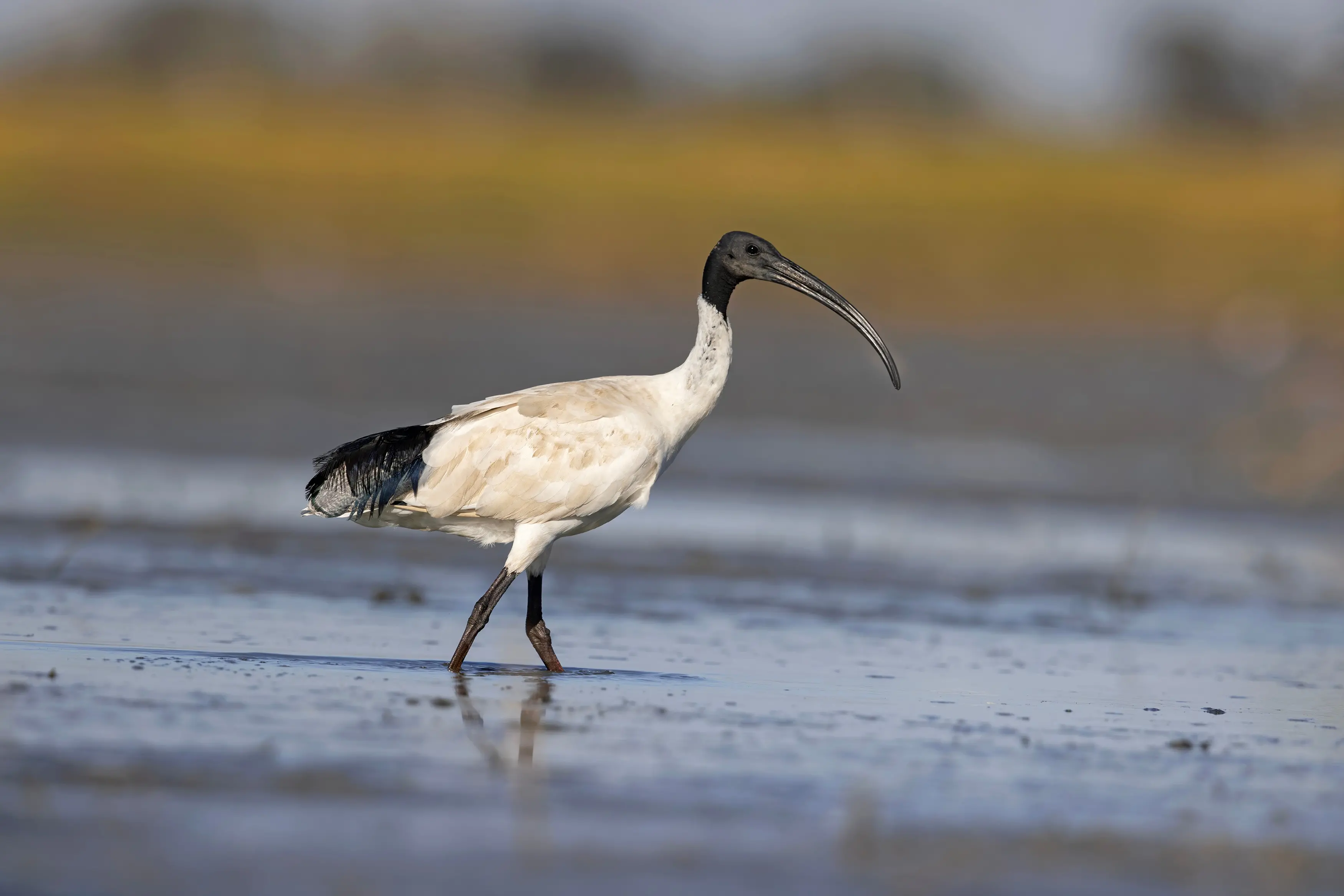
The Australian White Ibis is recognised by its mostly white plumage, bare black head and neck, and long, down-curved black bill.
In the breeding season, the small patch of skin beneath the wing changes from dull pink to dark scarlet.
Adults also have a tuft of cream plumes at the base of the neck.
Females are slightly smaller than males and have shorter bills, while young birds resemble adults but retain black feathers on the neck.
In flight, flocks often form distinctive V-shaped patterns.
The Australian White Ibis is common and widespread in northern and eastern Australia, and both its range and abundance is expanding in Western Australia.
The species is absent in Tasmania.
The Australian White Ibis feeds on both land and aquatic invertebrates, as well as discarded human food.
Favoured prey includes yabbies and mussels, which they dig up with their long bills and open by striking the shells against a hard surface to reach the soft flesh inside.
Male Australian White Ibis claim a branch in a tall tree as a pairing territory to attract females.
During courtship, the male performs a noisy display and drives off rival males.
When a female approaches, he bows from the branch and offers her a twig; if she accepts it, the pair bond is formed.
The pair then flies off to build a nest elsewhere.
Australian White Ibis usually nest in large colonies, though in some areas, like in our region, they breed in small, loose groups.
Negative interactions between people and ibis can be reduced by removing food scraps from parks and gardens and discouraging the birds from nesting or roosting in heavily used areas.
This often encourages them to return to nearby native habitats.