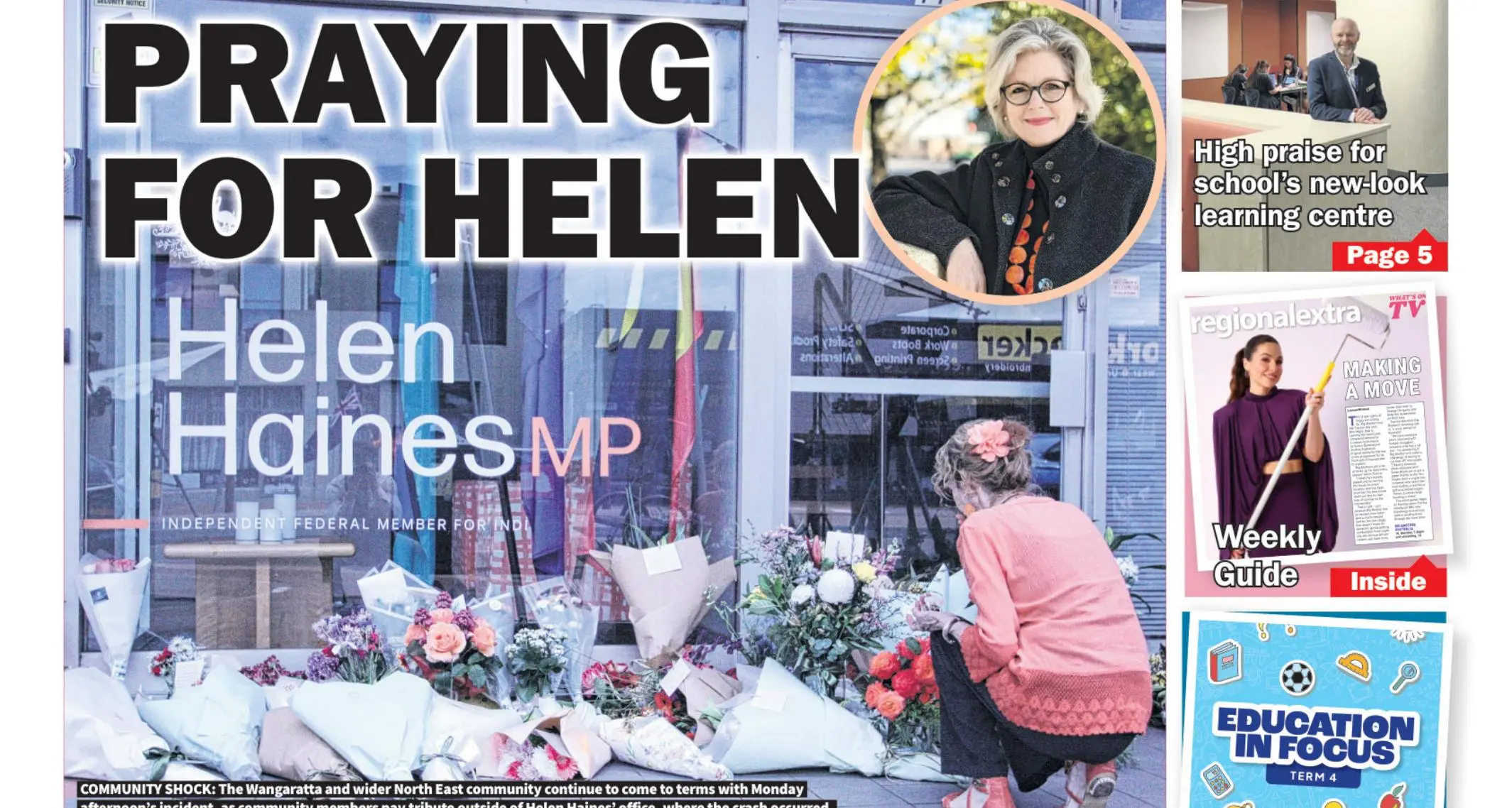
Wangaratta Council’s plans promise a welcoming community, a protected natural environment and transparent decision-making. Recent events leave me questioning whether its leadership is delivering on those promises. The rejection of the Reconciliation Action Plan and reports of restructuring affecting council’s environmental expertise should prompt a broader community conversation about how we are being governed. In my dealings with council, repeated requests to understand its decision-making have been met with inadequate explanations and responses which I experienced as dismissive and disrespectful. Residents should be able to ask how decisions were reached without being treated as a problem for asking. Those exchanges have also left me questioning whether council understands cultural safety and what it requires in practice. Its plan commits to inclusive engagement and respectful relationships. How does its leadership examine whether its own practices create barriers to First Nations participation? A welcoming community requires an organisation willing to listen, reflect and change. The environmental restructure raises a related concern. How will council protect our natural environment if it reduces the specialist expertise needed to do that work? Financial pressures demand careful decisions, but short-term savings can leave lasting costs. Our Community Vision was shaped by residents. Its commitments should guide decisions, especially difficult ones. When council’s choices appear at odds with those commitments, its leadership must explain how they fit together. We should question whether councillors and executive leadership are providing the governance our community deserves. I urge residents to ask questions, attend meetings, write to councillors and support others seeking answers. We do not have to agree on every issue to demand integrity, openness and respect. Council asked us to help shape a vision for Wangaratta. We should now insist it shows how its decisions will deliver it. Tegan Podubinski, Wangaratta 'Hazard tabs' for pothole riddled roads A simple but precautionary measure to prevent further fatalities and vehicle damage from the deplorable state of pothole riddled roads is identifying hazards with 'stand up tabs'. These reflective, flexible adhesive markers are visible from a distance, brightly coloured and often used during roadworks. The current method of encircling road cavities with paint is ineffective. Could I suggest the Rural City of Wangaratta become a forerunner in safety by implementing 'hazard tabs' as an interim measure until a fortuitous time when roads are repaired and fit for purpose. Beverly Hanson, Hansonville Mr McCurdy has shown care for community In response to Jeff Faithful’s letter asking ‘What’s in Tim McCurdy’s Briefcase?’ (Wangaratta Chronicle, 16 October) where he goes to great lengths to talk about what Mr McCurdy does not do, I thought I might respond with some acknowledgment and gratitude for what he does, which seems especially timely following on from the horrific attack on Helen Haines, another elected and hard-working politician. Over the years, I've approached his office a number of times regarding local issues. He has always responded promptly, without ever asking about my personal politics (left-leaning). He has been prepared to meet in person, visit localities, listen to the concerns of community members, investigate further to get a comprehensive grasp of issues, and advocate for rural people and their needs with other ministers or in Parliament. It’s not about how many committees a local MP is on; it’s about whether they care about us in the bush, and not many do. Mr McCurdy has shown that he does. Dr Roxanne Bodsworth, Eldorado Confused over state and federal policy The Wangaratta Chronicle article (9 Oct 2026) was headlined to gain attention and mislead the community. Headlined as “Coalition targets bowser pain…” one could be forgiven thinking that voting again for Tim McCurdy would remove the pain, according to Senator Bridget McKenzie. Confusing federal politics with state politics is a misleading game. McKenzie indicates the Coalition will introduce protection for our transport industry, if they are elected, implying that this could happen in November this year. In reality, the next federal election is schedule for May 2028, and if the LNP wins federal government, they would need to pass legislation, and also build this into their first budget, which may not come in to affect until July 2029 – almost three years away. There are a lot of ifs and maybe’s in this plan, and state government has little or no part of such decision-making; so we should not be fooled by these announcements at a federal level, and concentrate on state matters that can be, and should be attended to in the short-term. We all agree diesel prices are exorbitant and removing or reducing the excise would go a long way towards easing the cost of living for all of us right now, but this article fails to provide clarification that fuel excise is a federal matter, or that McCurdy has any influence over federal policy. Peter Finney, Wangaratta. EDITOR'S NOTE: The article clearly stated the Fuel Price Shield policy is a federal Coalition policy. Join campaign to tackle state's debt AMPLIFY has launched ‘Break free from Victoria’s debt’, a non-partisan campaign urging all political parties contesting the state election on 28 November to commit to a credible plan to tackle the state’s debt. Victoria is leading a national race to the bottom and now owes more than NSW, Queensland and Tasmania combined. State debt is approaching $200 billion and growing every day. Interest alone is costing Victorians $24 million a day, almost double what the state spends on its entire police force. That’s money that can’t be spent on hospitals, schools, housing or roads and means Victorians and small business need to pay higher taxes just to meet the interest payments. Worse still, the heaviest burden falls on the next generation who will have to pick up the bill and face the prospect of fewer opportunities in the future. But it can be fixed. Victoria has run balanced budgets in the past, and governments in Australia and around the world have turned their budgets around. Victoria doesn’t need a miracle - it just needs a credible plan and the political will to stick to it. Victorians can join the campaign at amplifyaus.org/victorias-debt Paul Bassat, AMPLIFY founder and chair