PHOTO
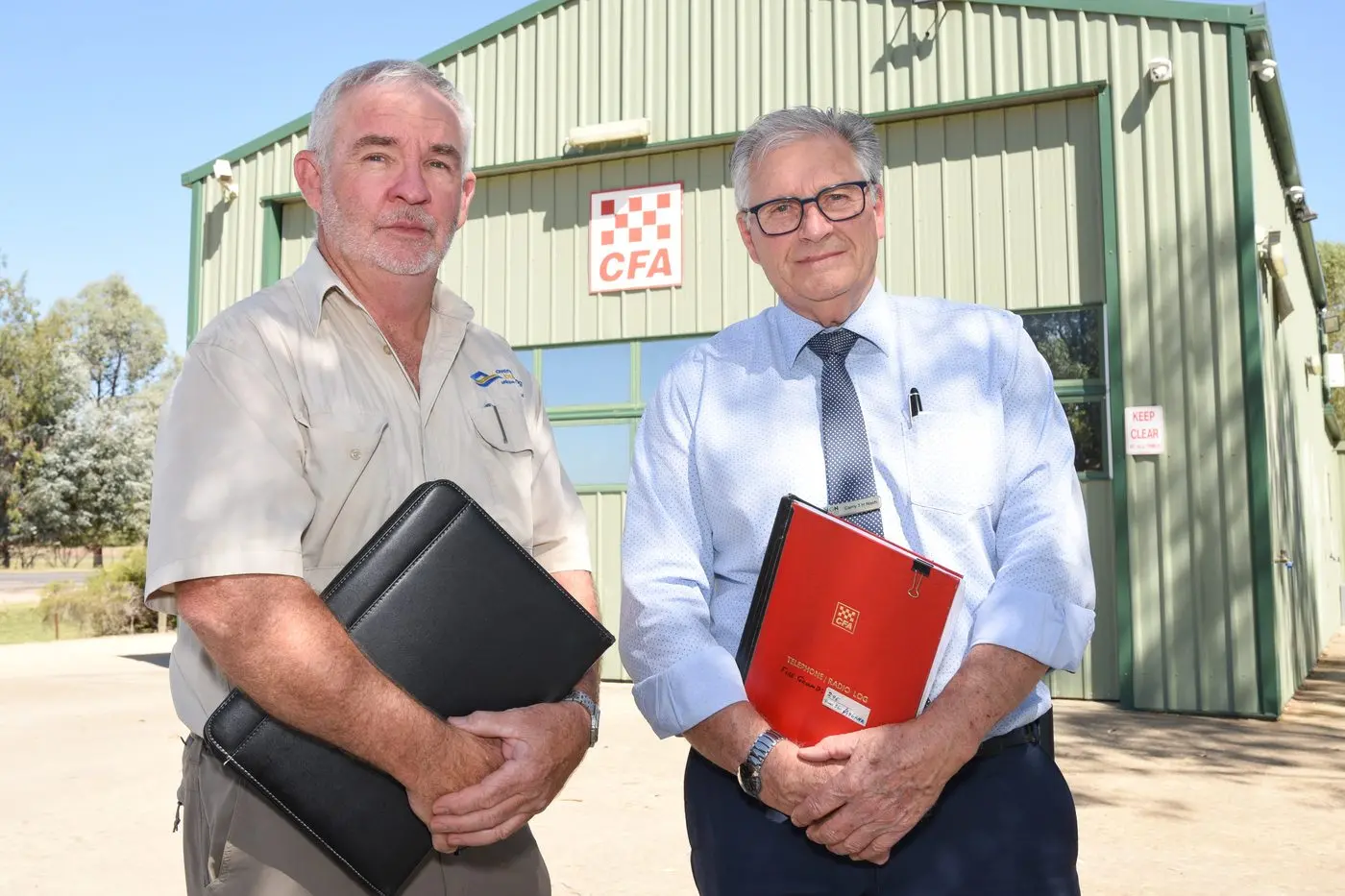
WANGARATTA CFA officials have called on the State Government to urgently address a dearth in appropriate local infrastructure, as the Wangaratta Group remains without a permanent base in the face of potential severe fire weather.
Having written to Minister for Emergency Services Jaclyn Symes more than two years ago expressing the group’s lack of a permanent headquarters, group officer Lachie Gales recently penned a follow up after “no substantive progress” was made to address the organisational shortfall.
The headquarters, as well as the lack of a permanent local command facility (LCF) from which incident controllers could manage and coordinate responses for local fire events, have been identified as key areas of concern by local and state CFA management, according to Mr Gales.
Group meetings, which convene representatives from the group’s 16 local brigades for management and important training, are currently held between Shanley Street’s Victorian Emergency Management Training Centre, at Ely Street’s CFA District 23 incident control centre, and at the Wangaratta Baseball Club’s pavilion, depending on availability.
An LCF has not operated in Wangaratta since 2004, and while Mr Gales noted there were satellite facilities at both north and south Wangaratta brigades, the location has been deemed “not ideal” and is said to be impacting the group’s ability to develop new incident management specialists.
Mr Gales said the group management team and its senior officials were “itinerants in (their) own town”, and sought to discuss alternative funding avenues with the minister.
“We continue to struggle to meet our operational commitment and sustain our volunteer structures,” he penned in his most recent letter to the State Government.
“We are in the invidious position of managing the work of a CFA Group, in a major regional centre, without a dedicated group headquarters and LCF.
“Our arrangements for fire and emergency response, development of incident management personnel, administration of our group and conducting necessary meetings of our brigade leadership change on a regular basis.”
Efforts to incorporate the group into the SES’ state-of-the-art Handley Street headquarters were made in 2022 at the behest of Ms Symes, however, an agreement could not be reached.
Having last month served as an incident controller overseeing the major fire response in catastrophic conditions at Beaufort near Ballarat alongside fellow Wangaratta group official Garry Nash, Mr Gales said local members needed to be “in a much better position than we are now” if those conditions returned to the North East.
He also noted the group could identify appropriate locations on a “relatively modest” budget if the funding was made available.
“The saving grace of the benign fire seasons we’ve experienced over the last several summers will eventually disappear – the effect of the climate crisis is being felt nationally and inevitably we understand we will again be responding to new campaigns of major fires that have been a regular occurrence of the last 20 years,” Mr Gales said.
“The clock is ticking on us, and we feel that tension greatly.
“As a level three incident controller and a fireground leader with significant experience of the major campaigns of this century, I can’t stress enough the risk we take in allowing any of our CFA Groups to fall away in their capability and capacity.
“The time is surely coming when we will be put to the test again.”
Ms Symes’ office was contacted for comment last week, but had not done so at the time of going to print.