
PHOTO
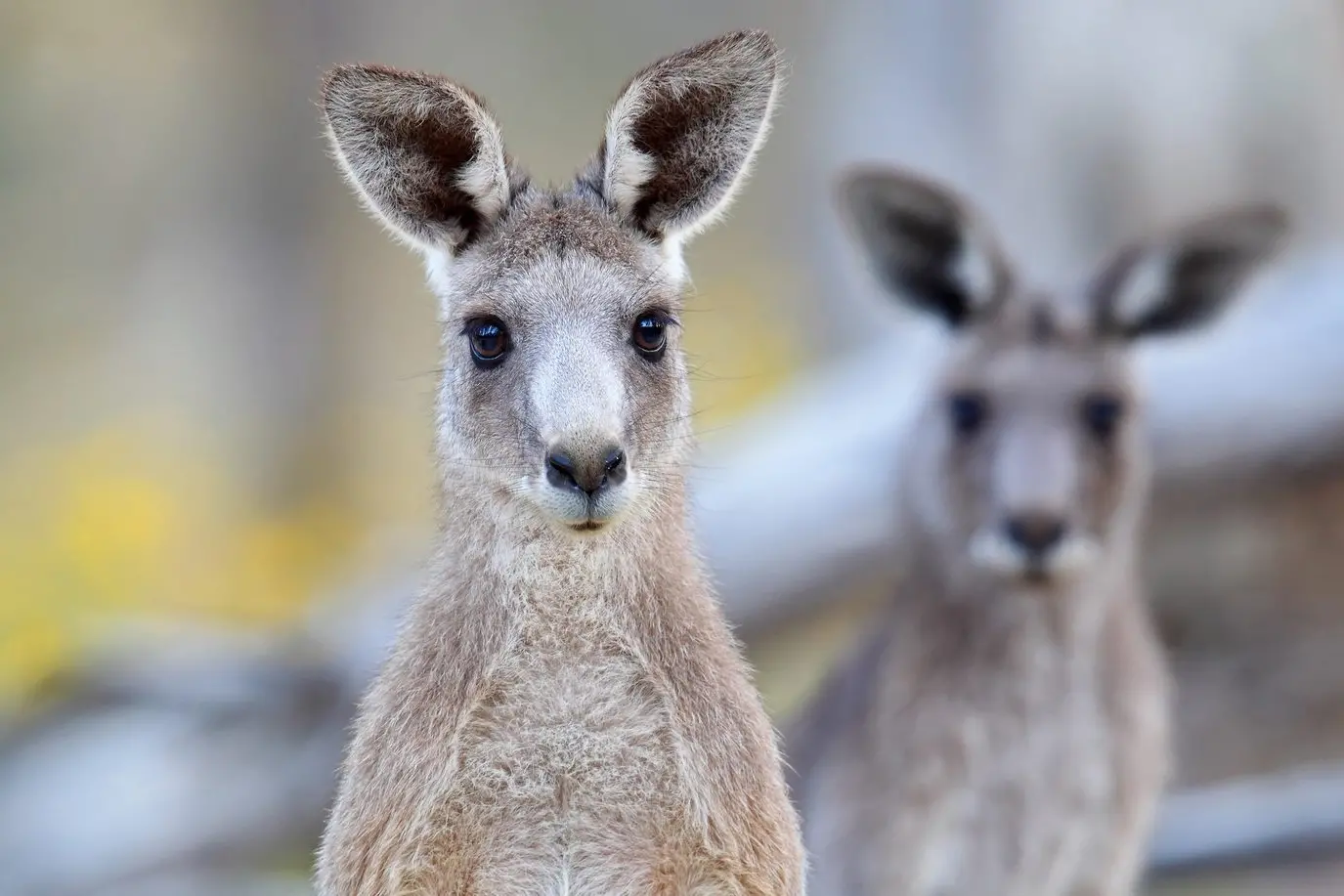
THE Eastern Grey Kangaroo is arguably the most familiar and well-known Australian animal in our region.
They can cover up to 6m in one hoping bound and may maintain a speed of 20kph for long periods of time.
As a Kangaroo’s speed increases, so does the distance of each hop and for short periods, they can hop at speeds of up to 65kph.
Eastern Grey Kangaroos can be up to 1.5m tall and weigh almost 60kg.
Their fur is grey brown in colour.
Their underparts are pale grey or whitish.
They eat grasses, herbs and occasionally shrubs.
Their food is well chewed before it is swallowed and digested.
They mainly feed in areas where grasses are most plentiful and are found in eastern Australia from Tasmania to Cape York Peninsula.
Areas with patches of trees for cover near open grassland provide perfect habitat for Eastern Grey Kangaroos.
During the day, they generally rest in the shade and sheltered areas, emerging in the evenings and early morning into open areas to graze.
They are uncommon in dense forests where grass is not readily available.
Eastern Grey Kangaroos can breed throughout the year; however, most births occur during summer or in response to favorable conditions.
Joeys are born 36 days after conception and are about the length of a jellybean.
They crawl into their mother’s pouch where they suckle until around nine months of age.
Joeys remain with their mother for approximately 18 months after leaving the pouch.
Females may have a second joey in their pouch while still tending young at foot.
Eastern Grey Kangaroos live in groups called mobs and have a dominant male that attempts to prevent other males from mating with receptive females.
Several mobs may merge outside breeding season.
Because of their relative abundance in country Victoria it is easy to take their appearance for granted.
We recommend that the observer take the time to watch their utterly Australian uniqueness and their incredible ease of movement.
Good places to observe Eastern Grey Kangaroos include the Wangaratta Common and Wenham’s Camp in the Warby Ranges, however they may also be found on any open pasture area adjoining bushland, especially at dusk or early morning.