PHOTO
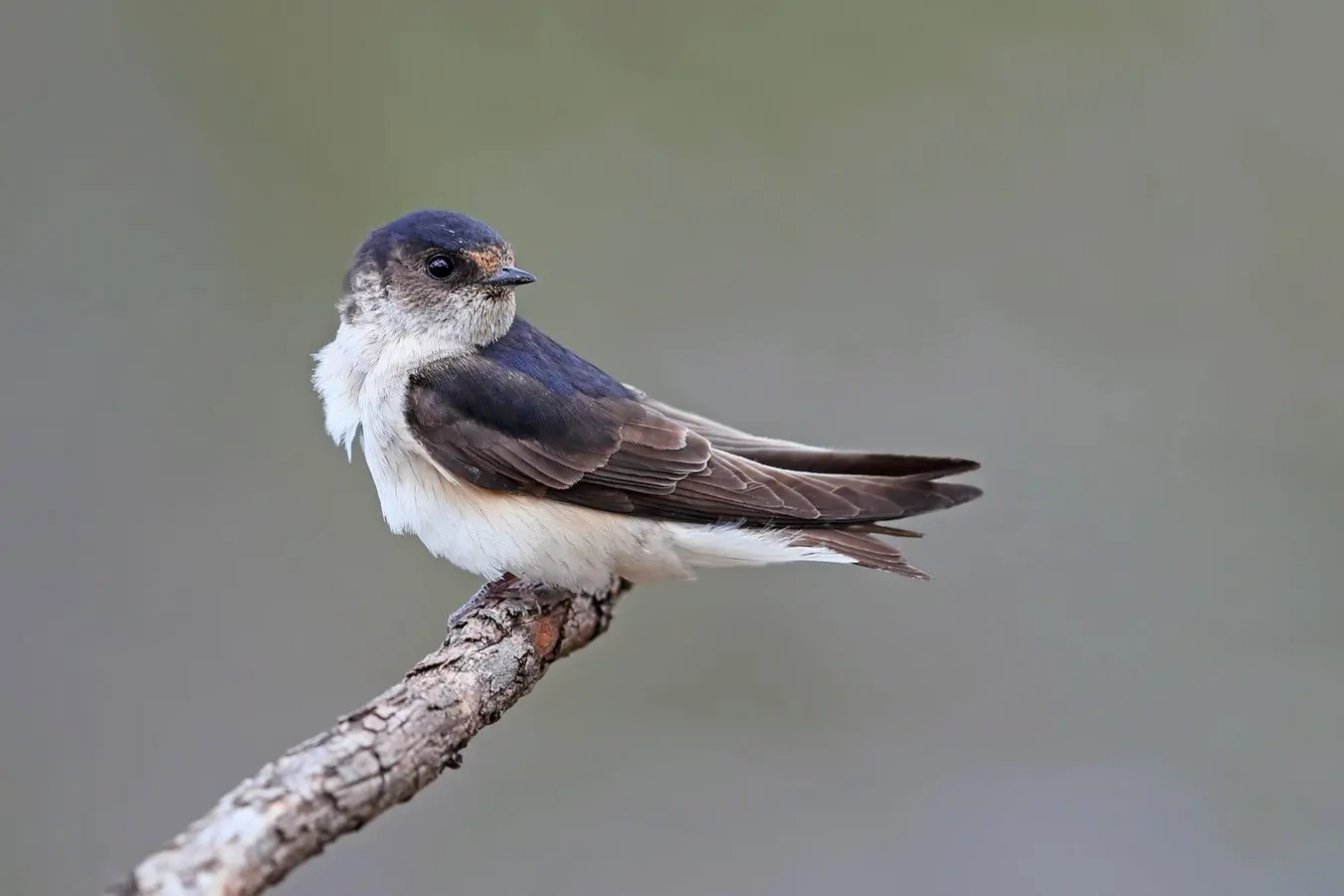
MARTINS are small, largely aerial birds that bear a close resemblance to swallows to which they are very closely related.
There are two species of Martins that occur in this region.
The most common is the Tree Martin, and then there its smaller relative, the Fairy Martin.
Tree Martins are very widespread, occurring over most of Australia wherever there are bigger eucalypts.
Such trees provide small hollows and ledges that are used by the birds as roosting and nesting sites.
In the cool conditions of early morning, communal flocks of these birds may be seen perched together on exposed high branches, preening and sunning themselves for some time before hunger eventually draws them away to commence foraging.
Agile in the air, they expertly circle, swoop and dive for small flying insects above the canopy, high into the sky and also over water and low over paddocks.
At times they will dive down to pick up insects floating on the surface of water and apart from gathering nesting material they very rarely land on the ground.
They are certainly birds designed for a life on the wing, with a short stout beak for catching insects, long pointed wings for effortless flight, and glossy downy plumage that reduces friction in the air.
They have small, weak feet which are used only to grasp perches when resting.
When coming in to nesting holes, they usually plunge straight in without stopping their flight.
Often associating with Welcome Swallows, Tree Martins are best distinguished by their white rump and short square tail, as opposed to the dark rump and longer forked tail of the swallow.
Sometimes, Fairy Martins join the mix as well, but they are noticeably smaller than Tree Martins and though they also have a white rump, they have a rusty coloured head which differs from the black head of the Tree Martin.
Tree Martins are migratory and though small numbers may occur throughout the year in this region, they are certainly more common come spring and into summer.
Locally, they may be seen almost anywhere but good views can be obtained at places such as Winton Wetlands and stretches of the Ovens River, where there are plenty of large old hollow-bearing trees to cater for their needs.