
PHOTO
MISTLETOES are a diverse group of plants found throughout Australia, occurring in rainforests, eucalypt woodlands, outback shrublands and even deserts.
No matter where they grow, they play an incredibly important role in any environment.
These partially parasitic plants, with their characteristic drooping habit, rely on a host plant for all their water and nutritional needs, yet they create their own energy through photosynthesis.
Most commonly in this region, mistletoes parasitise eucalypts and wattles, with different species favouring different host plants.
For instance, the Grey Mistletoe typically grows on wattles such as Silver Wattle and Deane’s Wattle, whereas the Box Mistletoe (as their name suggests) prefers box and ironbark trees as their host.
All mistletoes rely on birds for both pollination and seed dispersal, and a wide range of birds and insects benefit from the sugar-rich nectar and nutritious fruit provided by these plants.
Also, with their nutrient-rich and succulent leaves, mistletoe foliage is widely consumed by herbivorous mammals such as Brush-tailed and Ring-tailed Possums.
Mistletoes could well be the focus of several articles, such is their integral part of our ecosystems.
We will re-visit aspects of their ecology and importance to wildlife in future editions.
For the time being, we focus on what some of our local mistletoes are doing right now, and that is flowering.
The narrow tubular flowers of mistletoe, typically red in colour, produce a rich and abundant supply of nectar.
This provides an important source of food for mammals, insects and particularly a wide range of birds such as honeyeaters, friarbirds, woodswallows and lorikeets.
This food source is especially vital now, at a time when other nectar sources such as eucalypt flowers, are scarce.
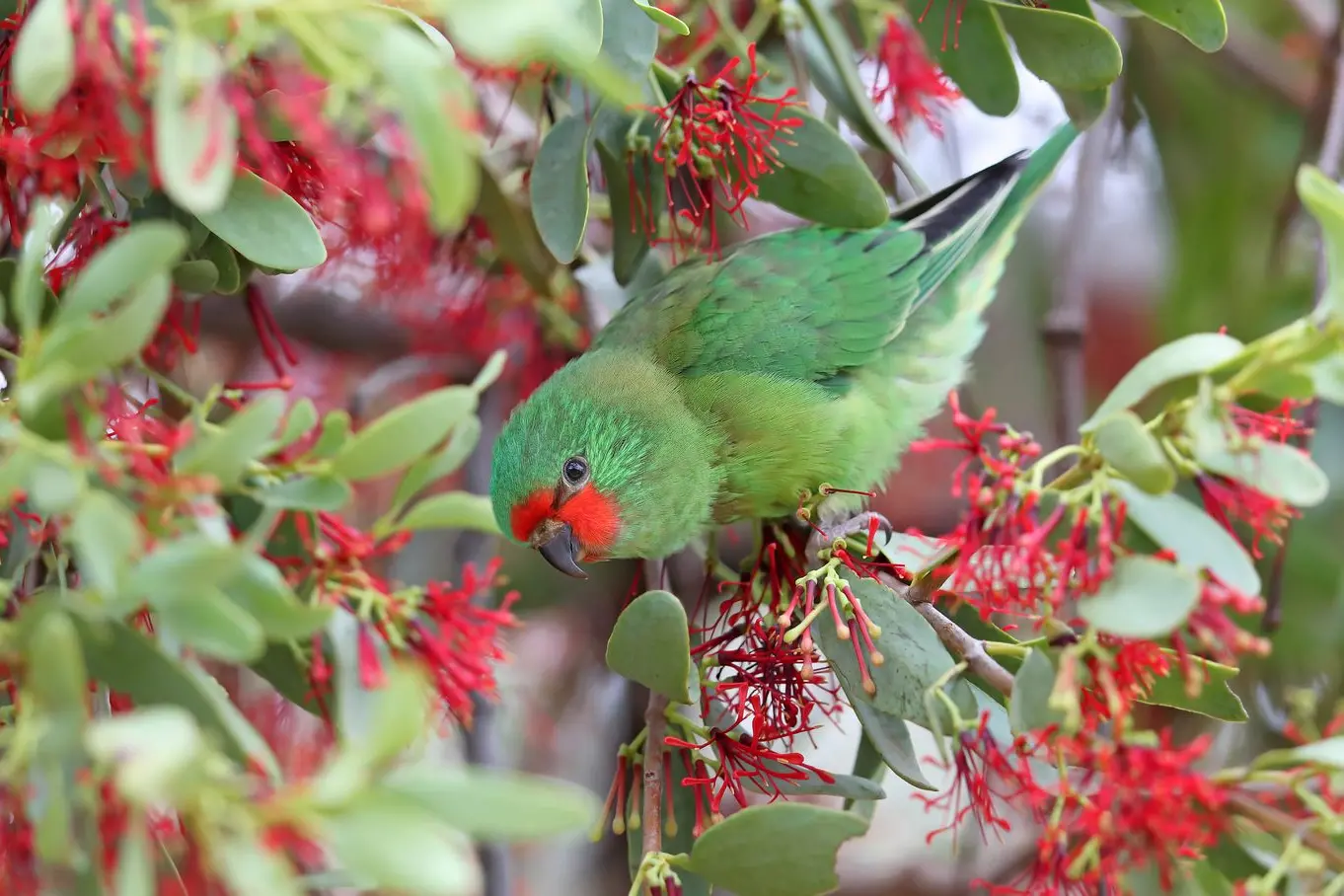
Over the past couple of weeks, we have observed numbers of Noisy and Little Friarbirds, various local honeyeaters and mobs of Little Lorikeets homing in on areas such as the Warby Ranges to take advantage of the mistletoe nectar that is on offer.
Some species, such as the Singing Honeyeater and Spiny-cheeked Honeyeater, are quite unusual for the Wangaratta region, normally occurring further inland in Mallee and other more open shrublands, but they too have wandered from their usual haunts which are very dry and providing little in the way of food after a long dry summer.
Next time you’re out and about and come across some flowering mistletoe, be sure to have a good look to see what might be there.
You might be surprised.