PHOTO
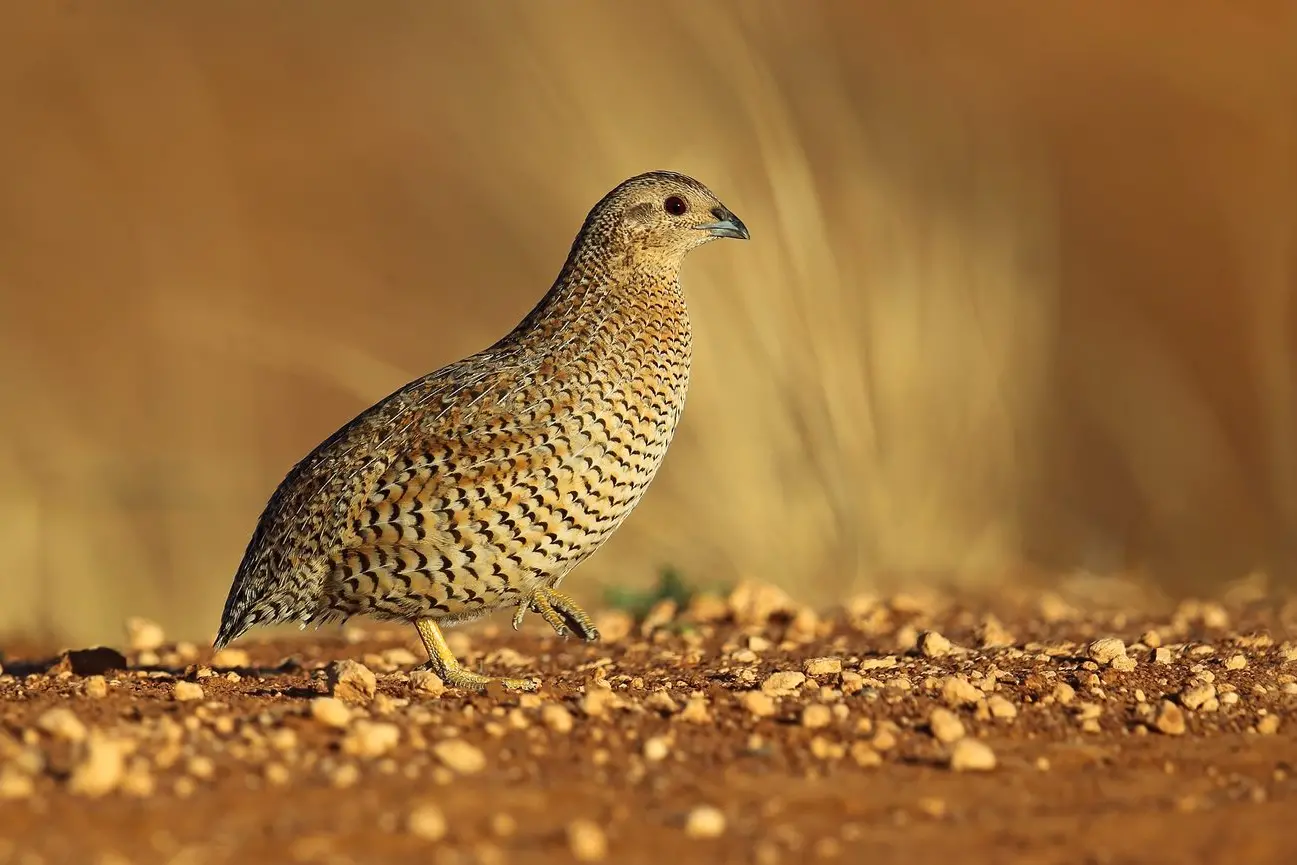
PREFERRING to be heard rather than seen, Brown Quail are shy and secretive inhabitants of rank grassy areas.
They are similar in appearance and behaviour to the Stubble Quail, previously featured in this column, but the Stubble typically lives in drier grasslands with shorter vegetation, whereas the Brown Quail prefers denser and taller pockets of tussock and sedgeland, often in low-lying swampy ground adjacent to rivers, creeks and wetlands.
However, after periods of rain and flooding, which often triggers a build-up in their population and extends the availability of damp grassy habitat, Brown Quail disperse into adjacent grassy woodlands and pastures, sometimes venturing into more open country.
Though moderately common, they are rather difficult to observe due to a combination of their shy and retiring habits and the dense and damp nature of their habitat – not a spot where birdwatchers typically visit.
More often than not, they are detected by their mournful two-note call given mostly at dawn and dusk.
Occasionally, however, one may be treated to a brief viewing of these plump little birds as they emerge from the tall grasses to feed in patches of shorter grass, often alongside roads, drains, fences or close to dams.
Like the Stubble Quail, the Brown Quail is considered a ‘true’ quail whereby they possess a hind toe, there are no substantial differences in size between the sexes, and they lack the 'ooming' call of button-quails.
Nonetheless, all of the quail and button-quail in this region are ground-frequenting birds that superficially resemble one another, so care needs to be taken when identifying this tricky group of birds.
Brown Quail are well-suited to their ground-dwelling lifestyle having a very short tail and short stocky legs.
If disturbed, they prefer to remain on the ground and run in rapid bursts through grassy vegetation, but if pressed they will flush with a sudden whirring of their wings, usually giving a short chirp as they take off, flying a short way before settling back into the grass.
Living in social family groups of three to 12 birds, Brown Quail feed on seeds and green shoots of grasses and small herbs, as well as taking insects.
They also nest on the ground beneath a tussock or small shrub.
Locally, Brown Quail could most easily be seen along pathways and roads that dissect areas of damp swampy grassland or tall grassy woodland, such as those along the lower Ovens River and Winton Wetlands, though they are frequently being sighted at the moment along roadsides right throughout the district given the favourable conditions.