
PHOTO
THE raucous Sulphur-crested Cockatoo is certainly one of the most recognisable birds locally as well as being one of Australia's most popular caged birds, where they live up to 80 years of age.
This has increased its range, as some of these birds either escape or are released deliberately in areas where they do not already occur.
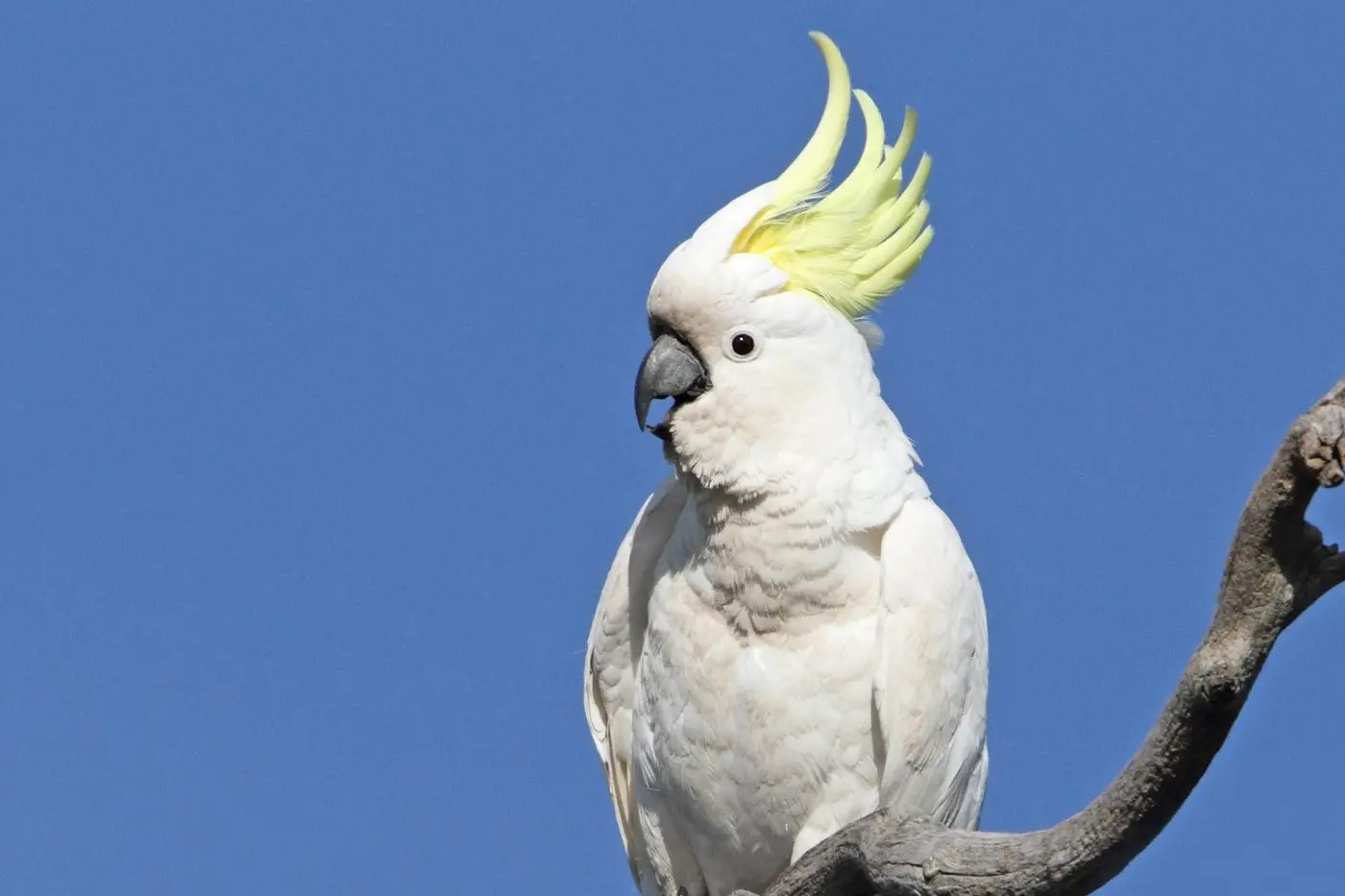
The Sulphur-crested Cockatoo is a large white parrot with a dark grey-black bill, a distinctive sulphur-yellow crest and a yellow wash on the underside of the wings.
Sexes are similar, although the female has red-brown eyes and the males are a darker brown.
They are noisy and conspicuous cockatoos, both at rest and in flight.
Young Sulphur-crested Cockatoos look like the adults.
Sulphur-crested Cockatoos are found in a variety of timbered habitats and are common around human settlements.
The birds stay in the same area all year.
They range throughout the northern and eastern mainland, and Tasmania.
A small population has become established around Perth, Western Australia.
This species also occurs in New Guinea and has been introduced into New Zealand and Indonesia.
The Sulphur-crested Cockatoo's normal diet consists of berries, seeds, nuts and roots; however they have developed a taste for some common introduced plants like the roots of onion grass and kikuyu grass and feeding on the seeds present in partly digested stock faeces where grain feed is used.
They feed in either small or large groups, with one or more members of the group watching for danger from a nearby perch.
When not feeding, birds will bite off smaller branches and leaves from trees.
These items are not eaten, however and many people find this an annoying trait.
The activity may help to keep the bill trimmed and from growing too large.
The eggs are laid in a suitable tree hollow, which is prepared by both sexes.
Both birds also incubate and care for the chicks.
The chicks remain with the parents all year round and family groups will stay together indefinitely.
The breeding season is from August to January and the clutch size is one to three with incubation taking 30 days and the nestlings staying for a further nine weeks in the nest.
In some urban and cropping areas the species may become a pest at times as they can congregate in very large numbers.
They are very easy to detect by their distinctive loud screeching.