PHOTO
THE Swamp Harrier is a large slim-bodied raptor, that may be regularly seen gliding low over swamps and tall grasslands.
They are a partial migrant in our region with numbers higher in spring and summer, particularly after wet winters when wetlands are replenished.
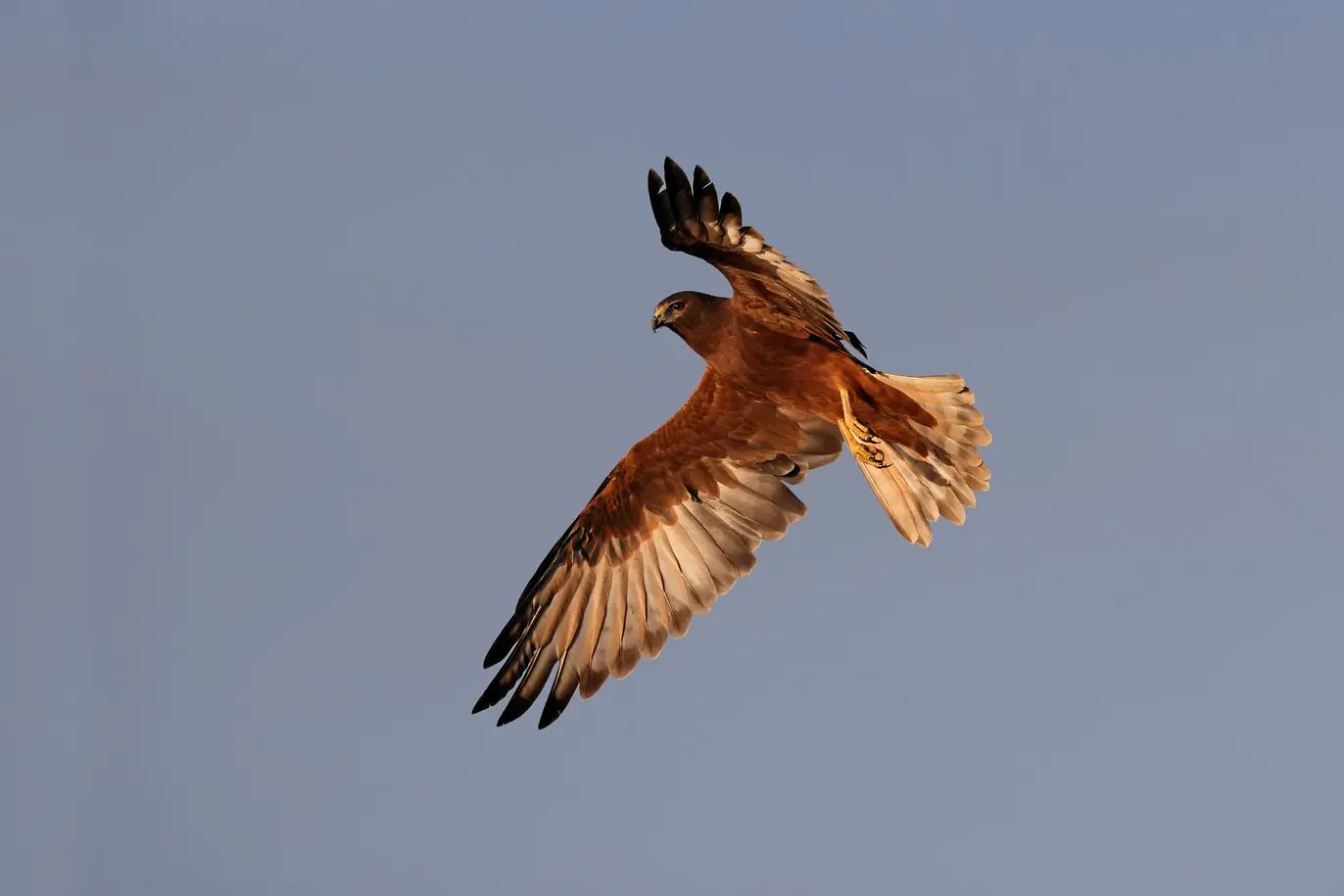
Swamp Harriers have long slender legs and a long tail, rounded at the tip.
They are mainly dark brown above and the white rump is prominent.
They have an owl-like face mask and the wings are long and broad, with five ‘fingers’ on the wing tips in flight.
Females are larger with rufous underparts, while the smaller male is lighter underneath.
The legs and eyes are yellow.
This species has a slow sailing flight on up-swept wings, flying low over water.
It is also known as the Marsh Harrier.
These birds are found in wetlands and open country of tropical and temperate Australia and New Zealand.
They are mainly seen over deep swamps with emergent reeds and rushes and over open water.
Locally, wetlands like Winton Swamp and Lake Moodemere with their fringing reeds and rushes and good waterbird populations, are ideal places to see Swamp Harriers.
When observing note their white rump which easily separates them from other raptors found over wetlands.
Swamp Harriers hunt for birds and eggs, large insects, frogs, reptiles and small mammals up to the size of hares or rabbits.
When hunting they ‘quarter’, which means that they systematically search for prey by gliding low to the ground or water, then drop down onto their quarry.
Once their prey is seen they may hover low over it before dropping down to seize it.
Their nests are made of straw and grasses, hidden above the water in dense reeds in a swamp or in crops or long grasses near water.
They usually nest in single pairs.
The female incubates and broods the young, while the male hunts for food.
He transfers the food to the female in the air, before she feeds it to the young.
Swamp Harriers are easily alarmed at the nest and will abandon their eggs and even downy young if approached by people.