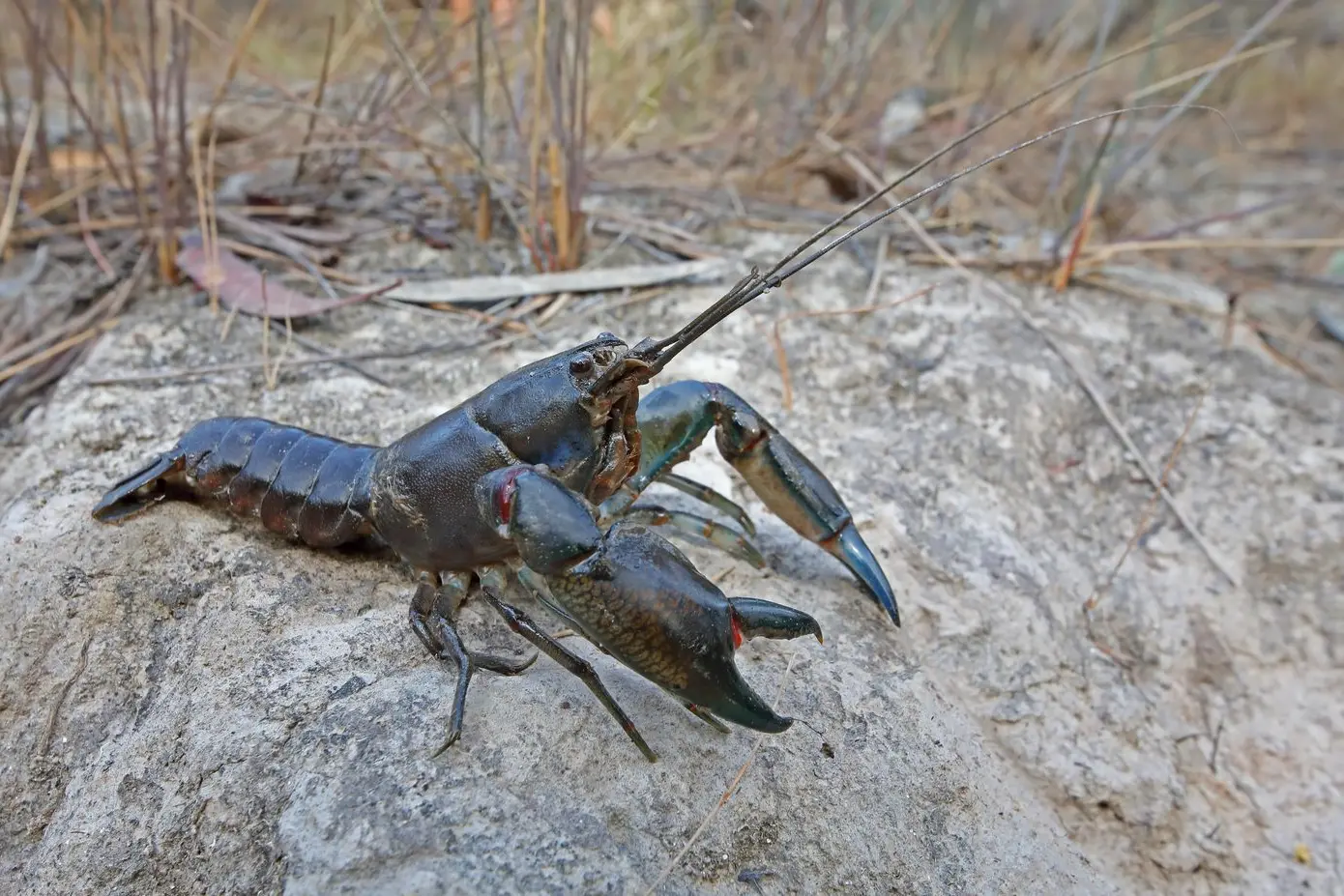
THE Yabby is a crustacean which means instead of having an internal skeleton like us and other mammals and birds they have a hard exoskeleton and jointed, paired appendages and a body divided into a head, thorax and abdomen, two eyes and two pairs of antennae.

The Yabby has the largest range of all Australian freshwater crayfish and they occur inland of the Great Dividing Range, throughout the Murray-Darling system, including most of Victoria, western New South Wales, south-western Queensland and eastern South Australia.

They have an enlarged, pincer-like first pair of legs and their colour is highly variable and depends on water clarity and habitat.

Yabbies can range from black, blue-black (like the photo on this page), or dark brown in clear waters to light brown, green-brown, or beige in muddy waters.

Yabbies are found in many river systems and temporary waterways and are extremely hardy.

They can survive dry conditions for many years by lying dormant in burrows sunk deep into muddy creeks and swamp beds.

During the wet season, they can travel kilometres across wet land in search of new waters to make a new home.

As well as freshwater ponds, lakes, rivers and creeks they are also common in many farm dams.

Their scientific name is Cherax destructor, with destructor being applied because they often dig into dam and levee banks causing weaknesses.

Yabbies feed on litter, like dead leaves and other decaying vegetation and are opportunistic carnivores, especially of carrion like dead fish.

They in turn are an important food source for many waterbirds, Platypus, Rikali, turtles and many species of fish.

They breed in spring when the water temperature reaches 15 to 16 degrees centigrade and the first batch of eggs (100 to 500 eggs per individual, depending upon the size of the female) hatches eight to 10 weeks later in early summer.

As soon as the young have left (a further three weeks later), the female is ready to breed again.

It is important that when yabbies are collected for eating or bait that females with eggs stuck under their tail are returned to the water to maintain populations.