PHOTO
ON a recent walk along the Bullawah Trail, we heard the unmistakable call of the Eastern Whipbird for the first time.
These birds are more frequently heard along the streams and waterways of the mountains.
Even though they are quite large, the Eastern Whipbird is seen far less often than is heard.
Its whip-crack call is characteristic of many of the moist forests in eastern Australia.
The unusual feature of this call is that it is often performed by two birds calling in unison, with one bird contributing to the first part of the call and another giving the second part.
This so-called 'antiphonal’ calling involves great coordination between the two birds to give the call its familiar whip-crack sound.
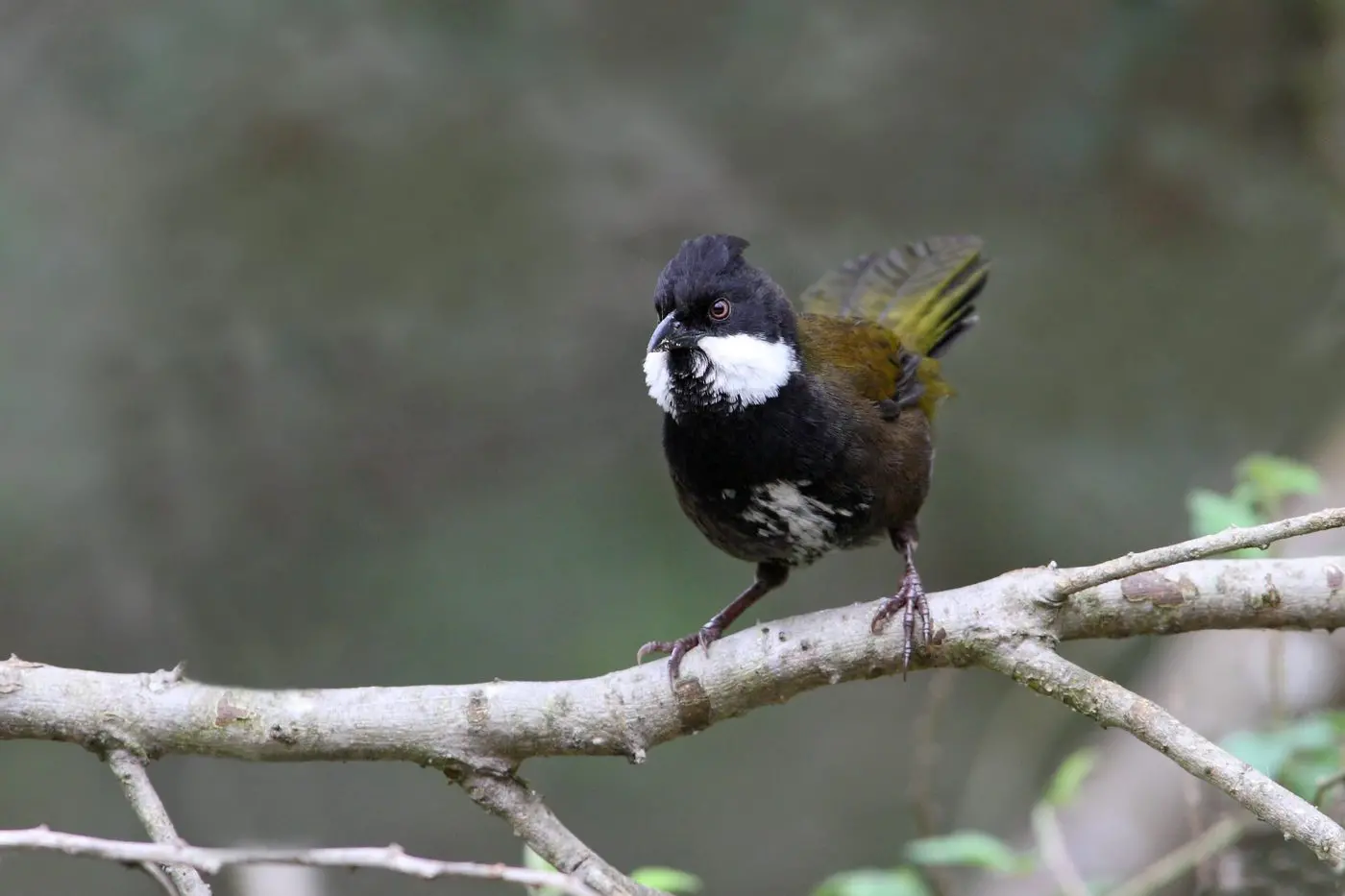
The Eastern Whipbird averages 28cm and they are mostly dark olive-green above, with a long tail and a grey-white belly.
The head and breast are black, with a broad white patch on the side of the face and a black crest.
The eyes are reddish-brown and the bill is black.
Young whipbirds are duller, with a smaller crest and the white cheek patch is absent in very young birds.
The range of the Eastern Whipbird is from northern Queensland to Victoria along the coastal band of eastern Australia, including the mountains of the Great Dividing Range.
Interestingly, Eastern Whipbirds are mostly sedentary and remain in the same area all year round.
This probably means that there is a pair living in Wangaratta along the Ovens River.
The birds are secretive, but can be curious, and may be seen if patient, just like the one I saw foraging on the roots of a large River Red Gum.
They feed on insects and other small invertebrates, which are caught on the ground by the bill.
Having greenish plumage and living in the dense undergrowth, they are hard to spot.
A breeding pair usually occupies a territory, which is defended year-round, with the mates staying together for many years.
The female makes a cup nest of sticks and bark, which is lined with finer grasses and placed in dense vegetation near the ground.
The clutch size is two to three eggs and the female incubates the eggs for approximately 18 days.
Recent enquiries indicate that a pair of birds were present near Mullinmur in 2021, supporting the idea of a local pair.
So next time you are on the Bullawah trail, listen out for the distinctive drawn-out whip crack of the male Eastern Whipbird and the sharp “choo-choo” follow up by the female.