
PHOTO
66064.0
Mistletoes, of which there are numerous species found right around Australia, play an incredibly important ecological role in any forest, woodland or shrubland ecosystem.
As a group of plants, they are partially parasitic in that they rely on their host plant for all their water and nutritional needs, yet they create their own energy and produce a range of products that are essential to the survival of many different species of wildlife.
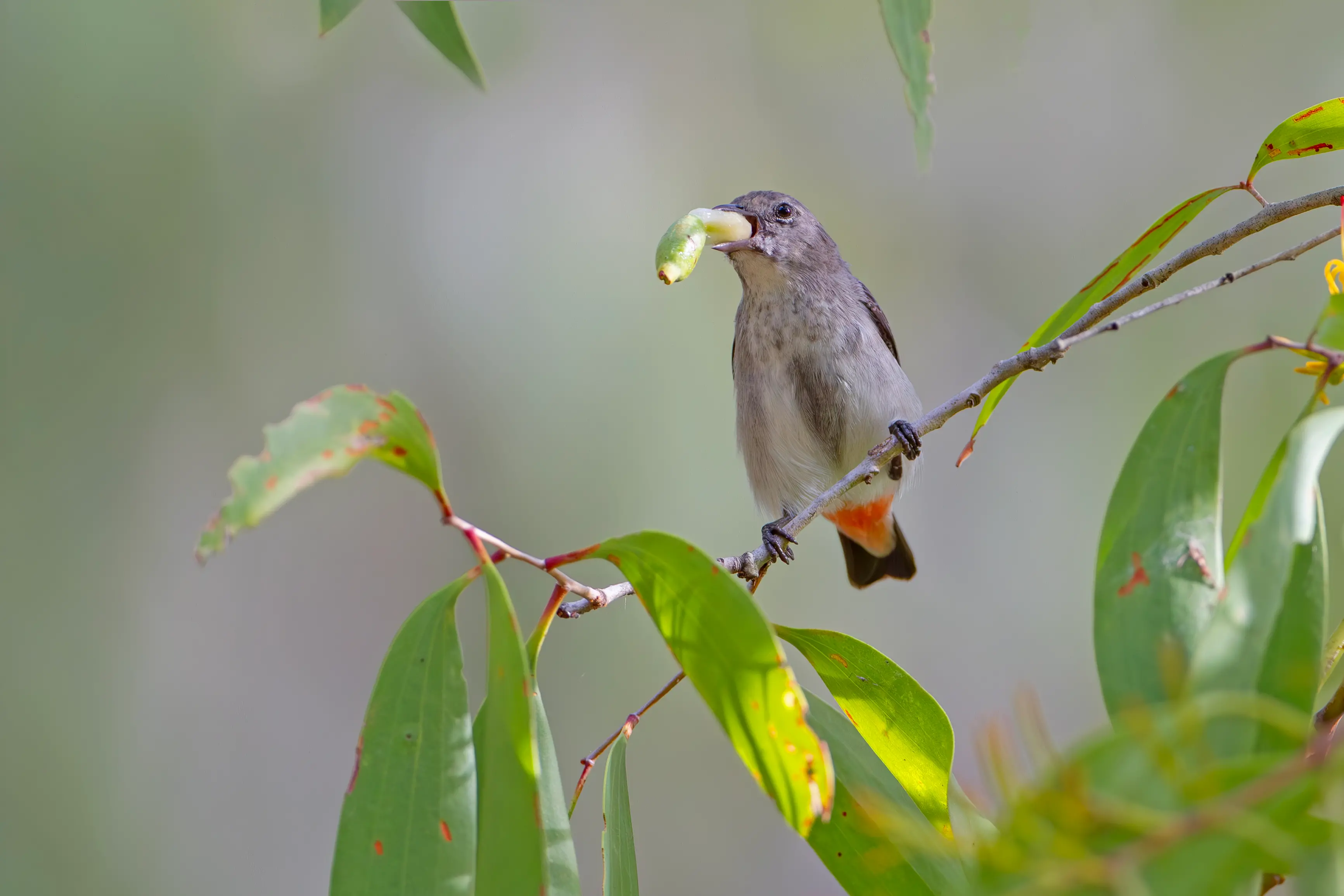
Perhaps one of the most well-known bird-plant relationships in Australia is that of the Mistletoebird and its primary food source, the Mistletoe plant.
Mistletoebirds, no larger than a matchbox, have evolved to have a dependence on mistletoe fruit and these tiny birds are largely responsible for the spread of various species of mistletoes throughout Australian ecosystems.
Following flowering, Mistletoes produce a small plump fruit, protected by a leathery skin and with a hard seed inside.
Some birds, including parrots, chew the fruit and the hard seed and digest the package as a meal.
Mistletoebirds on the other hand, along with another fruit-eating specialist the Painted Honeyeater, remove the cap on the end of the fruit then squeeze the sides to eject the fleshy pulp and seed from its skin before then swallowing the contents whole.
With the seed remaining intact, it passes through the Mistletoebirds digestive system and is dispersed undamaged through its droppings.
Should this sticky dropping land on a living branch, it may germinate and commence the life of a whole new Mistletoe plant, perpetuating an ecological cycle that has been going on for thousands of years.
Apart from fruit, Mistletoes also produce a valuable supply of nectar during their flowering period, which is very important to many birds such as lorikeets and honeyeaters, as well as attracting a range of insects that in turn provide a food source for insect-eating birds.
The soft foliage is favoured by possums and the dense nature of a mistletoe clump makes them an ideal nest site for an array of birds.
Clearly, their role in nature is extremely significant.
Mistletoebirds can be seen in the north-east at any time of the year but particularly during spring-summer coinciding with the peak fruiting season of the mistletoe plants.
Good places to search locally include the Killawarra forest, the Warby Ranges and around Chiltern.