
PHOTO
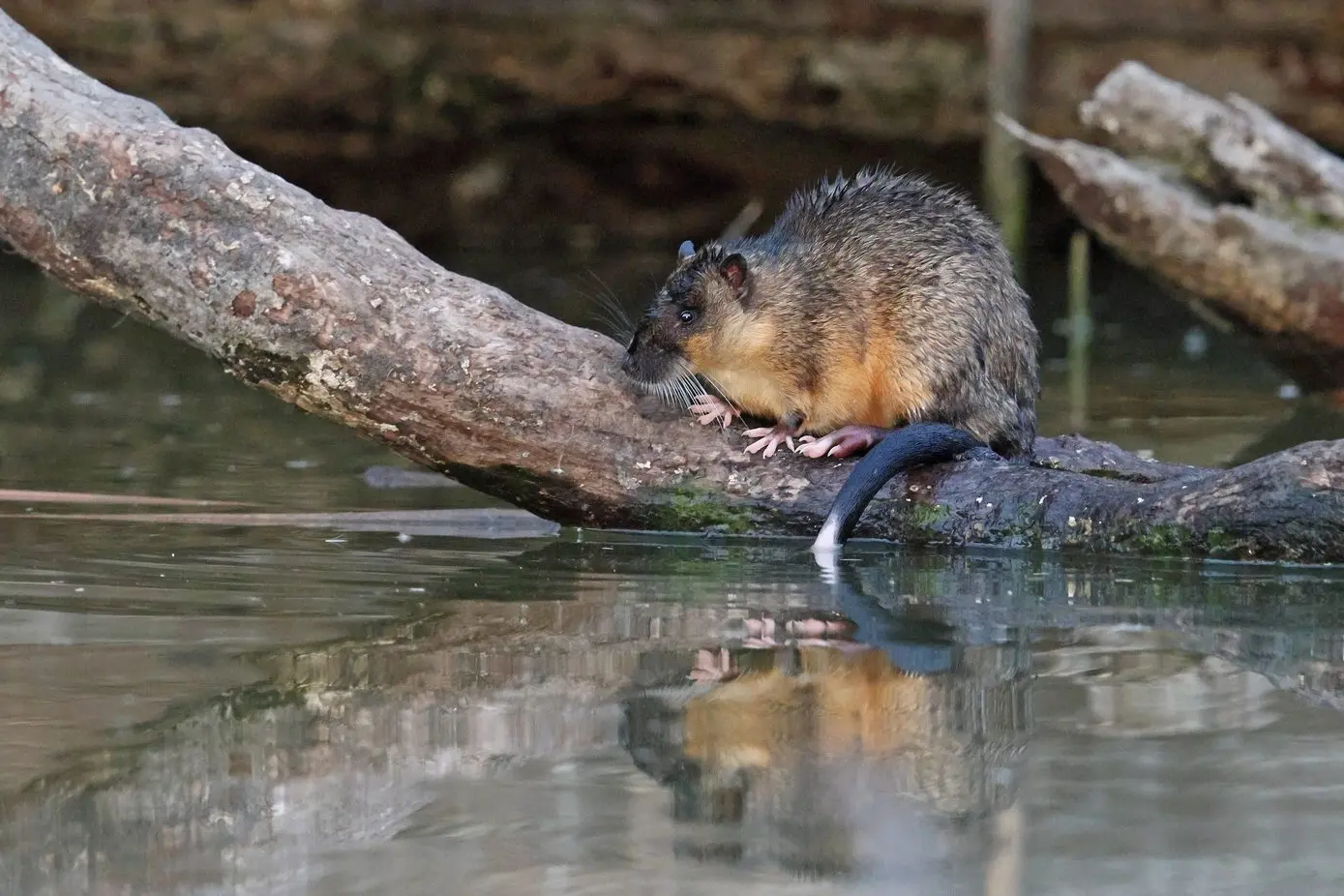
APART from the Platypus, the Australian Water-rat, or Rakali, is the only amphibious Australian mammal.
Early European settlers drew on the similarities of this animal to the Water Vole of Europe, hence it ended up with the somewhat undignified name, ‘Water-rat’.
The indigenous name, Rakali, is, however, now in widespread use and is a much more pleasant name for this unique and interesting Australian native rodent.
Rakali are well-adapted to their aquatic lifestyle, having waterproof fur to insulate their bodies and partially webbed hind feet to help propel them through the water.
Their soft, durable pelts were highly sought-after during the lean depression years, and the Rakali was widely trapped and hunted for their fur.
In many areas, the population of the Rakali suffered a serious decline as a result but the species is now fully protected and even subject to specific conservation measures to bring about improved waterway and wetland management, which not only benefits this species but many others, including the iconic Platypus.
Breeding can occur throughout the year, but most litters are born in spring and summer.
Under ideal conditions where food is abundant, females can become sexually mature at around six months, however most breed from around nine months and onwards.
It is common for multiple litters to be raised annually.
Females have four teats and suckle their young for about four weeks.
Young remain with their mothers for another four weeks before reaching independence, allowing the female to then breed again.
Such high fecundity obviously allows Rakali populations to build-up rapidly. Hence, after periods of high rainfall and widespread flooding, Rakali can expand into wetland areas via networks of rivers, creeks and drains, to take advantage of any favourable habitat conditions.
Occasionally, this may occur on floodplains far from permanent water, which they retreat back to once conditions dry out.
Slightly clumsy on land, Rakali are most at home in the water where they are adept at swimming in search of their food.
Most active early in the morning and in the evening, they are opportunistic predators that consume a wide range of food, from large aquatic insects, fish, shrimp, yabbies, frogs, lizards, bird eggs and chicks, and virtually anything else they can catch.
They are typically seen paddling along close to the banks of waterbodies, diving to find food around submerged roots and logs, bringing prey to the surface and usually carrying food to a regularly used feeding site, such as a log or stump protruding from the water.
Rakali can be seen along any of our local river or creek systems, wetlands and even some farm dams, preferring lowland areas with calm or slow-moving waters.