
PHOTO
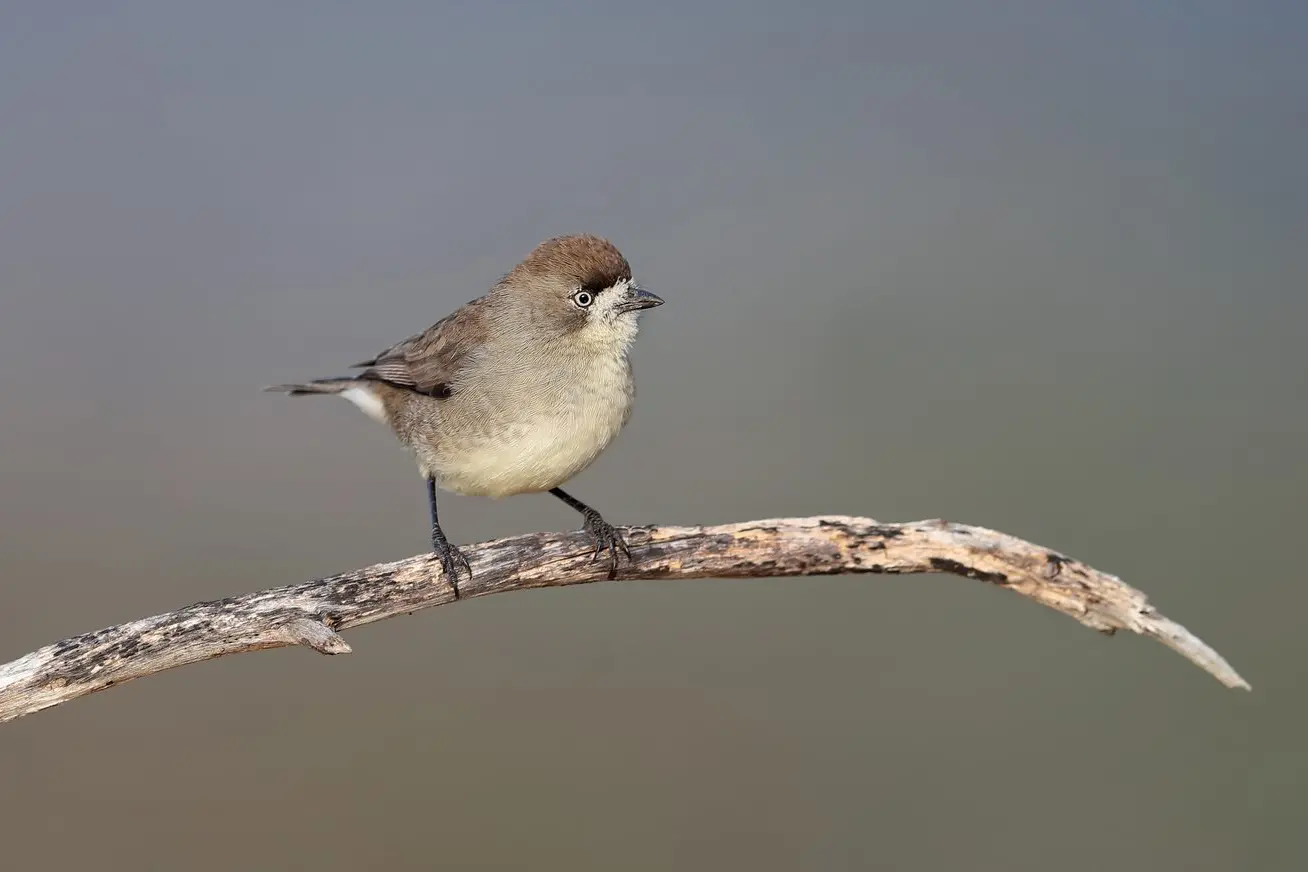
OF all the little brown birds - referred to as LBBs among the birdwatching community - the Southern Whiteface is one of the more distinctive members of the group, having a clearly defined white facial mask which stands out against the grey-brown plumage of the rest of the bird.
Their white eye is also a stand out.
Related to the thornbills, which are among the smallest species of birds inhabiting our bushland and farmland areas, whiteface are around the same general size, shape and colour - the primary difference being the shape of their bill.
Whiteface have evolved to separate from their thornbill relatives by feeding from the ground primarily on seeds from native grasses and herbs, as well as taking insects, whereas thornbills are completely insect-eaters.
Therefore, the stubby and robust bill of the Southern Whiteface is perfectly suited to pecking seeds and fresh plant shoots from flat surfaces, much like that of a finch, rather than being fine and pointy to catch insects.
They do also consume small pieces of sandy grit which is stored in their stomachs to help grind the seeds they eat.
Southern Whitefaces are rarely seen on their own, as they commonly associate closely with other small ground-foraging birds such as Diamond Firetails, Superb Fairy-wrens and Yellow-rumped Thornbills.
They are sedentary and small groups occur throughout the same area year-round, but groups break-up during the breeding season to establish territorial nesting pairs.
Nests are built in small holes in dead standing trees, stumps and posts, and occasionally in structures such as sheds or barns around farm houses.
They prefer lightly timbered drier woodland country, typically around the edges of larger patches of bush.
They never occur far from dense cover, typically thick patches of wattles, hopbush or other shrubs. In open farmland areas, they often utilise patches of introduced boxthorn – their prickly dense foliage affording ideal shelter.
Sadly, as is the case with many other small woodland birds, the Southern Whiteface has a declining population across south-eastern Australia.
Habitat modification and simplification is the probable cause, with the loss of native grasses and forbs diminishing their food source and clearing of shrubby understorey, stumps, and dead trees reducing shelter and nest sites.
Locally, Southern Whitefaces may be seen around the fringes of the Warby Ranges and other lightly timbered woodland and farmland areas such as those around Eldorado and Chiltern.
Listen for their twittering calls given in short bursts – often the first indication of their presence.