PHOTO
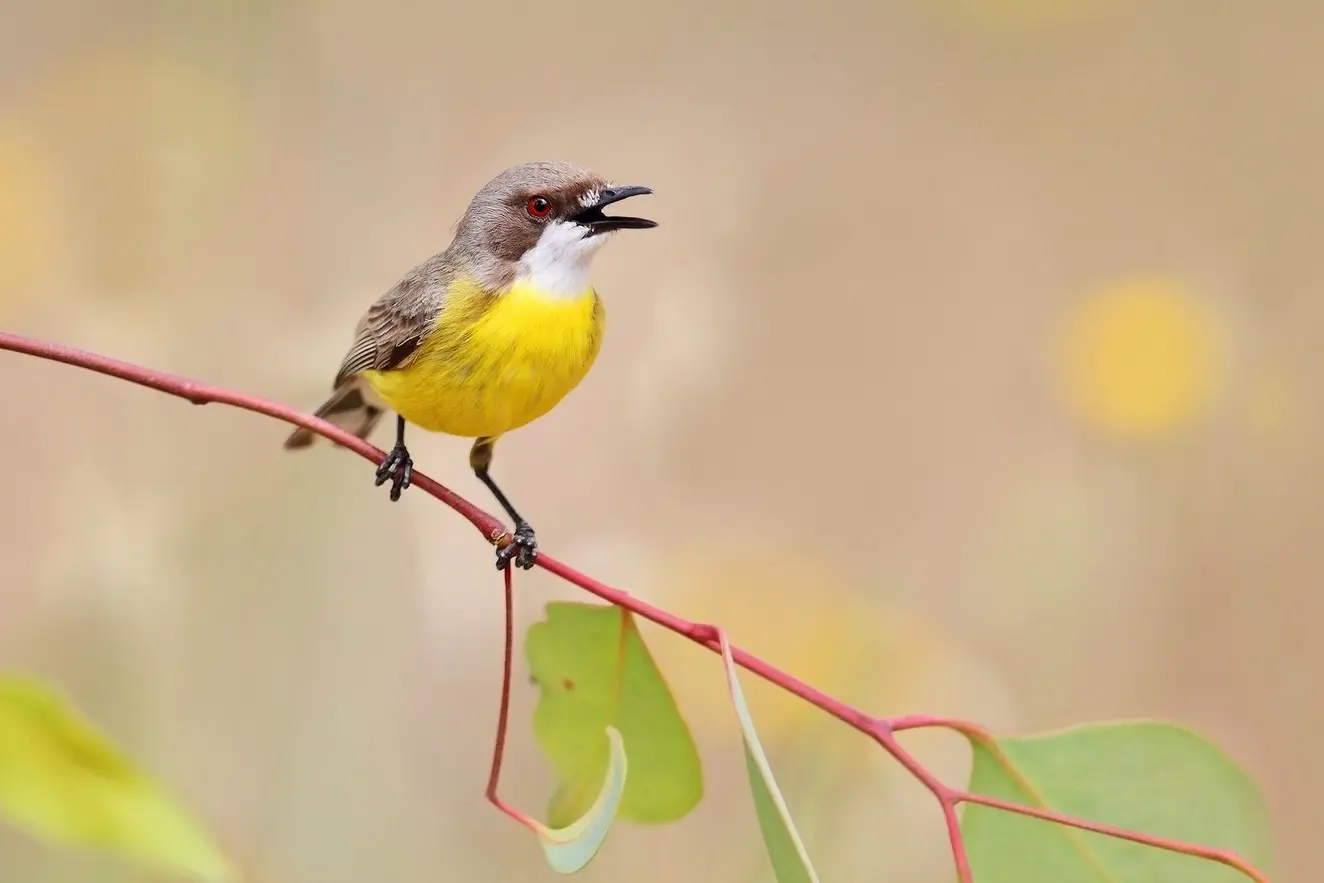
AMONG the wonderful songbirds found in spring throughout bushland in our district is the White–throated Gerygone.
And like the Western Gerygone, featured two weeks ago, it also has the sweet "falling leaf melody", but has an upward inflection near the end of the call.
Their beautiful call led to it also being known as the Bush or Native Canary.
The White–throated Gerygone is a very small grey, brown bird with a white throat and spot on forehead, distinctive bright yellow underparts and a white–tipped tail, with a red eye.
Juveniles have a yellowish throat and brownish eye.
Most often heard during breeding season, they are not obvious at other times.
The White–throated Gerygone ranges from south–eastern Australia through Queensland and across northern Australia to the Kimberley region of Western Australia
Locally, they are mainly warm weather migrants attracted to our region to breed from as far away as New Guinea and northern Australia.
In Victoria they tend to be most common in the North East, near the inland foothills and plains with 600mm or more rainfall.
The White–throated Gerygone is found in open eucalypt woodlands and forests and in vegetation along watercourses.
They feed in the foliage and twigs of eucalypts and tall shrubs, usually high in the canopy on insects and occasionally catch prey in flight.
After breeding they can often be found in mixed foraging flocks with thornbills and fantails.
The White–throated Gerygone mates for life.
It builds an oval or pear–shaped nest of bark bound with spiders' silk, which is hung in the outer foliage of trees.
Two or three eggs are laid, and the nestlings are fed by both parents.
When you detect a beautiful melodic warble in local bushland this spring listen carefully for the upward inflection which will indicate the presence of the White–throated Gerygone.
Or, if unsure, try and find the bird with its striking yellow breast and white throat.