PHOTO
64460.0
Honeyeaters are the largest family of Australian songbirds with over 70 species known.
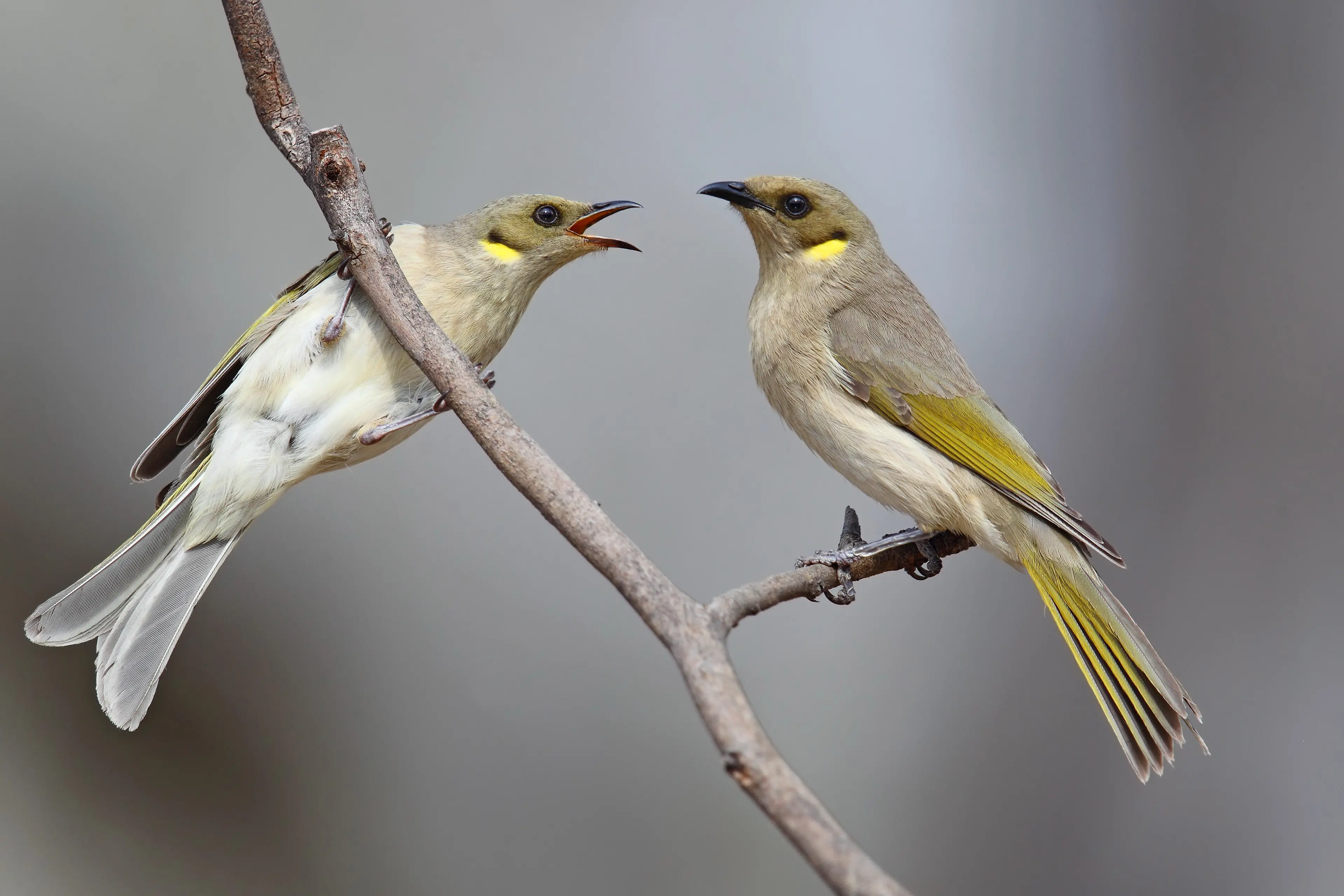
In the North East Victorian region, there are nearly 30 species, one of the more common, but less well known is the Fuscous Honeyeater, which occupy the drier woodland and open forest types of the district, especially box-ironbark habitats.
This small plain looking bird lacks bright colours except for its yellow facial plumes, though it has a lively and perky manner and a distinctive rollicking call – an iconic sound of the habitats in which they occur.
Often Fuscous Honeyeaters are seen chasing one another in twisting and acrobatic flights through the trees and shrubs, nagging one another with their persistent calls.
They are a sociable species, usually occurring in small loose parties but when food becomes abundant, such as mass flowering events of trees such as ironbarks, their numbers may significantly increase.
On these occasions, they are joined by other nectar-feeding species including various other small honeyeaters, wattlebirds, friarbirds, lorikeets and sometimes Swift Parrots.
To compete with these other competitive and typically aggressive species, Fuscous Honeyeaters are hyper-active and hyper-aggressive themselves, and they are often observed rapidly chasing other species through the forest canopy.
Though they are primarily nectar-feeders, foraging amongst the blossom in the canopy of eucalypts, Fuscous Honeyeaters also feed on a range of insects, including aerial insects and leaf bugs, as well as plant exudates such as manna.
Lerp and honeydew, the sugary excretions of sap-sucking insects, is also consumed, especially when there are no flower resources available.
During spring, Fuscous Honeyeaters nest in loose breeding colonies where there are sufficient food sources.
Within a colony, there may be several breeding pairs, each holding a territory of around a couple of hectares.
Males defend their territory by singing from a high perch and in aerial song flights, flying up above the canopy before darting back down to the trees.
Nests are small hanging basket-shaped structures built of dry grasses and bark, held together with cobweb, built in the outer dangling foliage of eucalypts.
Females lay two-three pinkish eggs which hatch after around two and half weeks.
At present there are some small groups of Fuscous Honeyeaters in native gardens and treed parkland around Wangaratta.
Apart from their distinctive call they are probably best found diving and bathing near ponds and small dams.