PHOTO
*Copy_rural - drought resilience project_Image001_67603
A groundbreaking project led by University of Melbourne researchers is currently underway in the Ovens-Murray region, aiming to redefine how rural communities prepare for the emotional and mental toll of drought.
Shifting away from traditional "top-down" advice, this Wangaratta-based initiative puts local farmers and agricultural businesses in the driver’s seat to design support systems that actually work for them.
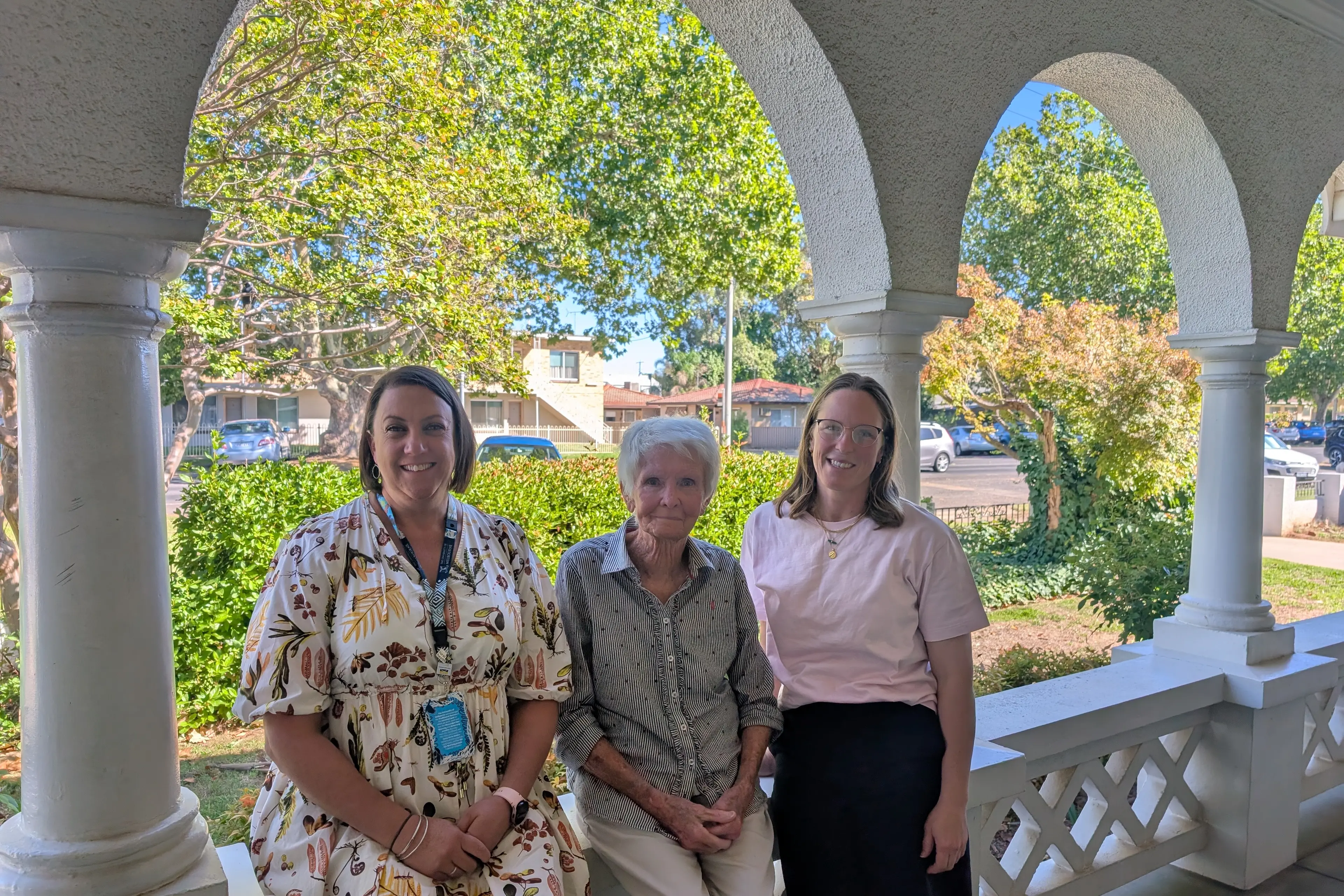
Wangaratta local and Senior Research Fellow Dr Tegan Podubinski, from the Department of Rural Health, has spent the start of 2026 gaining first-hand insight from local producers, agricultural businesses and agencies.
Earlier research by Dr Podubinski and her team, Dr Kristen Glenister and Robyn McNeil, indicates that while rural Australians face a higher risk of disasters, those with greater psychological preparedness experience significantly better mental health and recovery outcomes.
"Similar to a bushfire, farmers have an idea of how they hope to respond to drought," Dr Podubinski said.
"However, drought—like the moment a bushfire actually hits—is not necessarily something you can totally prepare for.
"It tends to build; many experience it as a ‘slow burn’ before it suddenly escalates."
Current advice often urges farmers to "make a decision and stick to it", but Dr Podubinski said that by the time a crisis hits, many are already overwhelmed.
"Decisions made reactively—without that early planning—are often not made in the best headspace," she said.
The relentless cycle of preparing for the next weather event can erode the capacity to make decisions when they are most needed.
"When you're living every day with drought and there is no reprieve from the dryness, the ability to "turn off" and create the distance needed to enact plans is incredibly difficult," she said.
The initiative, which focuses on the Alpine and Indigo Shires and the Rural City of Wangaratta, has already "flipped the premise" of traditional disaster support based on community feedback.
While researchers initially considered developing online modules, on-the-ground conversations revealed these were not what the community wanted.
Instead, the community expressed a desire for support from people they already know and trust, rather than outside experts.
Working closely with the community also highlighted the complexity of identity and "place".
These deep-seated attachments shape how farmers respond to pressure, yet they are often overlooked by statewide or national media and bureaucracies.
Even the language used matters with terms like 'psychological preparedness' or 'future-proofing' often failing to resonate.
"Many locals we spoke to preferred to reference 'dry times' or 'weather events' rather than drought," Dr Podubinski said.
Based on this input, several locally-led strategies are being explored to help farmers get into the "right headspace" for tough decisions.
Community check-in points, rather than formal clinical appointments, was one suggestion.
Coffee-cart chats or training trusted locals in frequently used spots to conduct informal check-ins were both options to reinforce important connections and belonging.
"It's those conversations that happen naturally over a coffee, at the post office or in a farming-related group," she said.
"The aim is to normalise talking about the hard stuff, in the places where people already feel comfortable."
Other ideas include multi-modal platforms like podcasts and videos dedicated to online storytelling and sharing, along with a planning tool that uses simple prompts to help untangle emotional experiences and identify actionable steps before a crisis hits.
"This approach draws on the way succession planners work, using structured but gentle conversation to surface what matters, what is getting in the way, and what comes next," she said.
The project is now moving from community inquiry to co-creation, and the team wants the community to stay at the heart of it.
"They are looking for people who'd be willing to share their story or join a local workshop to help shape and test the ideas that have already come from farmers and community members," Dr Podubinski said.
"This will ensure the final product—to be delivered to the government at year’s end—is truly owned by the community.
"The community here is already resilient.
"They have an idea of what they need.
"As researchers, we’ve gone in with open minds, allowing the information-gathering process to dictate where the project ends.
"Within this, community voices are fundamental."
If you'd like to tell your story, join an existing workshop, or bring together your own group to discuss these ideas, Dr Podubinski and her team would love to hear from you. Reach out at tegan.podubinski@unimelb.edu.au
This project is funded by the North East Catchment Management Authority through funding from the Australian Government's Future Drought Fund and the Victorian Government.