The replacement of underground sewer infrastructure in Wangaratta costing more than $200 million is forecast to begin in five years' time as part of a masterplan that will accommodate up to 6000 new homes by 2051.

In Wangaratta $41 million has been spent since 2018 to now reignite the network in catering for increased population growth and residential housing demand.

But wind back the clock to 2019 and Wangaratta's sewerage system was nearing capacity, hindering housing growth in the city at a time a national housing crisis was on the horizon.

Since Wangaratta council rezoned its north and south growth corridors to Residential 1 zone, 300 residential lots have been approved for development but only 271 have been completed.

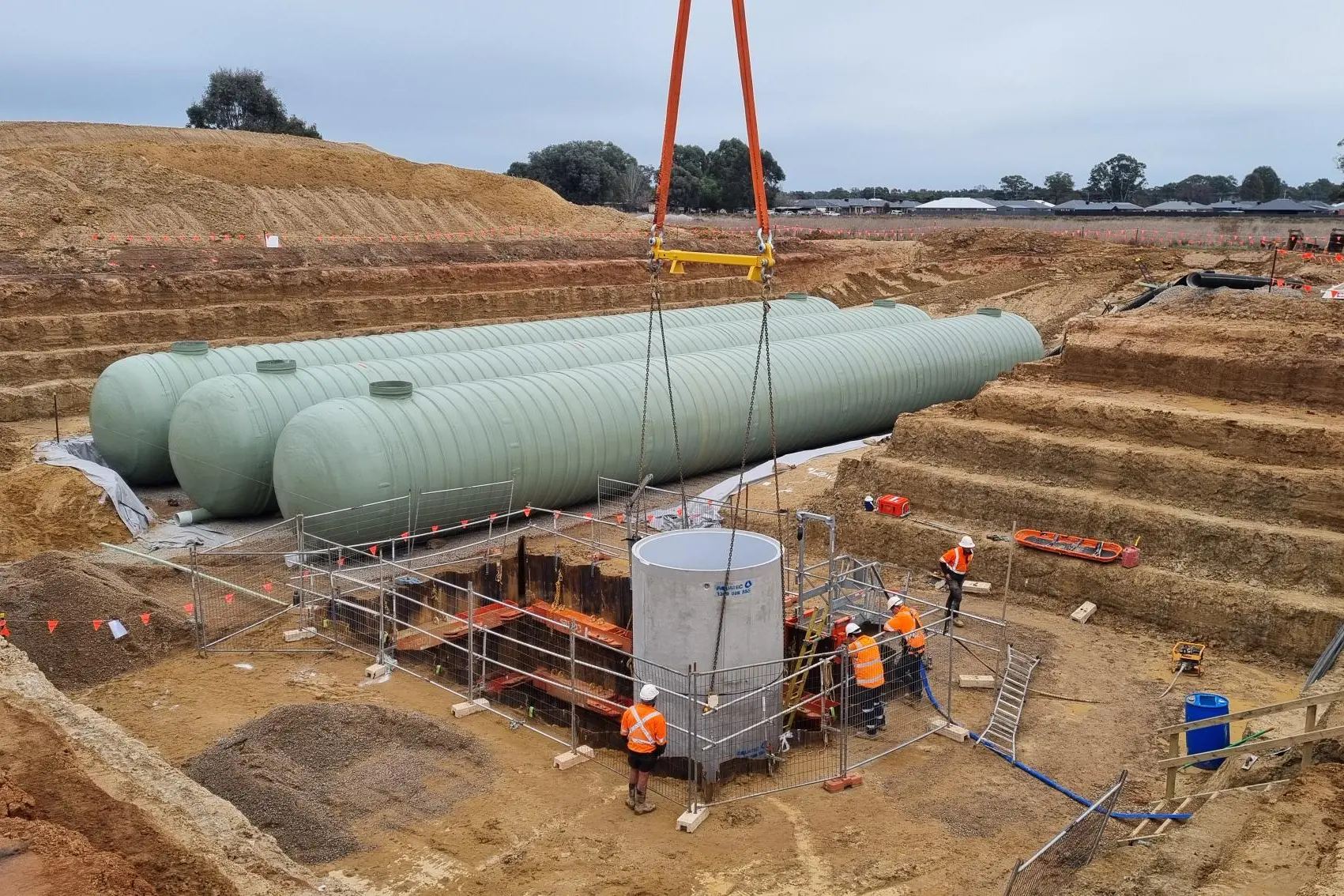
The solution was to install the largest wastewater detention tanks in the state, a low cost option that would buy time and allow for invigorated residential development.

As a 15-year fix, North East Water (NEW) began the installation of large scale detention tanks to store sewage during peak demand.

Tanks have been installed in other towns around Victoria but Guy Wilson-Browne, North East Water general manager planning & infrastructure, said probably not to the extent they have in Wangaratta.

The tanks are three metres in diameter x 21 metres long and made out of fibreglass, with each tank servicing 115 land lots.

"They are usually smaller and detention tanks this size are not that common," he said.

"It's cost effective and it means we can defer some of that major cost like building a brand new pump station for 10-15 years, spreading the cost of investment between current and future generations."

Developers contribute to this detention tank investment via New Customer Contributions (NCCs) which are $3545 per lot for water and wastewater connection.

For the five-year price period commencing 1 July 2026, the authority is proposing a new customer contribution of $4017.

There has been some chatter that this extra cost would impact land prices in Wangaratta, however, Mr Wilson-Browne said he does not believe this is the case.

Mr Wilson-Browne said the added cost to developers would have a very minimal effect as capital investment is recovered through customer bills over a 25-year period.

"We try and spread the cost of investment over current and future customers, so the developer or new customer contributions are basically an assessment to service that lot (operational and capital costs)," he said.

Wangaratta has been land locked more than a decade, and coupled with the sewer capacity issues over the last four years, this has affected land prices.

But as part of the NEW master plan, in collaboration with the Rural City of Wangaratta, more than 2900 housing lots are available in the north and south growth corridors to cater for population growth.

"Once those 3000 lots come on board in the next few years, that should help with affordability," Mr Wilson-Browne said.

The Warby Views Estate off Cruse Street and Granite Park Estate off Christensen's Lane are selling now and two estates to the south have been given green light by council.

Targoora Park development proposes construction of a small, local recycled water plant to irrigate the Targoora Park sporting precinct and Cathedral College grounds.

Coming up in the next pricing period there will be a major $20 million upgrade to the Faithfull Street water treatment plant.

"The level of investment right now is fairly high because we're doing a bit of catch up to meet the growth targets, so it's about trying to make it as fair as possible so there's not too much of an impost on customers in any one pricing period."

Wangaratta’s sewerage network was built during the 1930s and 40s and it will be replaced with larger diameter pipes to better accommodate population growth.

These works are estimated to cost more than $200 million and will include the replacement of old, damaged 150mm ceramic pipes with wider PVC pipes.

The planning for these works is well underway, and construction, subject to future price plans, is scheduled for 2030-2045.

Detention tanks will stay underground for the next 10-15 years in case they are needed until a new pump station is built.

Looking to the long-term solution for population growth, the existing plant has been assessed and will be proficient enough to handle demand well into the future.

"The existing plant is big enough to cope with growth over the next 20 years-plus as it's in good condition and it has the right capacity," he said.

"In 20 years' time there's also likely to be changes to technologies so there might be new ways of treating the waste when upgrading the plants.

"As more people move to the area there are more customers and they will share the added cost of network pricing increases.

“The future investment has been prioritised following extensive community and customer engagement as part of our price submission process and is pending approval by the independent regulator the Victorian Essential Services Commission (ESC).

"The community, customers and developers can have confidence that we have a forward plan and we will support growth and service levels in Wangaratta for the next 50 years."