
PHOTO
68331.0
When visiting a waterbody such as a lake, swamp or even a large farm dam, our attention is often first drawn to birds on the surface of the water, such as ducks, swans and coots, or those large and obvious birds that wade through the water, including herons, egrets and spoonbills.
However, there are often a number of smaller and less conspicuous birds that potter about on the shoreline, making use of the sandy or muddy ground on which to forage for food, loaf or even nest.
Among this group is the Black-fronted Dotterel – a type of wader endemic to Australia, though there is an increasing population in New Zealand where it was introduced in 1958.
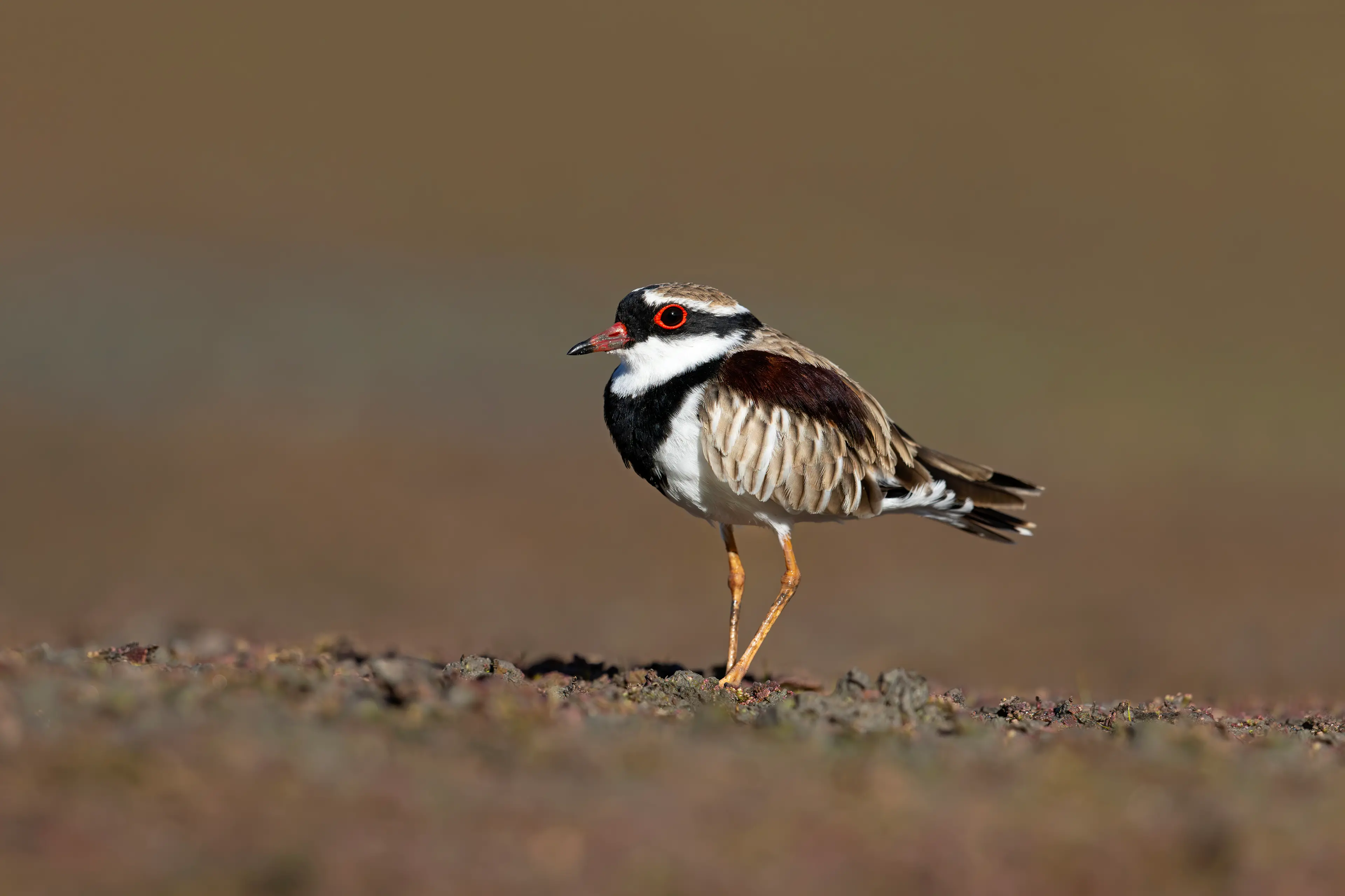
Black-fronted Dotterels are dainty birds with a small and slim body, longish legs, long wings and a short tail. They are identified by their distinctive horizontal stance, squat short-necked appearance and rapid run with abrupt stops.
Adults have bold markings including a black V-shaped breast band, broad black facial mask, red bill tipped black, red ring around the eye and clean white breast, throat and eyebrow.
Typically, they occur on firm damp surfaces, such as mud and gravel, around the fringes of freshwater wetlands, river-beds and pretty much any inland water body.
They avoid dense grassy or marshy vegetation and prefer not to wade in deep water, usually only barely getting their feet wet.
They are most often seen singly or occasionally in pairs during the spring-summer breeding season, but in winter they can form loose congregations of a dozen or more birds.
Much of their time is spent foraging, which they do by briskly walking, or most often running, and stopping to peck food from the damp surface.
Aquatic insects form the bulk of their diet, but they also occasionally consume seeds and some small crustaceans, which are occasionally taken by probing into shallow mud or among gravel and stones.
When disturbed, these birds perform a ‘road-runner’-like sprint, before suddenly stopping to assess the situation.
If pressed, they will fly in a swift but jerky motion, on long narrow wings showing a conspicuous white wing bar, often giving a sharp high-pitched pit alarm call as they go.
They often land some distance away, running upon landing then coming to a stop.
At times, in calm moonlit conditions, Black-fronted Dotterels fly around at night, identified by their distinctive churring calls.
Black-fronted Dotterels nest on dry sandy, gravelly or stony ground close to water bodies, often alongside tracks, on dam banks or disused scrapes and quarries.
The nest is a simple depression in the ground, where two or three dull green-grey stone coloured speckled eggs are laid. Eggs hatch at around four weeks, and the tiny fluffy chicks are able to run within just hours of hatching.
Adult dotterels feign injury, known also as the broken wing display, to distract intruders from the nest or chicks.
They do this by turning their backs to the threat and flapping their wings or raising one above their body in order to draw attention, gradually luring the threat away.
Locally, these birds are relatively common and can be seen around any large farm dam or wetland.