PHOTO
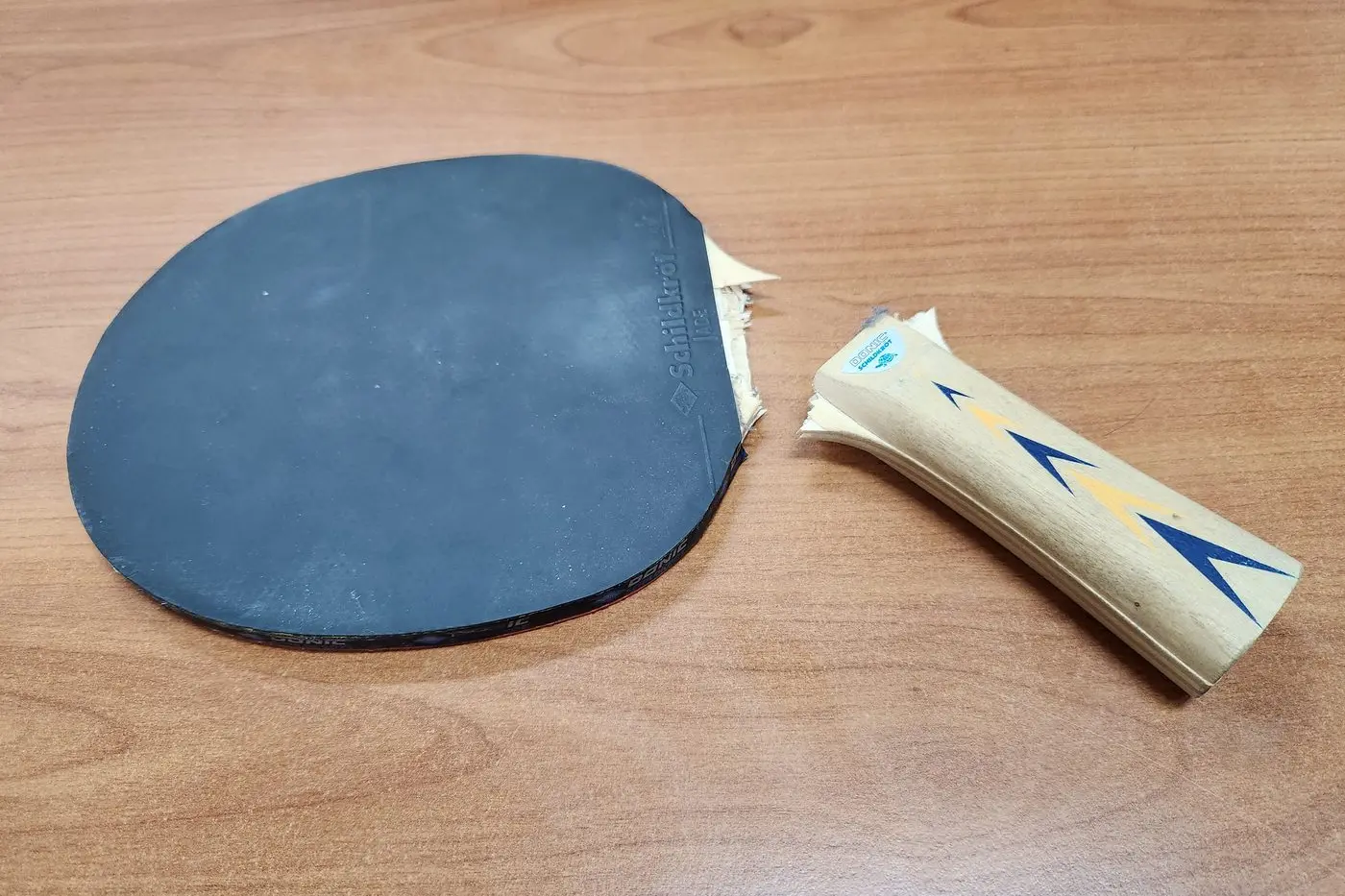
LAST time, we explored the balls of table tennis – this time we will visit the rackets.
This is the official term from the ITTF (International Table Tennis Federation).
It wasn’t till 1901 that the table tennis bat/paddle/racket that we are so familiar with appeared, and only used a sheet of rubber on top of a wooden blade, though it was not till much later that sponge started being used between the blade and the rubber.
The wooden portion of the racket is often referred to as the ‘blade', and can be anywhere between one and seven pieces of wood, though cork, glass fibre, carbon fibre, aluminium fibre and Kevlar are sometimes used.
Regulations state that 85 per cent of the blade shall be natural wood, balsa, lumbar, cypress or hinoki.
Table tennis regulations allow different rubber surfaces on each side of the bat, and various rubbers provide various levels of spin or speed and control.
For example, a player may have a rubber that provides much spin on one side of their racket and one that provides no spin on the other, and by flipping the racket in play, different types of returns are possible.
International rules specify that one side must be black while the other side must be a bright colour clearly distinguishable from black and the colour of the ball, usually red.
The glue between the rubber surfaces which has caused much talk in table tennis circles - but that is for next time.
For us keenagers, racket spin and speed comes second to control - in fairness, some of our sessions have some great plays and some of the players have played in different competitions throughout their playing lives and represented Wangaratta in inter-city championships.
Remember come on down Monday and Thursday mornings and from daylight saving on Sunday, October 1 it’s a 7.30am start.