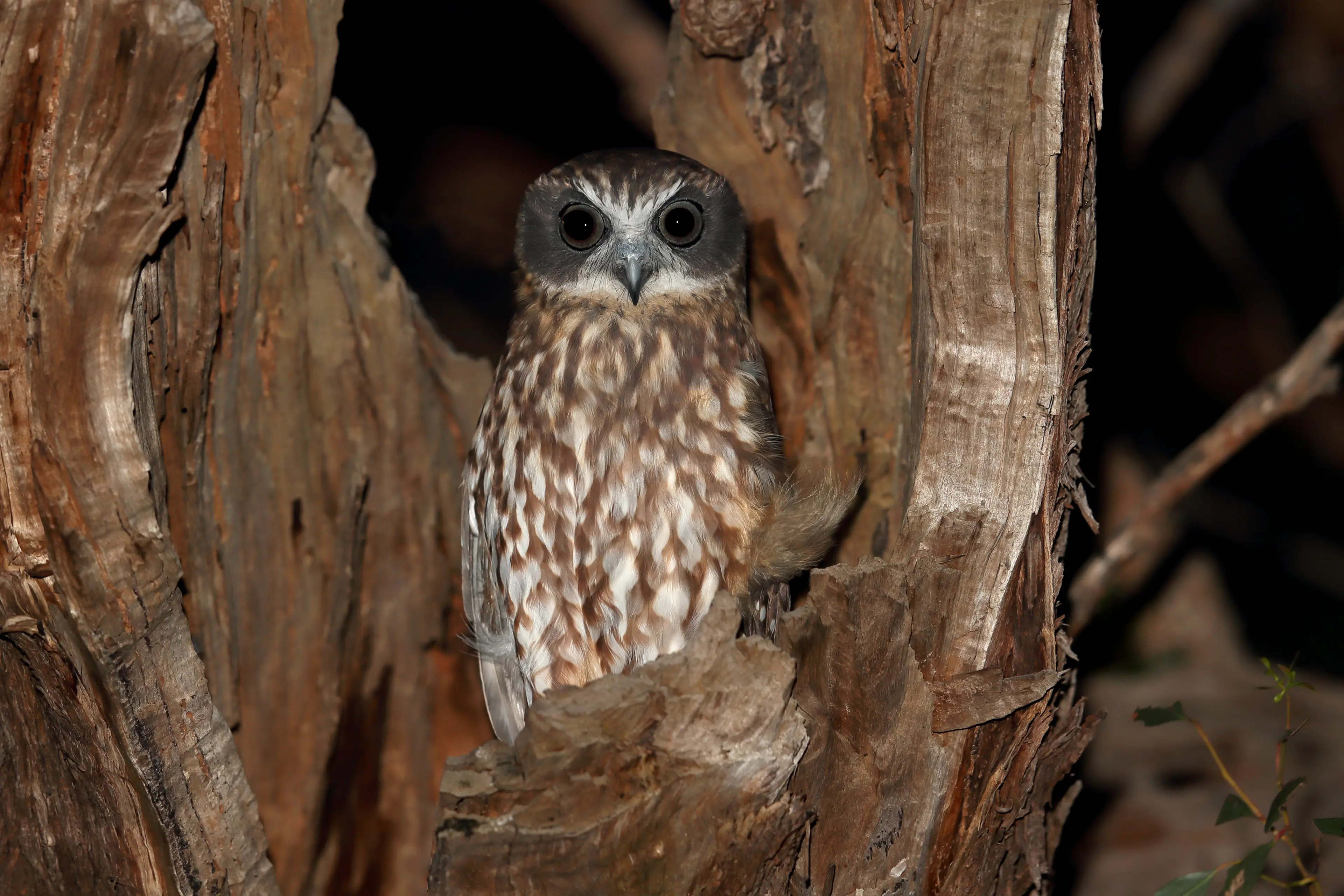
The call of the Boobook Owl is one of the most familiar and iconic sounds of the Australian bush at night.

The characteristic was thought by early European settlers to be given by the Tawny Frogmouth, but it is indeed given by this small and extremely widespread species of owl.

Boobooks are one of this region’s most common night birds and though they may seldom be seen, their well-known call indicates their presence.

At times, this call may be repeated incessantly for hours on end and often draws a response from other boobooks within ear-shot.

Maybe that’s why boobooks can be heard right throughout Australia!

Boobook Owls can be found in any treed landscape.

They are occasionally seen far from trees but these birds would have wandered from a nearby patch of vegetation where they require either a tree-hollow or dense foliage for daytime roosting.

Boobooks are considered the smallest and most common owl in Australia.

Belonging to the family of ‘hawk owls’, as opposed to the disc-faced owls such as Barn Owls, its larger relatives include the Barking Owl, Powerful Owl and Rufous Owl.

Boobooks are identified by their dark chocolate-brown plumage, spotted with white on their wings and faintly streaked underneath.

They have a spectacled appearance with white ‘goggle’ rims around their pale yellow-brown eyes.

Young birds are almost entirely white below, with conspicuous dark brown eye patches.

The similar looking Barking Owl is considerably larger, more robust and has fierce bright yellow eyes.

Like other owl species, the Boobook is entirely nocturnal, only active through the day if it has been disturbed from its roost, during which they are usually harassed by small birds such as honeyeaters.

Boobook Owls feeds on insects, small mammals including mice and rats, and birds such as small birds roosting at night and nestling birds found in tree-hollows.

Most prey is detected by listening and watching from a suitable perch.

Once detected, flying prey such as moths and small bats, are seized in mid-air, while ground and tree dwelling prey are pounced upon.