
PHOTO
74508.0
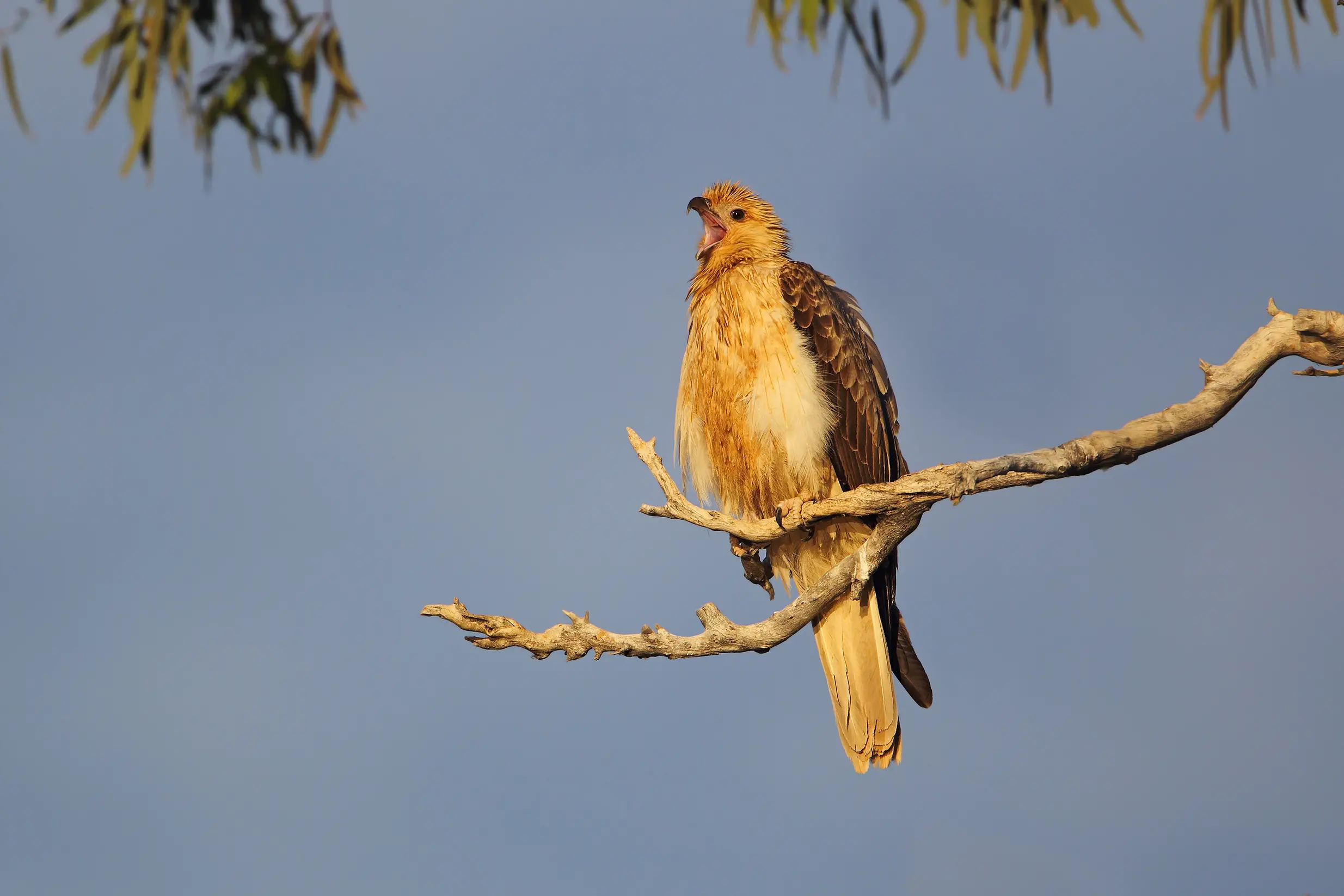
The Whistling Kite is one of our best-known birds of prey.
They can be identified by their distinctive clear whistle: a descending note followed by rising staccato chatter, heard as they fly overhead or perch in trees nearby.
This medium-sized raptor looks shaggy.
Their head and underparts are light brown with pale streaks, while their dark sandy-brown wings are paler underneath.
When spread, the underwings show a distinctive pale 'M' shape.
The head and body are relatively narrow, the tail rounded, and the long, well-rounded wings can span up to nearly 1.5m.
The sexes look alike, although females are larger.
Young birds are slightly darker above, with paler streaking on the head and underbody.
They are often seen near water or farms, soaring in lazy circles.
The Little Eagle, featured in an earlier article, may be confused with the Whistling Kite, but is best separated by factors like the rounded tail and wings of the kite and its distinctive call mentioned above, and the overall more solid body shape of the eagle.
Whistling Kites are found across Australia and in New Guinea, the Solomon Islands and New Caledonia.
They live in woodlands, open country and particularly wetlands.
They are also common around farmland, vineyards and anywhere where carrion (dead animals) can be found (e.g. abattoirs, rubbish dumps and roadsides).
They are often sighted soaring above the tree canopy and over water in search of prey.
During the non-breeding season, they mainly eat carrion, but during the breeding season they take live prey, especially rabbits and hares, as well as fish, reptiles, birds, small mammals and large insects.
They are often seen at fires where they try to catch fleeing prey.
They have been observed stealing food from other birds of prey.
The Whistling Kite are monogamous, with some breeding pairs remaining in a territory throughout the year and pairs actively defend the area around a nest.
The large nest platform is built of sticks in a tall tree and may be reused, growing larger over time.
Both sexes build the nest and incubate the eggs and may breed two or three times a year.
The young stay with the parents after fledging for about eight weeks.
Anyone in the vicinity of rivers and wetlands in our region are likely to hear the telltale call of the Whistling Kite.