

PHOTO
Australia’s economy is demonstrating remarkable endurance as the nation’s export values remain exceptionally resilient. Supply chain disruptions and fluctuating energy markets have increased the cost of imported goods, but Australia’s economic position is strengthening.
At the heart of this stability is a vital economic gauge, the terms of trade (TOT). The terms of trade measure the ratio of a country’s export prices to its import prices. A strong TOT means that Australia’s exports command high values on the global stage. This allows the country to purchase larger volumes of foreign imports for every unit of goods sold abroad.
What is Driving Australia’s Robust Terms of Trade in 2026
According to the latest data from the Australian Bureau of Statistics (ABS), Australia’s terms of trade index remains at a historically elevated level of around 111.90 points. This is well above the historical average of about 74 points. Despite a surge in import prices due to global shipping and fuel disruptions, export values have increased by 3.9% in the last year.
There are three main drivers of the strong terms of trade in 2026.
Stability of Traditional Bulk Commodities
Australia’s commodity market remains the absolute bedrock of its exporting power. The demand for traditional resources has kept exports up in 2026. Iron ore continues to be the heavyweight champion of the national economy, with projected annual export earnings on track for above $116 billion. Massive shipments from the Pilbara region in Western Australia to emerging infrastructure projects across India and Southeast Asia have sustained this value.
Gold and other base metals, as well as metallurgical and thermal coal prices, have remained resilient. They have contributed roughly $61 billion to $71 billion annually to the trade account. This reliable volume has helped protect Australia’s baseline export income as global markets fluctuated. Export growth has also positively impacted forex trading, strengthening the Australian Dollar (AUD) against the US Dollar (USD).

Renewable Energy and Critical Minerals Boom
While traditional bulk commodities hold the floor, a highly strategic industry is reshaping the terms of trade. Critical minerals have transitioned from an emerging sector into a core pillar of economic strength. Australia’s national critical mineral earnings are projected to reach up to $19 billion by 2031, driven by the global green energy transition.
Lithium leads critical mineral exports, with earnings from the mineral forecast to climb from $9.9 billion to $13 billion. Australia expanded its strategic partnership with the United States to cement this advantage. The expansion, announced in April 2026, will see the US and Australia invest $8.5 billion to back critical and rare earth mineral projects. This shields Australia from processing bottlenecks. This is a key advantage, given the impact of China’s dominance of global supply chains.
Service Sector Rebound Led by Education and Tourism
In 2026, services climbed to account for roughly 21.5% of Australia’s total exports. This is driven by record-breaking international spend and a pivot to “high-yield” markets. Australia’s services PMI reached new levels, boosted by internal and external demand. The S&P Global Flash Australia Services PMI touched 53.6, the highest in six months.
The tourism sector has nearly recovered, with 9.1 million visitors over the last 12 months. This has pushed total visitor spend to AU$56 billion in that period. A key tourism trend is the shift from mass volume towards high-spending experience seekers from Asia and North America.
The education sector has also seen remarkable growth in 2026 and continues to maintain its status as Australia's primary services export. The total education export reached AU$53.4 billion, split between tuition fees and student spending. One of the driving factors behind this growth is strict visa oversight, which has enabled universities to secure more high-value partnerships.
How the Trade Position Protects the National Economy
Australia's strong trade position serves as a primary macroeconomic shield, absorbing global pressures and stabilizing national purchasing power. This shock absorption operates through diversified sector growth and counter-cyclical resource demand:
The terms of trade level also strengthens the government tax revenue through corporate revenue and state-level royalties. This has helped shrink the FY2026 underlying cash deficit to AU$28.3 billion.
These trade-driven revenues are then redeployed into the economy through subsidies and capital project funding. These include initiatives like the ongoing AU$250 working tax offset.
All of these have contributed to the AUD’s strength in 2026. Stronger foreign demand and absorption of imported inflation have helped defend and strengthen the AUD. A direct result is that the Reserve Bank of Australia can manage inflation without resorting to aggressive rate hikes that would crush growth.
Emerging Vulnerabilities to Australia’s Trade Dominance
Australia's strong trade position still faces risks from rising import prices and geopolitical tensions in the Middle East.
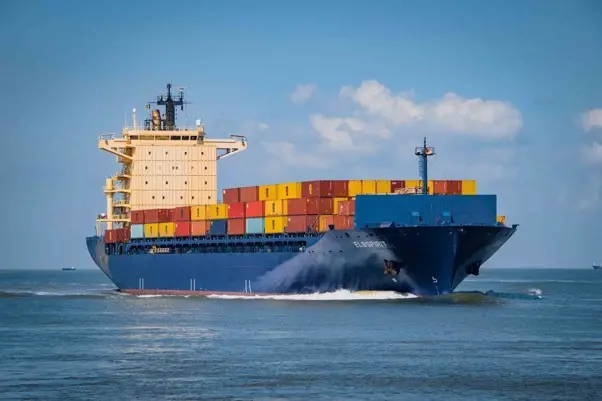
Import price pressures are arising from disruptions in global shipping lanes, container shortages, etc., mean Australian firms are paying premium rates to secure essential capital equipment. This is a serious issue facing Australia’s push for digital advancement. The rising cost of technological infrastructure and the massive spike in purchases of Automated Data Processing equipment for local data centers have increased the national import bill.
One of the core areas where domestic capacity pressures are seen is the high export wealth. This pumps money into the economy and makes it trickier for the RBA to manage sticky inflation. This is worsened by the concentration risk facing the economy. Australia's trade suffers from a lack of diversification. The economy is largely export-driven, and exports are driven primarily by the same commodities. The result is that global headwinds in the commodities market severely affect the domestic economy.
Closing Thoughts
The economy is resilient, but investors and businesses must remain vigilant, monitoring shifts in market demand as 2027 approaches. As macroeconomic indicators shift in response to global and domestic changes, Australia’s terms of trade will also change. But until international demand drops, the country is still riding the high wave of strong exports going into 2027.