PHOTO
Bali isn't one place; it's a collection of distinct zones that visitors move between, often repeatedly. Seminyak and Canggu for beach and nightlife. Ubud for rice paddies and jungle walks. Uluwatu for clifftop temples and surf. The Nusa islands when you want to get properly away. Getting between these areas takes time, and navigating them well depends on reliable data at each stop — not on finding a phone shop that'll sell you a topped-up local SIM.
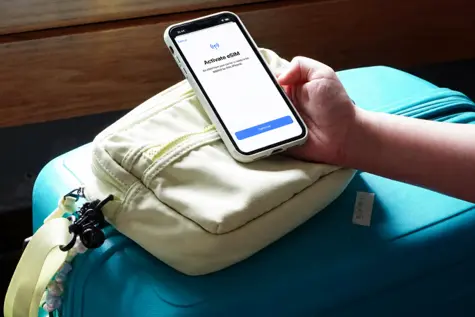
Travellers working out how to stay connected across Bali's geography can get a Holafly eSIM for Bali, which gives a practical answer: unlimited data on XL and Telkomsel networks, installed at home and active from the moment you land. Nothing to buy at the airport, no registration, and no top-up to remember when you're in the middle of Ubud's Monkey Forest.
The Local SIM Experience in Bali
Local SIM cards in Bali are genuinely affordable once you have one. Telkomsel and XL Axiata cards are available at the airport, in Indomaret and Alfamart mini-markets, and at phone shops throughout tourist areas. The issue isn't availability — it's the small friction points that turn a five-minute task into an unpredictable one.
Registration is the first hurdle. Indonesian regulations require passport registration for SIM cards. At the airport, this is handled by the vendor, but it takes time. Miss that window — arriving late, rushing to meet a driver—and you're relying on finding a reputable shop in an unfamiliar area. In Canggu, that's easy. On Nusa Penida on a Sunday afternoon, considerably less so.
Top-Up Logistics on a Longer Stay
Many Bali visitors stay longer than a week, and a significant number spend a month or more. The local SIM top-up cycle becomes a recurring errand. Prepaid cards have validity periods that don't always align with the length of a stay, and running out of data mid-trip—or discovering credit has expired while trying to get directions—is exactly the disruption an unlimited plan avoids.
An eSIM structured around days of use removes that cycle. You know what you're getting, you know how long it lasts, and the data has no separate expiry date that catches you out. For digital nomads and longer-stay visitors, the administrative simplicity is worth more than any modest price difference.
Coverage Across the Main Bali Zones
Coverage from XL and Telkomsel is strong across Bali's main tourist areas. Seminyak, Canggu, Kuta, Ubud, and the Bukit Peninsula are all well served with 4G and often 5G. Temples, rice terrace viewpoints, and main roads between zones have reliable signal.
The Nusa islands are a partial exception—coverage on Penida and Lembongan exists but is less consistent than on the main island, particularly in remote corners. That applies equally to local SIM cards on the same networks. For most Bali itineraries, the coverage is more than sufficient for navigation, maps, messaging, and content creation.
Bali's Digital Nomad Reality
Bali has one of the highest concentrations of digital nomads of any destination in the world. Canggu in particular has built an ecosystem of co-working spaces and remote-worker-friendly accommodation that attracts people staying for months. For this group, an unlimited data connection is a professional requirement. Café Wi-Fi isn't always reliable enough for client calls or large uploads, and a personal data line as backup is the difference between a productive afternoon and a scramble.
A travel eSIM with unlimited data and hotspot capability handles those situations cleanly. For nomads, the relevant comparison isn't eSIM versus local SIM; it's eSIM versus local SIM plus the time and energy of managing it across a long stay.
It’s One Big Decision Before You Pack
Sorting connectivity before you travel removes one decision from an arrival day that already has enough. Ngurah Rai can be busy—immigration queues, baggage claim, drivers waiting outside—and adding a SIM purchase to that sequence is an optional inconvenience. An eSIM installed at home means the moment you clear customs, you're already oriented.
Bali tends to get into people's plans in ways they didn't anticipate. A two-week trip becomes a month; a month becomes a return visit the following year. Having connectivity sorted from the first day makes all of that easier to fall into.