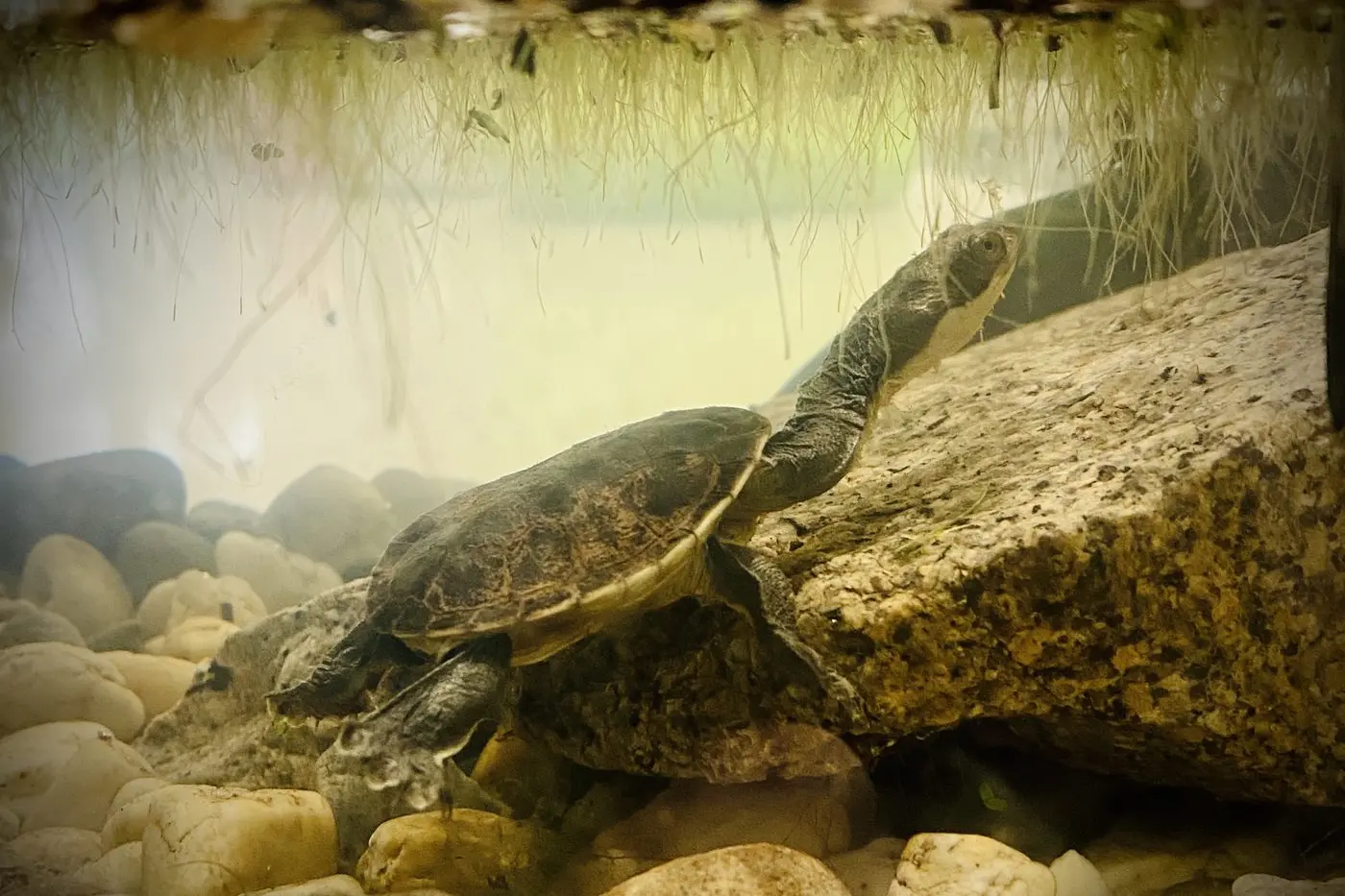
PHOTO
STUDENTS from Borinya recently found six very rare baby Broad–Shelled Turtles in their grounds.
Student Jade Scown found the first baby turtle on the grass beside the newly built learning centre, with other students and teachers then joining in the search and by the end of the week they had six turtles.
Local ecologist Ian Davidson from Wangaratta Landcare and Sustainability (WLS), who identified the turtles, expressed great enthusiasm about the turtle find, saying that in all his years as an ecologist he has only seen hatchlings of this species a handful of times.
"Unlike the more common Long–Necked Turtle, Broad–Shelled Turtles are rare, and only leave the water once a year in late autumn to lay around 10 eggs," he said.
"As well as supposedly having the longest neck of any turtle in the world, their eggs may incubate in the sandy ground for up to 16 months before hatching.
"The recent rains have most likely triggered these eggs to hatch making the soil easier to excavate."
Ian said the turtles face many challenges throughout their lifecycle, especially from predation by foxes, dogs and goannas as eggs and hatchlings.
"Once they make the water, they can be prey for fish like Murray cod," he said.
"Female turtles, which may live for over 50 years, also return to their nesting site every year and disturbances to land, including riverbank erosion can disrupt their breeding patterns.
"In many river systems weirs have reduced their ability to move and establish new populations."
Teacher Kjirsten Robb said Borinya's turtles were lucky to have survived through the building of the new learning centre and will be kept safe until they are strong enough for release in nearby Mullinmur Billabong.
"Borinya has a strong sustainability focus and works with WLS on improving the amenity and health of both the land and aquatic ecosystems of Mullinmur Billabong (behind the school)," Kjirsten said.
"Every week students work on a range of projects such as tree planting days, building, installing and monitoring nesting boxes and bee hotels.
"Most recently students have joined WLS, NECMA and Arthur Rylah Institute to establish native catfish and endangered Southern Pygmy Perch in the ponds."
She said finding the turtles was an indicator of the good health of the billabong and the adjoining Ovens River.
"As an apex predator, the turtles thrive if all of the other species in its habitat thrive," Kjirsten said.
"It is a testament to the hard work of the community and student volunteers."