PHOTO
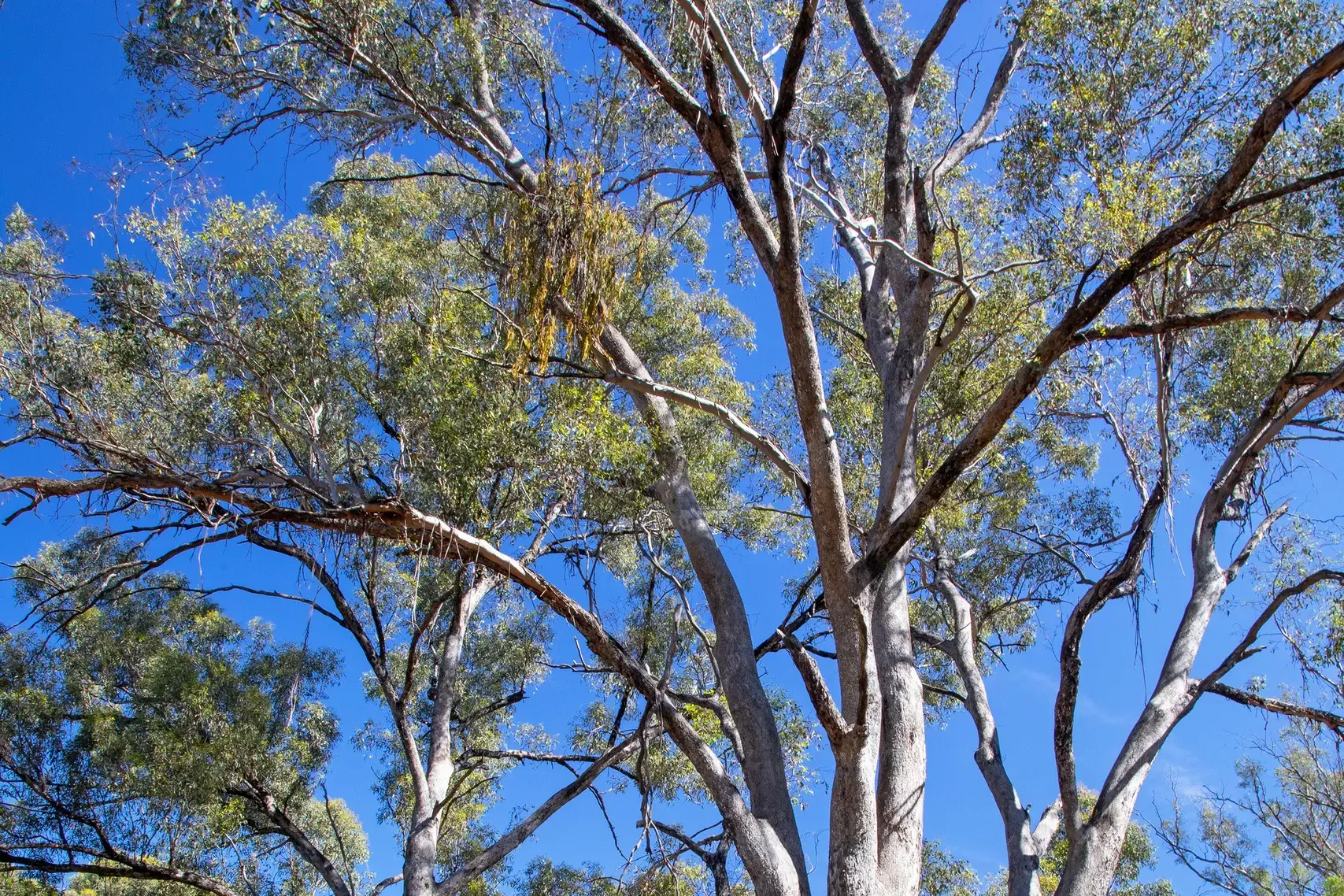
This week’s article features the Grey Box tree that grows locally just above the floodplain where River Red Gums dominate.
The Grey Box is a long-lived, mostly single-stemmed spreading eucalypt growing to 30m with finely textured grey bark on the trunk and larger branches, grading to smooth in the upper branches where it sheds bark in strips.
Leaves are olive green and like all eucalypts they produce flowers mostly in late summer-early autumn.
In fact they have just stated flowering locally now.
Their fruits and buds mostly occur in groups of seven and the buds are barrel-shaped with valves enclosing the fruit.
The flowers are white.
Grey Box woodlands were once widespread on the fertile plains with loamy soils and on the stony rises where ironbark often grows.
The plains woodlands were open and dominated by native grasses and shrubs were scattered, whereas on the stony hills, shrubs are very common.
The plains vegetation has mostly been cleared for agriculture and the best remaining examples are generally found along roadsides and in bushland reserves.
Grey Box trees were particularly important for the Bangerang who used their bark for making many practical and cultural implements including coolamons, shields and roofing.
In fact, there are still living Bangerang “scarred” trees present along many of our roadsides, where older trees remain.
It is worth noting that these living trees were marked over 200 years ago for cultural purposes and they were likely large trees then, making them up to 500 years old.
These relict Grey Box woodlands are still very important habitat for many native plants and animals.
For example the now extremely rare Bush Stone-curlew roosts on the ground throughout the day among fallen branches in small open Grey Box woodlands from where they forage for insects in the surrounding paddocks.
The now endangered Grey-crowned Babbler found between Killawarra and Rutherglen is heavily reliant on the surviving roadside patches and paddock trees of Grey Box for its future survival.
Even the endangered migrating Swift Parrot prefers the Grey Box nectar or the leaf sap-sucking insects for food once they return to our area around during autumn.
If you are walking, riding or driving along our rural roads check out these amazing large trees