PHOTO
63356.0
When writer/director/producer Jack Johnston set out to make his debut feature, Everything Grows In Eden, he didn’t decamp to the creative hubs of Collingwood or Fitzroy.
He doubled down on home.
Living about 20 minutes outside Benalla and with years spent across Benalla and Wangaratta, Jack wrote a story that could only be told against the textures, faces and landscapes of North East Victoria, then shot it here with an almost entirely local team.
“I wanted the film to have a very specific visual language and to showcase the stark differences between inner-city Melbourne and the raw beauty of regional Victoria,” Jack says.
“Whether it be shooting inside the iconic Vine Hotel, dressing up the Boho South Hall or capturing the gorgeous views of the Samaria valley, it was an amazing experience getting to be amongst my local community and the nature that surrounds us as we embarked on this ambitious project.”
Everything Grows In Eden follows a young woman who promises to take her suicidal best friend to a mental health retreat but they are drawn to a rural commune where old wounds threaten to surface.
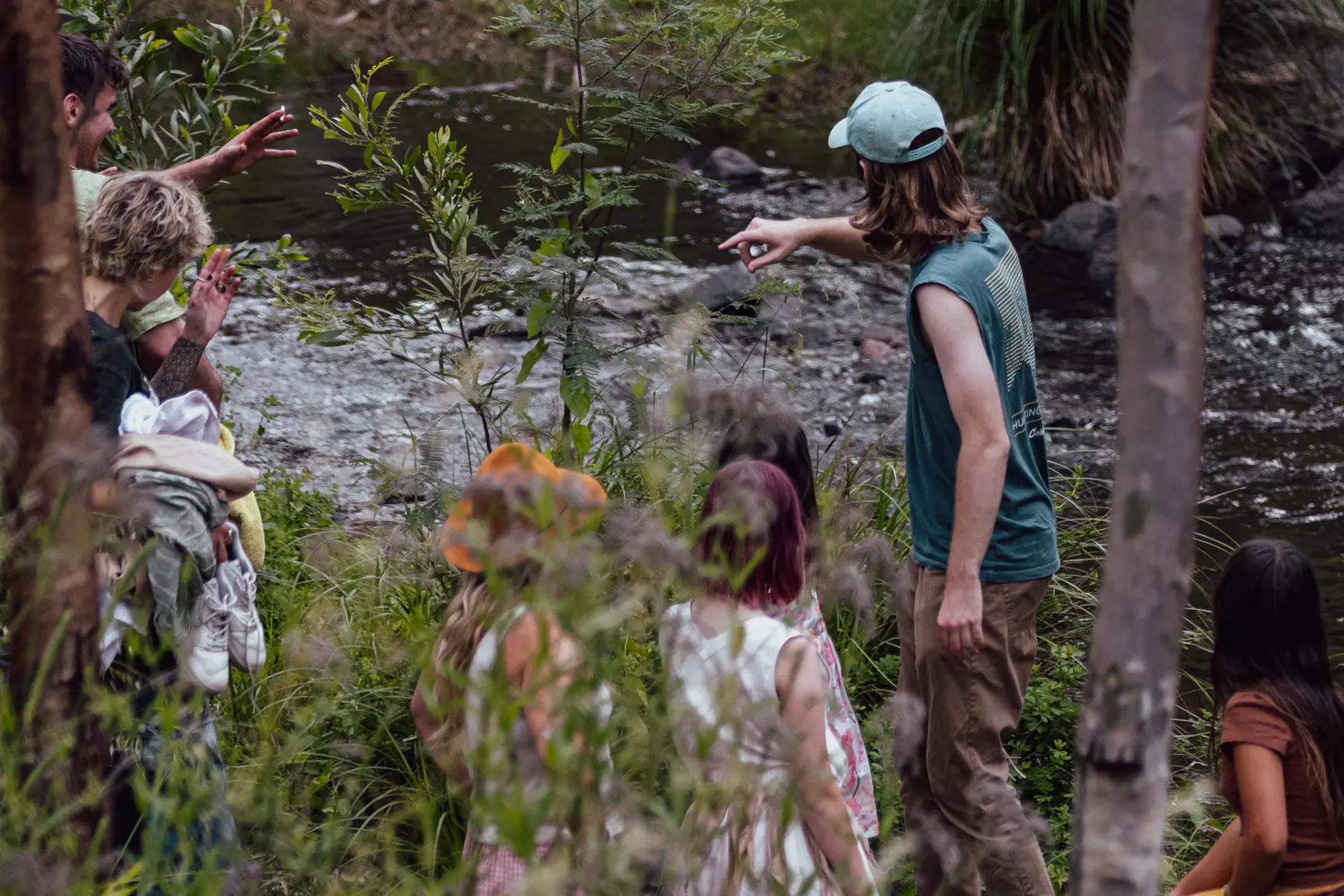
The film was shot across Wangaratta, Benalla, Samaria, Tatong, Swanpool and Boho South, its narrative stitched into the paddocks, halls and hill lines that locals know.
“A lot of our supporting cast are based in North East Victoria,” Jack said, listing Kirsty Woods, Lachlan Keith Murray, Owen MacLaughlin, Jake Bowtell, Laura Gundrill and Bec Carta among the on-screen ensemble.
Behind the camera, the hometown backbone continues.
“Our crew was almost entirely comprised of locals, and the film wouldn’t have been made possible without the help of Leila Hyland, Brianna Robison, Simon Evans, Nick Dellicastelli, Aleeta Carmody and Jessie Evans," Jack said.
The soundtrack also features work by local artists Ellen James and Felix Leunig, whose “poetic songwriting and haunting voices,” Jack said really helped to pave the way for the message that this film is trying to convey.
“All the local people who volunteered their time to make this film come to life," he said.
“Whether that be acting as an extra, providing props and costumes for scenes or lending equipment for the shoot.”
The end result feels less like a visiting production and more like a communal act of storytelling.
In an era when a “low budget” film can still mean millions, the entire production of Everything Grows In Eden ran on just $9000, with cast and crew volunteering their time over a 17-day shoot.
“When you’re working with just $9000 as your production budget, you don’t have the great luxuries that most Hollywood film sets are able to enjoy,” Jack said.
“Most films you’d see at the cinemas or streaming on Netflix would have budgets ranging anywhere from $3 million to $300 million… This project, however, was able to see the light of day because of the constant dedication and kindness shown by each and every cast and crew member.
“With only a handful of people behind the camera and a similar amount of on-screen talent, our circumstances forced us to be creative and to improvise without much of a safety net.
“Problems had to be solved efficiently and without fuss and we had to persist through less than ideal environments in order to achieve what we needed each day.”
That didn’t mean compromising on care.
“This kind of filmmaking is only achievable when you put everyone’s well being above all else,” Jack said.
“I’m proud to say that we had a very collaborative set environment with lots of laughs.”
While Jack is careful not to spoil the film’s plot for first-time audiences, he describes Everything Grows In Eden as a character-driven drama that pivots on identity, belonging and the tug-of-war between staying and leaving.
Themes that cut close to regional communities where creative pathways often seem to lead straight down the Hume.
“When I decided to make this film here in North East Victoria and resist the urge to move to Melbourne, I knew this project would be a massive risk,” Jack said.
“Most people in the industry would say that making a fully fledged feature film on just $9000 with a skeleton crew of people almost entirely on location in North East Victoria (requiring our Melbourne talent to have to travel every weekend) would be an impossible task.
“And yet, here we are.
“Not only did we make this film but we were able to give it a limited theatrical release.”
For Jack, the screenings are about far more than ticket sales.
They’re a vote of confidence in the region’s artistic ecosystem and proof that compelling cinema can germinate outside capital cities.
“I would encourage anyone that wants to support artists and creatives in regional Victoria to attend one of our screenings,” Jack said.
“If we can sell out these screenings, it would prove that there is an audience in the region for this kind of filmmaking and that you can create interesting and provocative feature films by fostering the artistic community that exists in your local area rather than abandoning it to follow the traditional path of major city filmmaking.”
Locals will be able to view the film at Wangaratta Cinema Centre on 18 April, for a single screening with a Q&A, tickets are available at https://www.wangcinema.com.au/home/.