PHOTO
With temperatures soaring into the mid 40s throughout much of south-eastern Australia this summer, our native wildlife would be finding life very tough in the bush.
Despite the adaptations that many species have to living in harsh and dry environments, mid-summer extreme heat forces pressure on some species to up and leave, seeking better conditions elsewhere.
It is a well-known phenomenon that many desert birds wander from their inland environments to the edge of their range seeking respite from the heat.
Some species may choose to stay in an area for extended periods, if the type of food they need is on offer, whereas others merely come and go, stopping briefly before moving on.
For a lot of these nomads, their movements are large-scale, many travelling interstate to seek better conditions
The Spiny-cheeked Honeyeater is one such example of a nomadic visitor – a species that visits North East Victoria sporadically, with just a handful of records from the Wangaratta area over the past few years.
Earlier this week, one turned up in a Killawarra garden where it appears to relish its new temporary home, feeding in a variety of trees and shrubs and visiting bird baths.
Normally found further north and west, the closest resident population of Spiny-cheeked Honeyeaters would be in the central Riverina region of New South Wales, around places such as Narrandera and Griffith, or the mallee region of North West Victoria.
They also occur right throughout inland Australia, found in shrublands of some of our harshest environments.
But if this bird was seeking greener pastures and a break from the heat, it has another thing coming.
The mid 40s experienced locally would be just as hot as anywhere else, so it’s uncertain how long this bird might stay and where it might go next.
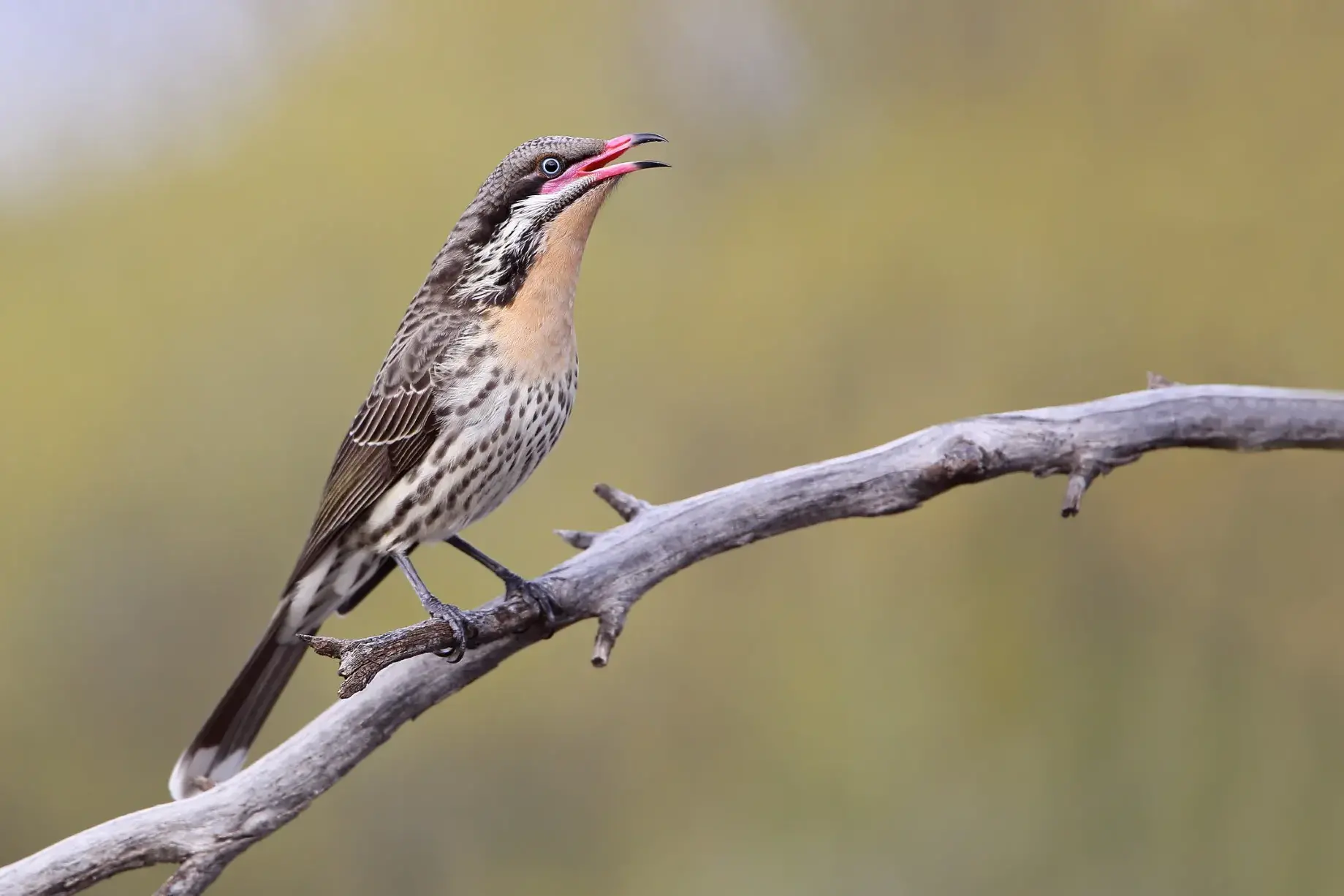
Slightly larger than most of our other local honeyeaters, Spiny-cheeked Honeyeaters can be distinguished by their unusual colour scheme and distinctive rollicking and gurgling call, often given at dawn and peculiarly right in the heat of the day.
In appearance, their upperparts are a dusky grey-brown, they have a white rump seen best in flight, their chest and throat is a conspicuous apricot-pink, their breast is cream heavily streaked black, they have a black and white streaked facial pattern and a bright pink beak, tipped black.
Like other honeyeaters, Spiny-cheeked Honeyeaters feed on nectar and pollen sourced from a variety of trees and shrubs including eucalypts, eremophilas, grevilleas and mistletoes, though flowers are scarce at this time of the year.
As such, they also consume a variety of small fruits, such as those from native saltbushes, and an array of insects that may be gleaned from foliage or captured on the wing.